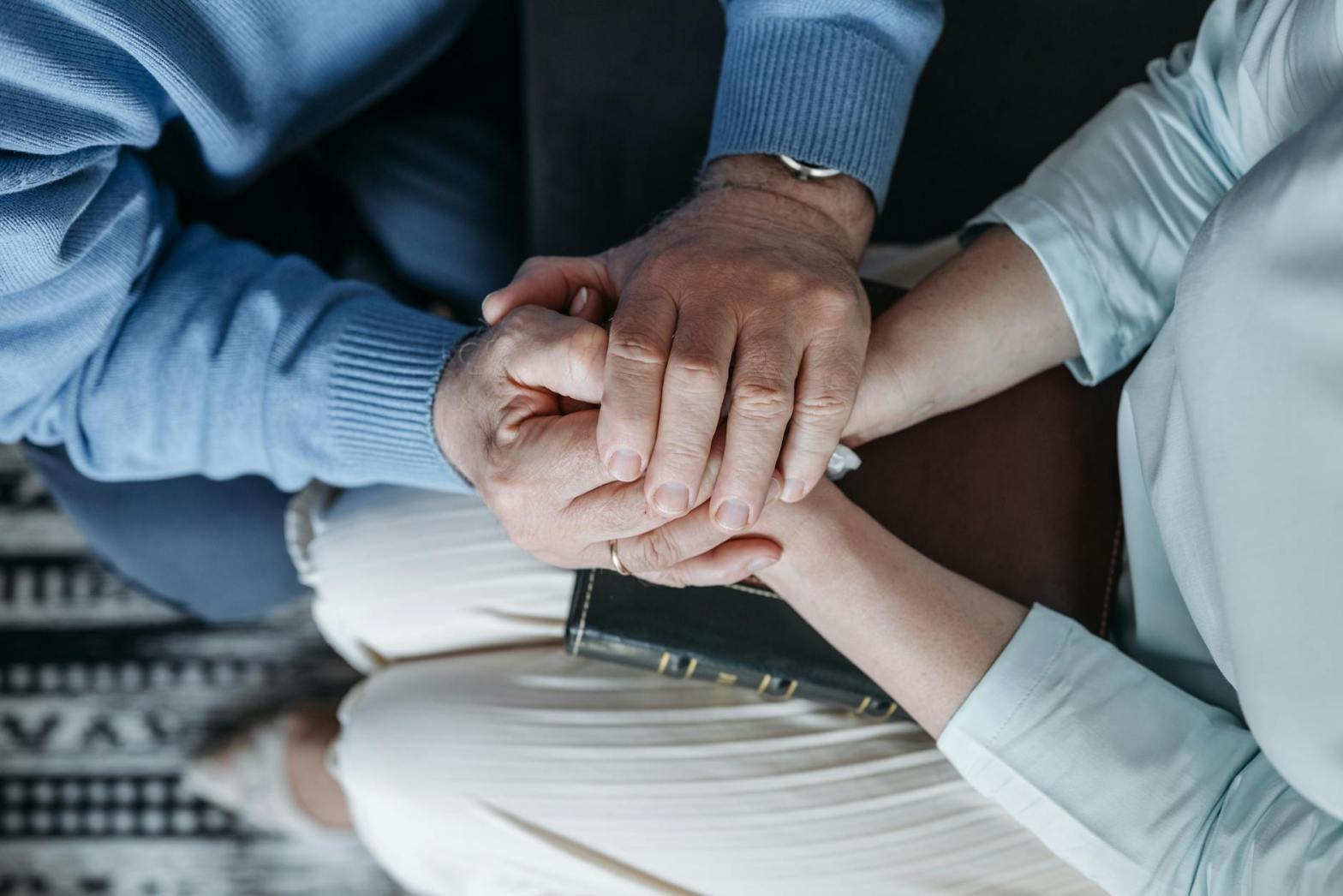
‘This is a historic day’, the John Cleese character in the film Clockwise repeatedly intoned to himself as he rehearsed his speech while driving to a conference – a scene which has always stuck in my mind. Whether or not we approve of the Assisted Dying Bill passing its first reading (330 to 275 votes), no can deny that it was indeed a historic day on Friday. If its passage through Parliament succeeds it will irrevocably change society, not least because those with terminal diagnoses can openly access and exercise their own authority regarding end of life rather than be at the sole mercy of medical authority. Although the GMC and BMA have changed their stance on the issue, this bill could be seen by some medics as a blow to their longstanding traditional authority. Opponents of the bill said it would fundamentally change the relationship between the state and its citizens, and between doctors and patients. They argued the bill had been rushed and the safeguards for vulnerable people were insufficient. Yes and maybe it’s high time that this relationship changes and as for judges and doctors not being trained in coercive behaviour, that can easily be rectified prior to enactment of legislation. The bill is about enabling autonomy and dignity.
Political sketch writer John Crace remarked on it being ‘a rare Commons sight: intelligent debate’, although we know that at least 100 MPs who wished to speak got no opportunity to do so. MPs were visibly moved as they heard one heart rending account after another of loved ones’ ends – though at least one X user suggested that these accounts should not determine the decision. But our views on this subject are bound to be at least partially determined by our own experiences.
‘Here the chamber was packed throughout the five-hour debate. Then a vote in which parliamentarians were free to go with their conscience. Governments don’t allow this sort of thing too often. We might end up with far better laws. Heaven forbid. The bill passed its second reading quite easily. Not nearly as close as some had predicted’. It’s noticeable that some opponents unwittingly or deliberately misrepresented the strict conditions the law would involve, for example calling it ‘killing’ and suggesting difficulties for doctors administering the means of ending life when the Bill clearly specifies that the patient must do it themselves. ‘Leadbeater talked through the mechanics. This wasn’t a matter of life or death. It was one of death or death. Only adults who have been given less than six months to live qualify and even then two medical practitioners and a judge had to give the go ahead. Various opponents intervened to raise the issue of coercion. Not so much from families pressurising sick relatives to kill themselves, but terminally ill people believing they had a societal obligation to die sooner.
There were no easy answers to this. We were trading in imperfections. There were no certainties in life. But it was far better to have a situation where these conversations were out in the open. Where doctors were on the lookout for signs of coercion. Because whether terminally ill people were allowed assisted dying or not, they would still be having the same feelings’.
Exactly, but there have been understandable questions about the process, which have to be worked through at Committee stage, not at this point. These include doubts about availability of judges given the appalling state of the justice system bequeathed by the Conservatives, whether said judges would just accept the views of doctors and how the two doctors would be selected. Powerful opposition has come from the palliative care area, demanding that due to insufficient resources its current state isn’t fit for purpose and this should be fixed before any change in the law is entertained. There’s an argument that if palliative care was consistently available and of a high standard there would be no need for such a bill. But one MP (also a doctor) speaking in Friday’s debate was clear that there are some situations beyond the reach of palliative treatment. This issue has put hospices under the spotlight and it’s truly appalling that only 18% of their funding comes from the NHS, the rest left to charitable donations. If hospices didn’t exist these patients would be in hospitals, resulting in even higher bed occupation and strain on the NHS. There’s also the significant ‘slippery slope’ argument, which opponents fear could induce disabled people to conclude their lives were a burden which they should release themselves and others from. I think there could be some useful lessons to learn from Canada’s experience on this.
A leader in the palliative care field, Dr Rachel Clarke, maintains that ‘Making dying easier is not the solution when NHS, social and palliative care are simply not there for patients’. She rightly points out the disconnect and hypocrisy of former prime ministers asserting their compassion for the dying when their administrations did nothing to properly fund the palliative care patients need and deserve. ‘So it’s over to you, Streeting and Keir Starmer. What will you do now about those anguished, frail, pain-racked patients who sit and quake in death’s proximity as they are failed by the NHS, social care and society at large? Surely you are not going to permit MPs to usher in a law that makes dying easier while failing to address the underfunding that forces people with terminal illnesses to conclude that death is their only option?’
‘At present, 600 terminally ill people kill themselves each year. Those that can afford it go to Dignitas. Often alone and sooner than they might ideally like in order not to incriminate loved ones. How is that more humane than a medically sanctioned death at home? Some terminally ill people are going to want to kill themselves regardless. This bill was for them, said Leadbeater’. I was surprised the number is so high. Even more reason to continue debating this issue but as it represents such a massive social change I think it should be decided by all of us via referendum, not just Parliament.
Polly Toynbee is amongst commentators very pleased with this result: ‘Here it is at last, a landmark that will be an enduring symbol and the humane legacy of this Labour government. Parliament has finally caught up with the public, who have long been firmly and unwaveringly in support of assisted dying since the first polls on the issue more than 40 years ago. What took MPs so long?’ Religion, for one thing, but Polly thought this hadn’t been mentioned much in the debate because it doesn’t cut much ice with voters these days and there’s going to be a lot less value attached to suffering: ‘Christianity – with the cross as its emblem – has a peculiar relationship with suffering as a value in itself’. The dogmatic caller on Radio 4 Any Answers yesterday wouldn’t be alone in trotting out ‘human life has always been regarded as sacred’ but these days there’s far from a consensus on this.
Besides deliberate misrepresentation of what the Bill would actually involve, what’s been striking and worrying is the amount of muddled thinking, for example those believing that a religion-informed view is the correct one; one vox pops interviewee saying if the Bill passed ‘we’d no longer be a Christian country’ (that’s surely been the case for a long time); another cliché ‘every life is worth living’ when that should be solely the decision of the individual living that life; and those complaining that there was no right of appeal for relatives. Surely that’s one of the points: it should be the patient’s decision, not determined by the views and agendas of relatives. It’s important to point out that this wouldn’t become law for another three years because of all the stages it must go through and also that best practice from the ten or so countries and around 8 US states already having adopted such legislation need to inform UK policy.
It’s well known that Kim Leadbeater is the sister of murdered MP Jo Cox but it was moving to hear much more about her background and just what challenges she had overcome to take her seat and get as far as she has (Radio 4 Profile, Saturday 30 November). At the very least this debate has shined a light on how little as a society we talk about death, a point reiterated by Dame Joan Bakewell, whose radio series We Need To Talk about Death, very usefully still on BBC Sounds.
https://www.bbc.co.uk/programmes/b09kgksn
The relentless attacks on the government by Tory politicians and right wing media haven’t let up and now, following Sue Gray some weeks back, Transport Secretary Louise Haigh has been brought down for an offence which these days would not be subject to criminal prosecution. It would not be so bad if the media hadn’t long sidestepped the much worse offences committed by Conservative administrations, one irony being the subject of mobile phones and the number of high flying Tories during Covid Inquiry appearances having ‘lost’ their phones containing incriminating messages about crony contracting and worse. Another irony is that a leading opponent of the Assisted Dying Bill, Conservative Danny Kruger, is himself under investigation by the parliamentary standards watchdog for alleged failure to declare donations from far right Christian organisations to the dying well all party parliamentary group. Kruger has repeatedly been platformed during the Assisted Dying media coverage but while Louise Haigh has been lambasted there was no mention of the Kruger investigation. ‘Observer analysis of financial disclosures raises questions about an apparent failure to promptly register several donations from pressure groups. Records indicate that in 2022, the dying well APPG received £37,500 in donations from three anti-assisted-dying campaign groups with strong links to the evangelical Christian right’. Of course what this also shows is the insidious power of lobby groups and political donations the public are largely unaware of but which can markedly influence policy.
As the questions regarding Mohammed Al-Fayed’s alleged abuse of female staff intensify, with now over 110 women coming forward with their accounts, it’s been suggested that this number of victims over four decades would make him one of the country’s most notorious sex offenders. The Harrods staff and Metropolitan police who enabled him are very much under the spotlight, yet another example of how the powerful are allowed to get away with serious crimes via the collusion of authorities. ‘A huge review is also being undertaken into whether opportunities were missed in past police investigations and whether there are grounds to pursue past or current officers over historical corruption claims’. Interesting that it takes a ‘huge review’ to determine something so obvious. We’re also told that besides an independent review, the Independent Office for Police Conduct may carry out its own.
Said a senior Specialist Crime Command staffer: ‘We are aware that past events may have impacted the public’s trust and confidence in our approach, and we are determined to rebuild that trust by addressing these allegations with integrity and thoroughness’. You could well imagine sceptical reactions to such a statement given the Met Police’s failures over a number of years now. What’s the betting that these reviews will enable the can to be kicked down the road, resulting in a few dust gathering reports and victims feeling no better? There’s an excellent French crime drama on BBC4 based on a real life serial rapist case (Sambre), which illustrates the extent of police corruption, collusion and inefficiency spanning more than 40 years and also how traumatised most of the victims still were despite the passage of time. Jo Maugham, who heads up the Good Law Project, observed: ‘Both our lawmakers and our police need to take a good hard look at themselves and ask, why does this stuff tend only to come out when the abuser is dead? The answers will include: our defamation law, which is often the friend of sex offenders; the police, who are under-resourced and often too ready to disbelieve women; and an institutional deference to power’.
Again and again, it seems, we hear of public figures getting into trouble via allegations of sexual impropriety or inappropriate behaviour, and they have been enabled in this by organisations employing and protecting them. The latest is BBC Masterchef presenter Gregg Wallace, who has had to ‘step aside’ while the allegations are investigated. We can wonder who’s advising him because instead of seriously addressing the complaints, he’s foolishly doubled down and dismissed them, because they were made by ‘middle class women of a certain age’. What an own goal. Said one tweeter: ‘Middle class women of a certain age”… a sentence to end any TV career immediately’. Another said ‘As with Prince Andrew he’s not bright enough to see what he’s doing’. BBC News (Wallace refused an interview with them) tells us: ‘Wallace’s lawyers say it is entirely false that he engages in behaviour of a sexually harassing nature. Masterchef’s production company Banijay UK has launched an investigation and said Wallace is co-operating’.
Since Kemi Badenoch became leader of the Conservative Party, the sixth in eight years, she’s not surprisingly proved herself a poor performer in the Commons, especially during Prime Minister’s Questions – no match for Starmer, who several times now has had to point out that what she’s attacked him for was actually a Conservative policy. The culture warrior’s agenda sounds horrifying and hubristic. ‘She aims, she said, at nothing less than “a comprehensive plan to reprogram the British state. To reboot the British economy … A plan that considers every aspect of what the state does … A plan that looks at our international agreements. At the Human Rights Act. The Equality Act. At judicial review and judicial activism, at the Treasury and the Bank of England. At devolution and quangos. At the civil service and the health service’. Tories accuse Labour of going towards a police state but Badenoch’s approach sounds much more like it to me.
But journalist John Harries raises a key question. ‘Not unlike the US Democrats, Keir Starmer and his colleagues are betting everything on the idea that theirs is by far the bigger political planet, and ordinary meat-and-potatoes politics will prevail. But the nervousness sparked by projections of the budget’s consequences surely highlights the risks of that gamble failing. What if modest Labourism can do nothing about stagnating wages and a flatlining economy? Will such outcomes not show millions of voters that our existing model of power and politics is simply bust, and Badenoch’s claim that Starmer’s government is just “doubling down on this broken system” is true?’
Following on from its brave edition of Dispatches, which exposed the exploitation and profiteering of members of the Royal Family from the two ‘private estate’ duchys, Lancaster and Cornwall, Channel 4 recently screened a documentary about ‘Queen’ Camilla, the contents of which won’t be a surprise to everyone. ‘Queen Camilla – the wicked stepmother’ shows how, following Diana’s death, we were manipulated by PR into accepting her as the partner of the then future King, the PR having worked successfully first on the late Queen. Prince Harry was quoted throughout, taking a very different view and confirming her as indeed ‘the wicked stepmother’ who had briefed against himself and his wife. It does indeed seem shocking that Charles has effectively sacrificed the relationship with his younger son in order to enable the arrangements with Camilla. What also strengthened anti-monarchist feeling was the revelation of the Coronation, which we did not need to have, costing the nation at least £72m, when we have thousands having to use food banks and unable to afford heating, etc.
Republic, which campaigns to replace the monarchy with an elected head of state and more democratic political system, described the coronation as an “obscene” waste of taxpayers’ money. Its head, Graham Smith, reckons the figure is much higher because of the additional costs incurred by the MoD, Transport for London, fire brigades and local councils – other estimates have suggested between £100m and £250m. ‘It was a parade that Charles insisted on at huge expense to the taxpayer, and this is on top of the huge inheritance tax bill he didn’t [have to] pay, on top of the £500m-a-year cost of the monarchy’. It definitely sounds as if there needs to be much closer scrutiny of expenditure on this arcane institution of monarchy.
Finally, The Week reports on some depressing findings by academics relating to a decline in reading, especially the capacity and appetite for classics. They say students read far less than they used to, taking 3 weeks to ‘plough through one Dickens novel’, blaming shorter attention spans due to use of social media and TikTok ‘dopamine hits’. One academic asks ‘how can students absorb complex ideas and develop their critical thinking if they can’t read long books?’ While one British commentator says what a terrible indictment of education and parenting it is, another says the demise of reading has been regularly predicted but there are signs of hope because trade data show that the keenest customers of book shops are of Gen Z. Perhaps the most convincing diagnosis is that these days tv box sets and podcasts compete with books for pleasure and the acquisition of knowledge. It seems to me that reading is alive and kicking amongst the middle aged and older people, many belonging to book groups of varying kinds. Perhaps younger people will resort more to such enriching gatherings when they get older!
 Politics and mental health - the missing link?