As the dangerous antics of the US President get worse by the day and as GenZ protests take serious hold in several countries, some followers of politics may feel relieved that the party conference season here is finally over despite the temporary relief afforded by these displays of theatre. At one time we’d mainly hear about Labour and the Conservatives but now we’re no longer in a two party system we and the media have to contend with the gatherings of the Libs, Dems, Greens and the nationalist parties. Even the usual naysayers had to admit that Andy Burnham did pretty well at the Labour conference, fully aware of the problems the country faces but also continuing to inject hope and, importantly, showing preparedness to tackle issues the other parties haven’t, such as social care and contention around the state pension triple lock. Yes, of course some plans will have to wait until the next Parliament but that would be the case with any party and a reasonable amount of progress can still be made in the current Parliament. Another boost for Labour, of course, was winning the St Pancras and Holborn by-election on Thursday.
On the subject of by-elections, although the Parliamentary Standards Committee has been known to take much longer, it’s been rumoured that their report is due soon on its investigation into Nigel Farage’s £5m ‘gift’, which could result in him having to stand down. The Tories are already preparing for that outcome. In the meantime Reform absurdly made much of their own internal inquiry, which of course totally exonerated the Reform leader, a true exercise in marking one’s own homework. On BBC’s Newsnight the other panel members were openly laughing at the Reform rep urging people to read this report, how well qualified the authors were etc. The authorities paying no attention to it will no doubt see Reform playing the victim card.
There’s no mistaking Kemi Badenoch’s desperation for an election, though: the Mail on Sunday headline screeched ‘Kemi: I’m set for election at Xmas’. She’s apparently ‘put her party on warning’ to get prepared for this even though the PM has given no indication of that possibility. What she’s clearly trying to do is capitalise on what she imagines is the ‘Badenoch bounce’ – failing to acknowledge that the exuberant echo chamber at their Birmingham gig last week wouldn’t be sustainable outside those portals and hasn’t translated into raised poll ratings for the Conservatives. All this week numerous Tory MPs and councillors have been posting on social media and giving interviews about their wondrous plans for all the things they could have done during their 14 years but didn’t, and targeting the vulnerable in order to give more to the already wealthy. Same old, same old, despite the party being billed as the New Conservatives in some quarters. They believe that ‘Kemi’ has united the party but some evidence suggests that this isn’t the case – some saying they’d never vote Conservative again and have moved to Reform. But if a general election looks increasingly unlikely, Kemi will settle for a Clacton by-election. These Tories should really run their Tik Toks past a communications expert, though: so many are rendered unwatchable on account of their evangelistic subjects frantically waving and flapping their hands around and the abject nonsense most of them are spouting.
I was struck last week by the Guardian’s sketch writer, John Crace, penning not one or two but three articles about the Conservative conference, and ‘Kemi’ and her ‘kemistry’ in particular. Absolute genius. The ‘Britannia Shield’ gimmick had some military experts shaking their heads on the very day of its announcement, unlike the sycophantic media, of course, whose reporters nodded along, taking it so seriously. It suited those attending the over-long conference, though – plenty of time for them to enjoy themselves at our expense where the BBC is concerned.
‘You might find yourself wondering if you are being gaslit. Small pockets of people roaming around aimlessly with a smile on their face, insisting that it is very heaven in this dawn to be alive and repeatedly crossing themselves before images of the beatific Kemi Badenoch. But then you realise that the people the Tories are really gaslighting are themselves. It’s almost painful to watch…Everyone waking up each day and believing they are engaged in something meaningful. When the reality is nothing is happening. They are living in a Potemkin village. A series of distractions designed to look like a party conference.The breakout star is, of course, Kemi. She is the Tories’ chosen one. KULT KEMI. The leader who has rescued them from one black hole and is plunging them straight back into another. I’ve come to realise I’ve got Kemi wrong. Sure, she’s short-tempered and can’t tolerate dissent. But she’s actually a supremely gifted entertainer. A comedy genius. A woman whose one-liners often get mistaken for serious comment’.
Regarding what she obviously considers a crucial policy, targeting ‘welfare’ when she herself charges massive parliamentary expenses including nearly £40k a year for a 6 bedroom house when her own is within commuting distance, we can see her habitual mistaking of macho cruelty for strength and what she likes to call ‘backbone’. ‘For her, being the Nasty party is a badge of honour. An aspiration. People had had it far too good with austerity, Brexit, Covid and the Liz Truss mini-budget. The country needed a reality check; a return to old-fashioned unpleasantness. A taste of genuine hardship. People had got far too used to getting something for nothing. Especially the physically and mentally ill. What they needed was a short sharp shock of intense labour from 8am to 8pm. That would make them feel better. And anyone found skiving would be banged up for a short time in prison. Say 10 years. She would prefer it if we could use the words “commonsense” party. Common sense, as in it was plain to everyone that something had to be done. And that something was to pick on the poorest and most vulnerable people in society. For years now, these parasites had been lounging around and getting fat on benefits’.
Yet another thing that tells you all you need to know about the Conservatives was their endless eulogies on Jeffrey Archer, who died suddenly last week. A good number of them took to the airwaves to say what a splendid chap he was, his charity work, highlighting his ‘colourful’ life, how nice he was to them personally and how you were never bored in his company, blah blah. Even when challenged by the media about his criminality and immoral conduct they brushed away the crookedness. Yet these people so often spout sanctimoniously about ‘Conservative values’ – it seems pretty clear what those values really are. The message clearly is never mind your conduct – it’s being a colourful ‘life and soul of the party’ (in more ways than one) that counts. The lack of humility was noticeable, too: Archer was interviewed on the BBC’s Broadcasting House last Sunday and when asked what had changed him about prison, he brushed the question away, saying it was 20 years ago, etc etc, but that he’d got ‘a lot of plots for books’.
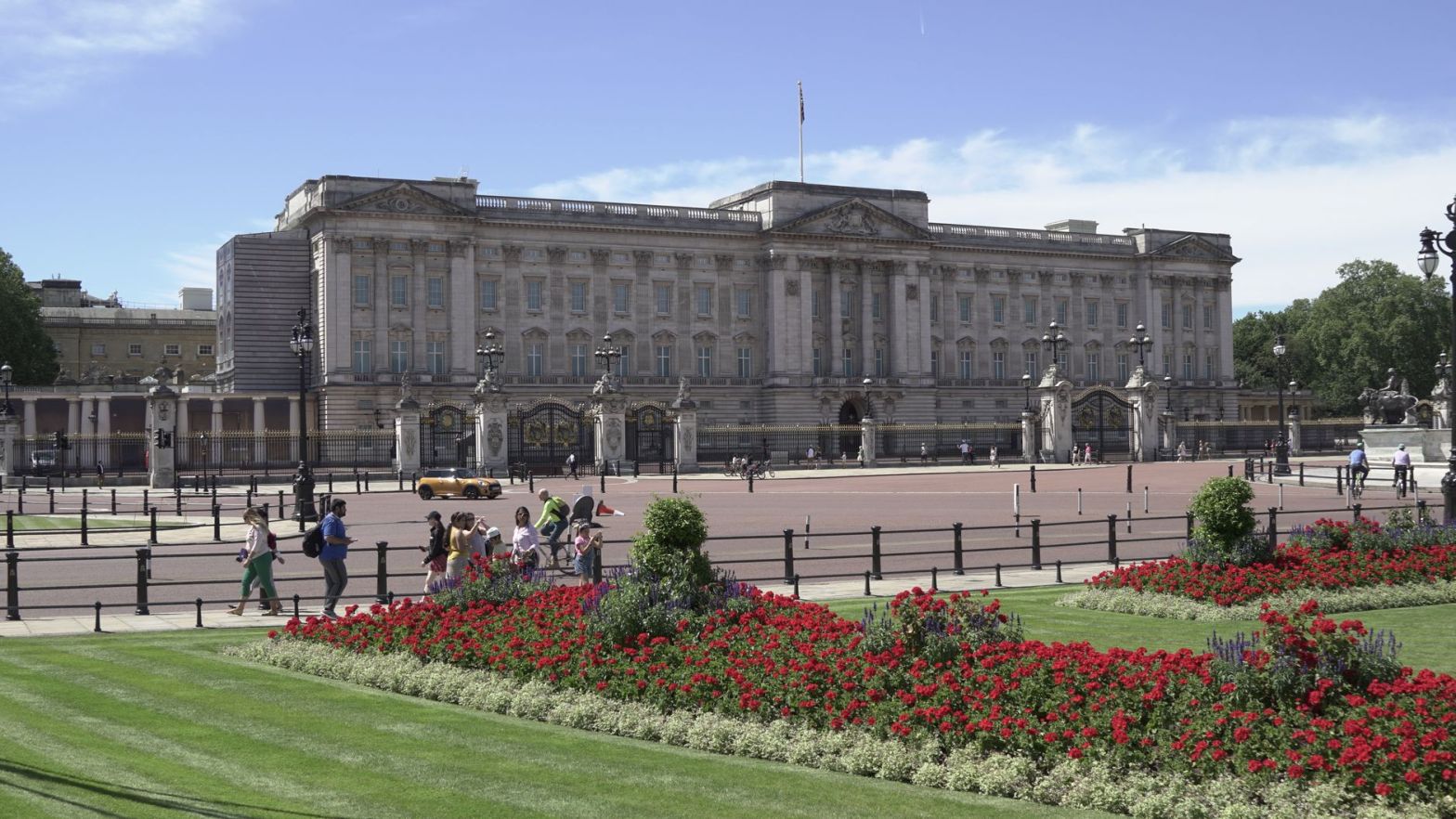
Another who, predictably, lauded Archer was ‘Queen’ Camilla, who stated: ‘Seldom does an author get to live a life as rich, varied and colourful as any of the characters in their books, or with as many surprising plot twists. He was not without flaws but friends will recall him as an irrepressible life force through all the many differing chapters of his life’. What about those who weren’t his ‘friends’, we may ask, who probably saw him more clearly than these celebs and Tory MPs?
It’s been yet another week of focus on the royals, as the King, Queen, heir and his wife continue to travel up and down the UK (often by gas guzzling helicopter) on a variety of pointless stunts in order to deflect from the Sussexes’ activities, the Charles Spencer revelations, and horror of horrors for the family, Andrew Mountbatten Windsor putting his toxic oar in once again. It’s long been clear that within his entitled mind he was very angry about his arrest last February and (what took him so long?) this week his lawyers challenged the police on the warrants used for his arrest and confiscation of key documents relating to their investigation of him. It was no surprise that the hearing (interesting it could be so soon when others wait years) decided that the documents were seized unlawfully, resting on the particular kind of warrant that the original judge had thought appropriate. But once again it’s shown us that the royals are effectively above the law. We were also expected to believe that the King had instructed Andrew that the stipend he pays him was not to be used for legal action, but what was there to stop him? Many have speculated what Andrew must have on his brother and other royals in order to get away with the antics he does.
Nevertheless, it’s likely that AMW has only won a Pyrrhic victory, resting on a technicality, the most absurd aspect being that the unlawful charge arose from these being confidential documents when Andrew is the very one charged with breaching commercial confidentiality by sharing information with Jeffrey Epstein, for his financial advantage, in his erstwhile role as trade envoy. It’s indicative of his entitlement and tone deaf conduct that he ever thought this was ok. The good news is that Thames Valley Police have been allowed to hang onto these materials ‘for the moment’, during which time they should prove vital in this investigation. Perhaps the worst thing for the royals, though, is the reputational damage caused by Andrew popping up at regular intervals, reminding us (as if we needed it) of the sheer cost of these luxurious people when the country is in poor financial shape. When the public finances are discussed three areas are so routinely regarded as off limits that they’re never even mentioned: the costs of the monarchy, the House of Lords and MPs parliamentary expenses.
But more members of the public are asking these questions and there has been support to lift the House of Commons restriction on discussing the Royal Family. Moreover, former Cabinet minister Lord George Foulkes is expected to tell the House of Lords the royal family do not offer value for money as he criticises the £100m Sovereign Grant. But he should also mention the royals’ exemption from FOI, numerous laws and several key taxes and the fact that the Duchy of Cornwall and Duchy of Lancaster bring in nearly £50m a year profit for William and Charles between them, with only voluntary tax being paid. At the very least those estates need to be brought under the portfolio of the Crown Estate and be properly financially controlled and audited.
Any progress towards changing or abolishing the monarchy is likely to be bumpy, though, and opposed by the complicit media and royal industry dependents whose livings depend on writing about the family in a favourable way. A good example of this syndrome is the BBC screening a documentary this week about Camilla and her reading when there are many others who’d be better models for this very important activity. There’s been an ongoing campaign for years to show the royals in a positive light in order to counter negative truths which have emerged, and the BBC is one of the main media culprits engaged in such whitewashing.
On the subject of the BBC there’s been increasing disquiet recently about the severe cuts being planned to programming and jobs (about 2,000 to go) because of the need to save £500m across the corporation over the next two years. Not unlike Parliament having the royal family, Lords and parliamentary expenses off limits when it comes to managing the economy, the BBC appears to be completely sidestepping the issue of obscene presenter salaries. So-called top presenters (but actually pretty poor journalists) in key roles like Political Editor Chris Mason, presenters Laura Kuennsberg (£407k – £409k), Robinson and Webb, are paid huge salaries, but on checking further I found that much higher than this bunch are radio presenters like Scott Mills, Radio 2 £745,000 and £749,999 before he was dismissed from the corporation, Greg James: £440,000 – £444,999 (BBC Radio 1) and Stephen Nolan (Radio Ulster and 5 Live). There’s simply no justification for this.
The first cuts we heard about, for example Radio 4 From Our Own Correspondent and The World Tonight, seemed poor choices because such programmes cover news we wouldn’t hear in the usual coverage, but we’ve now heard about further decisions such as extending Start the Week (which is mainly book plugs anyway) and cutting the popular consumer programme You and Yours, presented by Winifred Robinson since 2000, the programme having started in the 70s. Such decisions seem nonsensical to quite a few of us but whenever senior BBC executives are interviewed they always just dismiss these concerns put to them. Much attention was directed to the appointment of new Director General Matt Brittin (ex-Google) back in March but his statements and appearances have seemed pretty underwhelming since then, in my view. Along with many others I seriously questioned whether a former Google tech bro would be right for the BBC, but the organization seems obsessed with competing with the ‘streamers’ and with ‘digital content’, areas of Brittin’s expertise. But the BBC is about much more than this. You’d never think that the BBC will face the Charter renewal process next year, because of these issues and its persistent right wing, monarchist and Zionist bias of its news and current affairs coverage. As we know, many have stopped paying the licence fee, some are continuing to access BBC content without paying for it.
It was timely, then, that Labour MP Patrick Hurley last week wrote to Culture Secretary Lisa Nandy (who has been most inadequate since her appointment) expressing profound concern about the management philosophy of Matt Brittin. ‘I find these developments deeply troubling. The decision to axe programmes such as Thinking Allowed, Free Thinking, and You and Yours represents considerably more than just some sort of minor change to the broadcasting schedule. These are precisely the kinds of programmes that distinguish the BBC from commercial broadcasters. They inform, educate, challenge and enrich our national life. Their value cannot simply be measured by audience figures, podcast downloads or engagement metrics. This comes hard on the heels of announcements of negative changes in local and regional journalism, and short-sighted comments from Mr Brittin about using artificial intelligence in the making of television programmes. The BBC cannot be run as though it is Google, Spotify or Netflix. It is a public institution, established to serve the public interest, and its future must be ensured on that basis.The BBC must modernise and it must make responsible decisions about its finances.
But modernisation should mean finding better ways of fulfilling its public service obligations, not redefining those obligations around the priorities of commercial technology companies or the self-interest of its own management class’. Absolutely spot on!
He goes on to say more, making the crucial point that ‘independence does not mean an absence of public accountability, particularly when decisions appear to threaten the very purposes for which the institution was established’. The BBC’s senior management seem to have forgotten these purposes. It will be very interesting to see how Nandy and Brittin react to this important intervention, which voices the concern of many listeners and viewers.
Finally, when we often hear about businesses closing down or being taken over by overseas concerns, it was cheering to read about a thriving industry in an area not normally associated with it. Wales struggled after the demise of the coal mining industry but Cardigan, a coastal town in West Wales, has revived the denim industry which had been prominent there early this century. ‘Hiut Denim was founded by David and Clare Hieatt in Cardigan in 2011. The couple, both originally from Wales, previously ran the ethical fashion brand Howies. They set up Hiut – the brand name blends their surname with the word utility – with the goal of reviving denim-making skills in the town and training up the next generation of skilled craftspeople.
Elin Evans was one of those “grand masters”, as they are known in the company, with a lifetime’s experience of making jeans. Now 59, Evans is Hiut’s factory manager’. These garments sound quite a special product, borne out by some high profile customers. ‘The company insists its product is no ordinary wardrobe staple. Each pair is made by hand from 17 pieces of fabric, with a “made in Wales” label inside the waistband and another label signed by the member of staff who stitched the jeans. Hiut also offers lifetime repairs’. Interesting, too, that when they had financial challenges they invited in some investors and having started as minority shareholders, the German von Loeper family took over in 2025. CEO Johann von Loeper, 26, showed he was serious, though, by leaving his London based finance career in order to move to Cardigan. Long may they continue!