Sunday 1 November

Well, here we are again, in a place many of us expected and dreaded for some time: a second national lockdown from Thursday (subject to parliamentary approval on Wednesday), naturally briefed to the press late on Friday evening. This is a habit which undermines trust in the government even more, ensuring its bombshells fall on ground which at least has been prepared. But it has a massive downside, which short-termism merchants fail to take account of: in the days to come people will taking the last chance to mingle, party and get out and about, contributing to the spread, and it also adds to the massive uncertainty underpinning the nation’s compromised mental health. How ironic it’s been, that the timing of the Downing Street Briefing, scheduled for 4 pm today, then delayed till 5, then 6 30, finally starting at 6.45, is echoing the dither and delay characterising the government’s strategy throughout the entire pandemic. Is this the poor 21st century equivalent of the 1939 gathering around their wirelesses to hear Churchill say that as no assurance had been received we were now at war with Germany? There were more debateable issues with the press briefing than you could shake a stick at (not least the claims of humility, morality and responsibility) and many on social media were annoyed by the data not being properly configured for tv transmission and the constant ‘next slide, please’ requests, asking why, by now, hadn’t they acquired a Powerpoint clicker. It’s clear the absence of one isn’t about tech: it must in part be to convey status and the message that Vallance and Whitty should be freed from the potential for technical hassles.

This move comes weeks after the warnings of SAGE and the Chief Medical Officer and Chief Scientific Adviser and it seems unconscionable that the decision has only now been taken (hubristic government procrastinating on national lockdown in order to make the UK seem in a better position than other European countries) because advisers said imposing new national measures could “save Christmas from the coronavirus” and allow families to meet during the festive season. So Christmas (focus on family gatherings and retail opportunities) is now being made to drive government policy – marvellous. Novelist Jonathan Coe asked whether we can now expect a new government slogan – Save Our Christmas.

https://bit.ly/2HQVQKR

There’s still a failure to acknowledge what’s really missing – an effectively functioning test, track and trace system, its head, Dido Harding, seeming to have gone AWOL for weeks on end. As if we could be surprised by anything any more, George Monbiot’s piece in the Guardian (How teenagers ended up operating crucial parts of England’s test and trace system) is shocking. He describes and puts in context the £12bn spent on the system, which is still only reaching 60% of contacts when the critical threshold is 80%, to ensure real impact. This amount is equivalent to all the general practice budget, giving an idea just what a colossal sum has been wasted. ‘The government has created an opaque and unmanageable hybrid system of public and private provision, in which favoured corporations have received vast contracts without competition, advertising or even penalty clauses. Public health, reorganised in the midst of the pandemic to give even greater control to Harding and her chums, is in semi-privatised meltdown’.

Getting to the shocking revelation of the title, an anonymous (and ID checked) call centre worker informed Monbiot that the workers (supposed to be at least Clinician Band 6 NHS level) were mostly students and school leavers being paid the minimum wage, not the advertised rate of between £16.97 and £27.15 per hour. Not only that, they were recently ‘upskilled’ so their duties would include calling infected patients and discovering all their contacts over the previous fortnight. ‘To use the official terms, they have suddenly been promoted from level 3 call handlers to level 2 clinical contact caseworkers’.

The NHS defines the Band 6 role as ‘working as part of a team of experienced clinicians..must have a health or science degree or demonstrable equivalent experience or qualifications…experience in a field related to public health or health and social care services as a practitioner and registration with the relevant professional body’. This is a far cry from the level of these call centre workers, through no fault of their own, and it turns out the ‘upskilling’ consisted of 4 hours of online content, including a PowerPoint presentation, an online conversation, a quiz, some e-learning modules and some new call scripts. The worker told Monbiot: ‘We weren’t asked if we wanted to ‘upskill’: there was no consultation and no choice. We were just told. No one felt able to say no. After the announcement, I spent three hours crying about it. Other people in the team were crying and having panic attacks.’

Serco said and the Department of Health and Social Care confirmed that it had given these instructions, but insisted that those who’d accepted the roles had volunteered and that the role had been split in two so that each traced contact also gets a “qualified health professional”, who dispenses medical advice and decides whether or not to escalate complex cases. Monbiot’s informant categorically denied these two statements. The article paints a shocking and depressing picture of a situation which only came to light because of a leak: massive profits being channelled to inexperienced private providers, the NHS being privatised by stealth and underfunded to the extent of advertising for posts to be filled by volunteers (this has been happening in the talking therapies field for years) and minimal accountability for the money spent. ‘People ask me, “is this a cockup or a conspiracy?”. The correct answer is both. The government is using the pandemic to shift the boundaries between public and private provision, restructure public health and pass lucrative contracts to poorly qualified private companies. The inevitable result is a galactic cockup. This is what you get from a government that values money above human life’.

https://bit.ly/37Z4y4c

Added to this is the apparent collusion between government and the media to avoid the elephant in the room, the continuing absence of programme head Dido Harding, who now hasn’t been seen for weeks. Instead of going AWOL, she should be out there defending her record. It comes to something when even Conservatives are critical of such records, as exemplified by veteran MP Sir Bernard Jenkin, Chairman of the Commons Liaison Committee, who opined strongly last week that she needs to go. The coup de grace must be today’s Sunday Times revelation that the COVID 19 app, downloaded by 19m people, has been subject to a ‘software bungle’ and has consistently failed to send alerts telling people to self-isolate after they came into contact with infected people. A government source admitted that Android device owners were among the worst hit. This is also an equalities issue: ‘the mobile operating system (Android) accounts for more than half of UK phone users and is also disproportionately used by the less well-off, who are most at risk from the virus’. The problem has now been rectified, apparently, but many will not be comforted by the knowledge that the app was so ineffective for so long. And what about those who can’t or won’t download the app?

https://bit.ly/3edzbEp

Anti-corruption campaigner, barrister Jolyon Maugham, who runs the Good Law Project, is also on Harding’s case. ‘Appointing your mates to top jobs isn’t new or the preserve of the Conservative Party: we all remember “Tony’s Cronies” too. But it’s high time we put a stop to it. That’s why, along with the Runnymede Trust, Good Law Project is challenging the appointment of Dido Harding, as well as a string of other appointments which were made with seemingly no advertisement or fair recruitment process’. It will be interesting to see if this campaign makes any headway.

An article in The Times could make us wonder if the government has taken its foot off the complex track and trace gas, because of an unrealistic idea that we will have less need of it. In news that sounds a little far-fetched, the government is said to have purchased from Big Pharma Pfizer sufficient vaccine doses for 20 million people, ‘….. ready to distribute before Christmas, with the first doses earmarked for the elderly and vulnerable’. But since when has the government shown genuine concern for ‘the elderly and vulnerable’? The government’s move sounds rather risky, since the vaccine has not yet been approved for use. Just as well, then, that the UK has also secured early access to five other vaccines currently in development.

A useful reality check comes from Kate Bingham, leader of Britain’s vaccine task force. Writing in the medical journal The Lancet, she said it was likely that we would need several vaccines to end the pandemic. “There will not be one successful vaccine, or one single country, that is able to supply the world. And crucially, ‘It is important to guard against complacency and over-optimism’.

Speaking of ‘complacency and over-optimism’, it’s ironic that this article was only published on Thursday, quoting Communities Secretary Robert Jenrick still resisting the need for a national lockdown. He told Sky News: ‘We don’t want to create a second national lockdown. We know that has some effect on bearing down on the virus but we also know it’s immensely disruptive in other regards to people’s lives and livelihoods and broader health and wellbeing, so we will do everything we can to avoid that situation’.

https://bit.ly/3ee7WJC

All of this will leave such a bad taste in people’s mouths that we can surely expect the cosy Boris and Carrie Sunday evening broadcast, part of the Pride of Britain awards, (ironically, praising the NHS) to be postponed. Cartoonist Martin Shovel tweeted: ‘The toxic combination of libertarianism, neoliberalism and incompetence at the heart of this government guarantees that the handling of the second wave will be a disaster for our country!’

https://bit.ly/322m2cu

As the total in England living under Tier 3 topped 8 million last week, 50 Northern MPs, including the ‘red wall’ ones, wrote to the PM demanding ‘a roadmap for the way out of lockdown’. Many of them must feel on a sticky wicket, having been victoriously elected to longstanding Labour seats, and now no doubt confronted by angry constituents chafing against restrictions and seeing their businesses going down the drain. How cowardly, then, that 14 of the 50 signed anonymously, some saying they didn’t mean it to be a demand, etc. Will they now be relieved they’re about to be overtaken by events?

https://bit.ly/2HTx6RD

Meanwhile, former Supreme Court judge Lord Sumption, long having opposed lockdown policy, is once again apoplectic about what he sees as the threat to our liberty we are sleepwalking into. “The British public has not even begun to understand the seriousness of what is happening to our country. Many, perhaps most of them don’t care, and won’t care until it is too late. They instinctively feel that the end justifies the means, the motto of every totalitarian government which has ever been … The government has discovered the power of public fear to let it get its way…’. Sumption bases his arguments on the evidence of government by-passing of the legislature, starting with the proroguing of Parliament (later ruled unlawful) and continuing with the suspension of many normal procedures during the pandemic, all constituting an avoidance of scrutiny. ‘Governments hold power in Britain on the sufferance of the elected chamber of the legislature. Without that we are no democracy. The present government has a different approach. It seeks to derive its legitimacy directly from the people, bypassing their elected representatives.’

Having special relevance to the imminent second lockdown (have the appropriate regulations been prepared this time?) he exposed what he sees as the illegitimacy of giving lockdown orders without making statutory regulations. ‘Even on the widest view of the legislation the government had no power to give such orders without making statutory regulations. No such regulations existed until 1 pm on 26 March, three days after the announcement… I do not doubt the seriousness of the epidemic, but I believe that history will look back on the measures taken to contain it as a monument of collective hysteria and governmental folly.’

https://bit.ly/366sMr1

Occupying a lot of airtime earlier in the week but now somewhat pushed down the news agenda were the ongoing debates about free school meals and the deaths of migrants, but these will continue to rumble on until they’re resolved, the latter being much trickier than the former.

Despite the doom and gloom, some benefits of the pandemic have been identified and now the Guardian’s European edition reports on research suggesting that the pandemic has resulted in a reduction in populist tendencies in the eight countries surveyed. The good news is that the YouGov/Cambridge Globalism Project (surveying 26,000 people in 25 countries, eight the same as last year’s survey) showed a ‘steep decline’ in the eight, but the bad news is that political scientists thought populism could recover when the economy becomes the main focus of the crisis. The eight countries cited are Britain, Denmark, France, Germany, Italy, Poland, Spain and Sweden.

https://bit.ly/3oWqfZ0

In his new book, Feline Philosophy: Cats and the Meaning of Life, philosopher John Gray makes a case for learning the wisdom of cats: it’s not such a bad idea, reflected by the meme of Larry, the No 10 cat, sitting at the PM’s lectern appearing over and over on social media. Larry for PM – he couldn’t do a worse job. Gray believes that humans turned to philosophy principally out of anxiety, looking for some tranquillity in a chaotic and frightening world, telling themselves stories that might provide the illusion of calm. He says cats wouldn’t recognise that need because they naturally revert to equilibrium whenever they’re not hungry or threatened. The article alludes to Gray’s 2002 book (Straw Dogs: Thoughts on Humans and Other Animals), in which he was thought to have dismantled the history of western philosophy. It particularly attacked the prevalent belief in the steady forward progress of humankind brought about by liberal democracy. ‘I would say that a lot of torment in our lives comes from that pressure for finding meaning…. We struggle with the idea that there is no hidden meaning to find. We can’t become cats in that sense – we probably will need to always have the disposition to tell ourselves stories about our lives – but I would suggest a library of short stories is better than a novel’. Demonstrating that major events were not predicted by experts eg the banking/finance crisis, he believes that ‘politics is a succession of temporary and partial remedies for permanent and recurring human evil’ and ‘baser tribal instincts’ and ‘human folly’ won’t be prevented by the advance of enlightened thought. Coming back to cats and their relevance, ‘Cats live for the sensation of life, not for something they might achieve or not achieve… If we attach ourselves too heavily to some overarching purpose we’re losing the joy of life’. Sobering stuff.

https://bit.ly/3efEvHq

A Guardian article further highlights what seems quite a contrast regarding  people’s commitment to health and fitness during the pandemic, some reporting greater takeaway and alcohol consumption, others less and likewise with exercise, some taking next to no exercise and others using the lockdown to get fit. ‘Chocolate sales soar as UK shoppers comfort eat at home amid Covid’ begs the question what happened about the government’s anti-obesity strategy, which would already have taken a hit from the Eat Out to Help Out campaign, since many of the restaurants featured were purveyors of fast food. ‘While the £50m sales increase is only 3% up on the total value of chocolate sales, the amount of chocolate eaten is likely to have risen by two or three times that level because the kind of chocolate bought in supermarkets is so much cheaper’.

While a survey found that half the UK population found their weight more difficult to manage since the start of the crisis, retail analysts attributed the rise in chocolate sales down to the ‘lipstick effect’– a spending pattern where cheap treats sell especially well during tough economic times. (Interestingly, the online survey focused on both Slimming World members and what they term ‘a representative sample of 637 adults in the general population’ and asked respondents their opinions about their general health, mood, diet, alcohol intake, physical activity, and weight management.

https://bit.ly/381oELa

Finally, an article which attracted much comment in The Times this week (Your get up and go will have gone by 54) reported on research in Norway which concluded that ‘Fifty, it turns out, may not be the new thirty after all….. people lose their spark and the “get up and go” to try new things when they hit 54’. The Norwegian psychologist explored, across different age groups, the links between ‘passion, grit and a positive mindset’, the results suggesting that ‘from the age of 53 this drive fades and more is needed to motivate people in middle age’. The correlation between passion and grit was found weaker in those over 50, but both traits were needed for ‘get up and go’. ‘The study also found that across the age groups males had significantly more passion than females, scoring an average of 4.12 compared to 3.85. For grit and mindset the differences between genders were not significant’.

The study’s lead author, Hermundur Sigmundsson of the Norwegian University of Science and Technology (Trondheim), said: ‘It’s more difficult to mobilise our grit and willpower, even if we have the passion. Or we may have the grit and willpower but aren’t quite as fired up about it. The correlation between grit and the right mindset diminishes with increasing age. The willpower and belief that we’re getting better aren’t as closely linked any more.’ He then urges people to identify meaningful activities and interests they can bring grit and willpower to and stresses how important it is to ‘ignite the spark, whatever your age’. I couldn’t agree more: lack of spark seems very common but in my view represents more than a step down the road to a geriatric mindset. The article attracted 453 comments, a good number contradicting these findings, eg ‘I am sixty nine and set up my business when I was fifty four, and made a success of what I do. This was after a relatively successful corporate career. I am still working and passionate about what I do, positive and determined’.

https://bit.ly/2TP9Abb

Saturday 24 October

During a week dominated by the Greater Manchester standoff, more local mayors giving the lie to the PM’s insistence that he’d had some ‘great’ conversations with them, COVID cases continue to rise at an alarming rate, with more and more areas of the UK going into Tier 3 or total lockdown. As if it needed stating, there’s growing consensus that what’s really needed to keep the virus in check is a properly functioning test, track and trace strategy, but this seems a fond hope given the government’s ongoing commitment to the Serco travesty. It felt the last straw for some Sevenoaks residents earlier this week to have been sent to a non-existent test centre there, some driving around for an hour trying to find the facility. Officials were investigating how this came to be listed on the government website when it had not yet been ‘signed off’. Not long after this came news of an £80 test to be offered at Heathrow, for those needing a test prior to flying to places like Italy and Hong Kong. Transport Minister Grant Shapps made no secret of yet again enabling the private sector (in this case Collinson Group and Swissport) to profit from this development. ‘Public Health England will set the quality for the test itself and then it will be up to the private sector to provide a test up to that quality’. A telling statement on Collinson’s website reads: ‘With over 25 years’ experience, Collinson Group is a global leader in shaping and influencing customer behaviour to drive revenue and add value for its clients’.

Brexit issues also continue to dominate the news agenda, one video clip illustrating Theresa May’s incredulity at Michael Gove’s ‘assurance’ that security would be more easily assured by leaving the EU. Increasingly, the government is getting flak from its own side and this week the Guardian’s John Crace turns the attention of his withering pen to Gove. ‘Gove appears to have no vestigial sense of shame. Politics for him is just a theatre in which truth and lies are interchangeable, and he retains an outward appearance where excessive politeness is merely a front for outright contempt. “I am not blithe or blase,” he said. Sometimes, a politician’s lack of self-awareness is breathtaking. According to the Govester, 10 weeks was more than enough time for all those businesses that were hopelessly unprepared for a no-deal Brexit to put in place all the systems they needed should the all too thinkable become a reality’.

Alluding to Opposition questions about Kent lorry parks and recruitment of new customs officials, ‘Mikey just blanked those questions. He wasn’t here to talk to problems, he was here to sound vaguely threatening to Johnny Foreigner. The whole play had merely been a charade. A piece of posturing….Because everyone knew how the comedy would end. The UK could not afford a no deal on top of the economic damage of the coronavirus pandemic. So the EU would give a little and the UK would give a lot and some sort of deal that Boris had always insisted he could never agree to would be negotiated. And the Govester would be first on his feet in the Commons to declare the deal that was noticeably worse than had been on offer under the Maybot a government triumph. What’s more, he might even believe it’.

Rarely idle, it seems, the same pen also slated Housing Minister Robert Jenrick and the PM, the former on the Greater Manchester support package wrangling, refusing to go above £60m: ‘You’d have thought that if anyone was capable of brokering a financial deal between central government and Greater Manchester it would have been the communities secretary, Robert Jenrick. After all, Honest Bob has a track record of magicking money out of thin air’. In the PM’s case there was slating of his Greater Manchester stance: (‘For the sake of £5m Boris Johnson was prepared to grind the least well-paid workers into poverty. All the talk of a levelling-up agenda had been just bullshit. The real agenda was levelling down. A government that had talked at the beginning of the pandemic about doing “whatever it takes” had switched to the punishment beating of whatever you get’).

This was followed up by deconstruction of his PMQs performance, the frequent lying and the blaming of London Mayor Sadiq Khan for the ‘need’ to make swingeing cuts to Transport for London. ‘It wouldn’t be prime minister’s questions without Boris Johnson being accused of telling at least one lie. Indeed, in recent months it has often felt as if Boris has taken a bet with Dominic Cummings to see if he can outdo himself on the lies of the week before. But normally Boris saves his biggest fibs for his exchanges with Keir Starmer. This time he reserved his top Trumps for London MPs concerned about planned changes to TfL and council tax’.

‘It was also telling just how personal Johnson’s hatred for Khan is. He can’t stand the fact that Sadiq is more popular in London than him, nor can he bear it that Khan has unarguably done a better job than he did as London mayor. So Boris went into hissy-fit overdrive where one lie was immediately topped by another. Sadiq had bankrupted the city, etc etc…..None of which was true. According to TfL’s accounts, since Khan took over from Johnson in 2016 he has reduced the deficit by 71% and increased cash reserves by 16%. That TfL is now in trouble is entirely down to the pandemic. Not even Johnson’s own MPs could stomach these lies. Asking for the country’s trust during a national crisis when you can’t even tell the truth about an audited balance sheet is an uphill struggle. If the prime minister will lie about this, what won’t he lie about?’

https://bit.ly/3mbfaky

Once again the World Health Organisation has expressed extreme concern about the COVID situation and lamented the lack of cooperation between countries, so it seems helpful to be aware of how they’re experiencing the pandemic rather than focusing exclusively on the UK. This week there was a pictorial record of Paris before and after the curfew, the first conjuring a jolly scene of busy streets and bars, where little distancing seemed to be going on, and the second showing empty streets and grills pulled down over the previously lively venues. Many UK towns and cities can boast similar depressing backdrops, the likelihood being that some venues may never open their doors again.

https://bit.ly/3jrw6l9

Meanwhile, an article by Karl Lauterbach (SPD member of the Bundestag and professor of health economics and clinical epidemiology at the University of Cologne) explores whether Germany’s first time COVID approach of politicians and scientists working together will work second time round. He describes three major factors of the initial strategy: ‘luck’ (but surely more good sense in reacting quickly to what was seen elsewhere) in that Germans seeing what happened in Italy immediately reduced their mobility; an immediate government decision to be straight and transparent with the public, with scientists enabled to contribute to the communication strategy; and the involvement by Berlin of local and municipal governments and of opposition parties, enabling consensus building. Contrast this with the UK. Lauterbach also cited other contributory factors, such as avoiding lockdowns and curfews, recommending mask wearing early on and having an effective testing strategy.

As to measures adopted for this second wave, unlike the UK the Germans have divided the country into zones with either more than 35 or more than 50 cases per week per 100,000 inhabitants. ‘These limits have proved to be useful for predicting the success of contact-tracing infected persons. The aim is to have as few areas as possible declared high risk’. Long-term, there’s recognition that this will be a difficult journey – there seems to be reliance on the development of a vaccine, but no expectation of significant improvement until May 2021. A key factor is the German government has taken the population with it. ‘Uncertainty and doubt are not a disgrace for scientists or politicians at this time. What is disgraceful is excessive self-confidence, self-righteousness or dishonesty towards fellow human beings’.

A reader highlighted the importance of effective communication: ‘When the pandemic started, virologists and epidemiologists together with federal and local governments informed and communicated with the German population via TV news and special TV reports and other media channels (print and online media). The same happened on district and municipal level. The information was so extensive that no one could claim to either no know or be confused. It was this clear and decisive stance that counted for a lesser expansion of the pandemic’.

https://bit.ly/3orlMNM

Having been under the spotlight for some time, this week has seen significant mental health coverage by the media, including the difficulty of obtaining help for children and young people (‘Psychotherapist says accessing NHS is harder and most services offered only online or by phone’) and the ‘irreparable damage’ being done to prisoners’ mental health due to the imposition of solitary confinement during the pandemic. Yet again, we have evidence that NHS mental health services aren’t working effectively and are not coping. One parent of a disturbed teenager said ‘We have been directed to websites that don’t exist and, shockingly, advised to Google side-effects of an antidepressant medication when I called to say that my child’s mental state had significantly worsened since she started to take them’. This parent had been under the impression that child and adolescent mental health services were where to go for help. ‘This is not the case … It has been extremely stressful and I just want the best help for my daughter’.

A child and adolescent psychotherapist working in a school and interviewed anonymously reported that as the pandemic progressed, there had been around a fivefold increase in attendance, with a notable increase in eating disorders. ‘I think accessing the NHS is harder and all that is offered now is pretty much online. People want children to be seen, and the only way to do that at the moment is to pay for it’.

https://bit.ly/3mkpZRu

Departing Chief Inspector of Prisons for England and Wales said ministers and officials should see the coronavirus crisis as a chance to ‘reset the aspirations for what prisons could be about. While agreeing it was right to focus on the pandemic, he was keen to emphasise that ‘the underlying systemic problems within the prison estate, including drug use, violence and self-harm, had not gone away’. Capturing the common syndrome of short-termism, Clarke said the impact of deteriorating mental health, as well as lack of access to rehab programmes and education, would be felt further down the line.

This is a key point, especially for those inclined not to take prisoners’ health and rights seriously. ‘There’s a risk that very little, if anything, is being done in terms of preventing reoffending. There’s an overriding public interest that people should emerge from prison less likely to reoffend and this is damaging that possibility’. The Prisons Service also came in for some (polite) flak for its defensiveness rather than a preparedness to admit and address the problems. It will be interesting to see what kind of job the next incumbent does. ‘The government adviser and former youth justice boss, Charlie Taylor, is taking over the £135,000-a-year chief inspector role next month and is expected to be in the post for three years’.

https://bit.ly/31BwRSA

A charming and uplifting piece on BBC Woman’s Hour this week featured a community of nuns in Sussex called the Poor Clares of Arundel, who have just released an album called Light for the World, described as ‘traditional plainchant with added beats’. Sisters Leo & Sisters Aelread are interviewed at the end of the programme. ‘We do it as part of our normal living’…. the sisters admit that not all of them can sing but this Earthly Kingdoms excerpt sounds pretty celestial.

https://www.bbc.co.uk/programmes/m000nsrp

Finally, online clothing retailer ASOS, which has done much better during the pandemic than many of its competitors, reports a shortage of tracksuit bottoms. This isn’t surprising, since working from home and less socialising has increased the use of leisurewear. This begs the question of how many of the well-attired people we see on Zoom are only smart on the upper half, the lower half being encased in jogging bottoms. A second question poses itself: will we ever get used to non-elasticated waistbands again?

Saturday 17 October

With a week like this, during which COVID cases have risen by 50% (now about one in 160 according to the Office for National Statistics) and the government has imposed its much-trailed Three Tier strategy, it could be easy to overlook other important news, such has been the resulting outcry. Under the new rules, nearly a third of the country – more than 17 million people – face localised restrictions. It has seemed that the government is trying to drive a wedge between the northern politicians, some going along with the government’s Tier 3 status for their areas, but Andy Burnham for Greater Manchester still resisting it, without further financial support. It’s now thought the restrictions will be imposed on Greater Manchester regardless. Having largely ignored local politicians and public health experts for months, prioritising hubristic centrist ideology over the nation’s health, ministers are finally, when it suits them, talking about the importance of ‘putting party politics aside’ and ‘working together’. You couldn’t make it up. Regarding Tiers 2 and 3, at one fell swoop the hospitality sector has taken a major hit (likely to prove fatal in numerous cases) and the mental health of single person households (15% of the population) has been put further at risk through the prohibition on separate households meeting inside.

I forecast widespread non-compliance (plenty of evidence already) and the mass purchase by pubs and restaurants of environmentally unfriendly patio heaters, if they have the funds and the space for outside seating. Illogically, you can visit a restaurant alone and therefore be in the same space as many more households, and are cash-strapped venues intending to ask customers whether they’re in the same household? If faith in the PM and his government wasn’t already seriously undermined, it surely would have been with Chief Medical Officer Chris Whitty’s statement at the press conference that he was not confident even this strategy would be sufficient to slow the spread of the virus. Immunologist Professor Sir John Bell has just said the same thing.

It also emerged that SAGE warned weeks ago that more urgent action was needed but the government ignored it. Besides the ‘circuit breaker’, SAGE had recommended advising all who could to work from home; a ban on household mixing in homes, except for those in support bubbles; the closure of all bars, restaurants, cafes, indoor gyms and services such as hairdressers; and all university and college teaching to be online “unless absolutely essential. So, it looks quite possible that even these latest measures will prove insufficient and we will be back to general lockdown within weeks, except, unlike countries like France, Spain and Italy, the UK lacks the resource to police it, leading to a quasi-lockdown.

Many have commented on the no-brainer that what’s really essential in slowing the progress of the virus is an effective test, track and trace system, but we are still no nearer that given the litany of failures it’s been dogged by. And still no sighting of Baroness Dido Harding, who should be out there ‘straining every sinew’ to improve it and defending her record. It’s almost as if ministers have agreed to shield her from scrutiny. It emerged that only around one fifth of those who should be self-isolating were actually doing so but this couldn’t be solely attributed to selfishness, as in many cases people can’t afford it without support. Labour’s Zarah Sultana tweeted: ‘People need a liveable income to be able to self-isolate, but working class people aren’t getting that support. Instead, as the PM made clear to me today, many have to choose between self-isolating in dire poverty, or the risk of a £10,000 fine. Outrageous’. Although yet again the devolved nations seem steps ahead of the Westminster government, the science and experience outside the UK must make us wonder whether lockdowns don’t work, since the minute they’re eased the situation worsens. A Radio 4 listener tweeted: ‘Lockdowns are a blunt instrument – so much points to the lack of an effective track and trace system, which the government isn’t going to fix any time soon, thanks to its disastrous crony outsourcing policy’. Another said: ‘Phew!! It’s official now. UK is following herd immunity strategy. Tiering is just a whitewash’.

Meanwhile, both the government and the media continue to ignore the wisdom of Independent SAGE, which ran another webinar on Friday which anyone could join, demonstrating transparency and inclusiveness the government has rarely shown any grasp of.

Guardian sketch writer John Crace wrote several disembowelling pieces this week, starting with this description of that press conference. ‘Johnson looked knackered before he even started… For a moment it looked as if the narcissist had been confronted with his own sense of futility. A situation that he couldn’t bend to his will, no matter how delusional the thought process. He is cornered by hubris: a man hating every second of his life but condemned to experience its unforgiving horror. Not even the health secretary could be bothered to attend to watch this latest meltdown….Yet all he had really achieved was to remind everyone that he was out of his depth and had no real answers to anything. Like all of us, he was just dancing in the dark. Beam me up, Whitty’. This gets close to the central message of this blog:  the nation’s mental health is severely undermined in an already gruelling situation when its leaders, who we justifiably look to for psychological ‘containment’, are incapable of delivering it, cannot be trusted and have no real authority. A Radio 4 listener tweeted:  ‘Time is of the essence…’ says Boris Johnson, whose whole government has had an irony bypass. Shame he didn’t say so before as so much time has been wasted by his uncoordinated and corrupt CovidUK strategy’.

https://bit.ly/343cGhH

Crace also slated the PM’s performance at Prime Minister’s Questions, in a piece called ‘Starmer has the intellect, the economics, the science. Johnson has his apathy’ suggesting that Johnson is no longer even pretending to counteract Starmer’s forensic forays, instead falling back on trying to ‘make PMQs look like a meaningless charade, to minimise the beatings’. He was apparently surprised at an entirely predictable question, that is at what point did he ‘decide to abandon the science and cobble together a three-tier regional system with which almost no one was happy?’ ‘Boris looked genuinely bemused. As if he had quite forgotten it was Wednesday and had been hoping for a lie-in. So he did what he always did. He filled dead air with dead words. When he had said he was going to follow the science, he had never intended to imply he would do so faithfully. Rather he was going to pick and choose the bits he liked’. ‘Of course Boris Johnson won’t take Keir Starmer seriously’ said one tweeter at the PMQs hashtag – ‘Sensible policy must be sacrificed on the altar of Tory hubris’.

https://bit.ly/3k0JNIG

Speaking of hubris, we can’t ignore the Brexit news this week and clear evidence that the PM’s sabre rattling brinksmanship and setting of unnecessary deadlines is rapidly unravelling. The epitome of fibs must be the regular allusion by politicians to an ‘Australia type deal’ (aka No Deal), a disingenuous way of saving face skilfully demolished on Any Questions last night by former World Trade Organisation DG Pascal Lamy when wheeled out by trade policy minister Greg Hands.

Not content with two PM eviscerations in one week, Crace turned his attention yet again to his other favourite target, Health Secretary Matt Hancock, again painting a worrying picture of cognitive dissonance. In a piece entitled ‘Teetering Matt Hancock ignores head and heart and sticks to PM’s script’ and subtitled ‘Door Matt knows a circuit breaker is the right way to go but he lacks the strength to stand up to Boris’, he describes what he calls a ‘spectacular’ fall from grace. He suggests that at the start of the pandemic Hancock seemed to have a grasp of the situation but one failure and missed target after another soon put paid to that although he could persuade himself he’d stuck to ‘the science’. ‘But even that escape clause for his conscience was snatched away once the prime minister chose to ignore Sage’s recommendation to introduce a circuit breaker in September and then chose not to disclose the evidence until this week’…Now Door Matt finds himself ground down by Boris Johnson’s desperation to please the crowd and he just reads from whatever script is put in front of him. He doesn’t even bother to check the details as he can be fairly certain they are incorrect’…. He apparently wheeled out the cliché ‘Things will get worse before they get better’, as if that was remotely acceptable. ‘He wasn’t kidding. We now have a government masquerading as a piece of self-destructive performance art’.

https://bit.ly/3dw54aT

Following on from last week’s piece about the massive amounts spent by the government on Brexit consultancy, more news emerged this week of colossal sums disappearing down the test, track and trace rabbit hole. Apparently management consultants including the Boston Consulting Group are being paid as much as £6,250 a day to work on the system, amounting to an ‘eye watering’ £12 bn. But the BCG tentacles have reached further than this and we’re told that ‘publicly available data collated by the Spend Network show that they were awarded contracts worth at least £18.3m for work related to the pandemic’. As if this wasn’t jaw dropping enough, it seems that BCG are actually amongst smaller fry in this scenario – ‘BCG’s 40 workers are only a small fraction of the 1,000 consultants employed by Deloitte on the system’. The profoundly worrying thing (amongst others the Good Law Project is trying to plumb the depths of consultancy contracting), is the lack of transparency resulting from the suspension of normal tendering procedures during the pandemic. ‘None of these appointments has been announced publicly, no costings have been published, and there is no information about how the Department of Health and Social Care (DHSC) will secure value for money from the consultants’. Another often overlooked downside is the loss of organisational expertise and infantilisation which increased dependency on consultancy leads to.

https://bit.ly/358qVkC

Much has been said about the crisis in social care, the can kicked down the road for years by successive governments, but news today should have been a real wake up call. Whereas days ago, looking ahead with more promises, the PM said he was going to fix social care (when?), it was said today that the sector needs urgent funding within the next few days – not weeks or months – as private homes were in danger of going to the wall. The crisis is due to the number of empty beds due to the pandemic, deaths and new residents unable to move in, but also the funding model often based on private equity. Closures would leave thousands without a home or a job and be simply unacceptable anywhere, let alone a developed country.

A Department of Health and Social Care spokesperson said: ‘We recognise the challenges facing the social care sector and we are doing everything we can to support it’. Nowhere near enough, many have argued. The National Care Association said: ‘The statistics are alarming and provide a stark warning as we anticipate a second wave. Social Care provision has been fragile and ignored for too long’. Nevertheless, some policymakers don’t advocate an entirely national service. This article on the King’s Fund view makes clear the appeal this may have but points up key differences, eg social care has eligibility criteria and NHS doesn’t. ‘Who is eligible for publicly-funded care, who manages and commissions it, who provides it, who regulates it and how it is funded are distinct issues that don’t all have to sit in the same place and may not be best carried out at a national level….. a nationalised service would be hugely expensive, legally difficult and time-consuming to implement, without necessarily delivering the benefits its proponents expect’. The King’s Fund recommends a mix of providers – public, private and voluntary, locally commissioned and those organisations ‘embedded in the community’. This in itself is problematic as it takes time to achieve this engagement and embedding, but the real sticking point is that all this ‘requires local authorities to pay providers a fair price for good quality care, which in turn requires national government to fund councils adequately’.

https://bit.ly/3lRPs4n

It seems to me a big mistake to have allowed private equity anywhere near the care home sector – sensing decent gains in the wake of government austerity and losses in other PE areas, these companies ‘piled in’, only later to reap the overlooked complexities and mounting debt. But, as so often, short-termism prevailed and PE may have felt welcome at a time when central government was making severe cuts to council budgets.

https://pitchbook.com/news/articles/pandemic-private-equity-backed-nursing-homes

As the importance of nature moves further up the public agenda in terms of maintaining mental health and tackling climate change, it’s puzzling that adherents of ‘wild swimming’ must be regularly ignoring notices warning that this activity is prohibited in many waters and that only one in seven of English rivers are considered ‘ecologically healthy’. The Week tells us that the Environment Agency set a target for 75% of English rivers and lakes to meet the ‘good’ standard by 2027 (that’s quite some way ahead) but predicts that it won’t be achieved. The main barriers are said to be raw sewage discharged from storm overflows and agricultural run-off but there’s also the danger of swimmers contracting Weil’s disease from water contaminated by affected animals such as rats. The situation in Scotland sounds better (64% of rivers rated as healthy) but the average across Europe is only 40%. This is interesting as not long ago there was an interesting article about how the main rivers in some European capitals were being geared up for swimmers. It sounds a great idea as long as health and safety measures were in place but what about all the river traffic?

One development excellent for both physical and mental health which sounds far more promising is that of mapping Britain’s intercity footpaths via a ‘slow map’. A BBC piece about this interviewed one woman who had never walked to the next village just a few miles away. The assumption of car use and more inactivity mean this won’t be a surprise to many, but a major disincentive is the lack of known routes away from main roads, where the pavement soon disappears and heavy traffic makes the experience unpleasant. ‘Geographer Daniel Raven-Ellison is offering a solution; a new map created by volunteers during lockdown to show the best walking routes between all of Britain’s main towns. All that is needed now is 10,000 keen walkers to test out the routes on his ‘slow’ map’. Interestingly, the article carries a photograph of a walkway looking remarkably like one near here in North London. It also makes clear just how important this development is. ‘Coronavirus is changing life in many unexpected ways and those who think more walking should be part of our lives now have a new tool. Maps do not just describe the world, they can often help change it’.

https://www.bbc.co.uk/news/uk-54562137

Finally, the Radio 4 series of profile programmes is typically bang on topical with tonight’s subject of Liverpool mayor Steve Rotherham. A former bricklayer, it’s cheering to hear of politicians who’ve had ‘a proper job’.

https://www.bbc.co.uk/programmes/m000nkhh

Saturday 10 October

I seem to be saying this most weeks but it has indeed been another eventful week, some developments proving quite shocking when we thought it couldn’t get any worse. Leaving aside the drama across the Atlantic, the main one here must be being the loss under the aegis of Public Health England and the discredited Serco Track and Trace of 16,000 tests, meaning so many details weren’t entered into the system until a week later. Their contacts were therefore not traced, leading to possibly thousands of potential people remaining uninformed and at risk of spreading the virus. IT experts and others were shocked on learning that what ministers tried to dampen down by calling a ‘glitch’ was largely due to trying to send data via an outdated version of Excel, spreadsheet software not designed for mass data transmission, rather than a recognised database platform.

The wider context of the ‘glitch’ is a system which simply isn’t working, despite Health Secretary’s protestations to the contrary. Matt Hancock was lambasted in the House after it was revealed that just 33% of in-person test results were returned within 24 hours, months after the PM said he wanted all test results delivered within a day. As cases are rapidly rising, prompt testing is needed more than ever, but supply problems persist, many being forced to isolate at home because they can’t obtain a test or get to a centre. And more is emerging about the prevalence of asymptomatic cases: in a national survey more than 80% of people who tested positive had none of the core symptoms of the disease the day they took the test. Matt Hancock seems to have adopted a defensive strategy which consists of no longer attempting a response to critics but simply rudely dismissing them or coming out with a non-sequitur statement, as he did with Labour’s Dawn Butler last week.

Hot on the heels of the testing debacle came news, not surprising, of further restrictions in the North of England and elsewhere, and a leaked plan for a three-tier approach to restrictions and lockdowns. More and more areas are being subjected to lockdowns, possibly a cynical ploy to increase the numbers of locked down areas, approaching a general lockdown in all but name. Meanwhile, north of England mayors and public health experts are up in arms about the lack of consultation, despite business minister Nadhim Zawahi emphatically declaring that they had been consulted. I’d be more inclined the believe the angry Greater Manchester mayor Andy Burnham, who described on Question Time and other programmes a discussion with ministers where agreement appeared to be reached, but it actually hadn’t, and the first the mayors knew about imposition of further restrictions like households not mixing was seeing it in the papers. The government seems to have no idea how contemptuous this would feel to the northern politicians and how difficult it would be for them to deal with the fallout. Besides the need for proper consultation, Burnham’s key demand was no further restrictions without support: the thousands of staff working in the bars and restaurants shut down overnight had no source of income.

One of Guardian sketch writer’s Boris Johnson eviscerations this week naturally focused on his appalling conference speech, where he sounded like a parody of himself, talking bullishly about COVID19 being ‘the trigger for major social and economic change. Try to think of the virus as an opportunity rather than a disaster’ etc. ‘But up until now, he’s got away with it (being a ‘conman’) – in his public life at least – because the country has been happy to collude with him. It wanted someone who could tell a few gags and promise that everything would be OK in the end. The narcissistic fantasist as national saviour. But the last eight months have changed all that. The country has grown up in the time of coronavirus’. Felt to be a profoundly misjudged speech, in which Boris alluded to people being ‘fed up’ with the virus and how he was working to get things back to normal…. ‘There was nothing on the toll the last eight months had taken. No apologies for government inaction, failure and incompetence that has seen the UK leap to near the top of the global COVID mortality scale’. A fantasy land speech including the promise to fix social care (a can kicked down the road so often it must be severely dented by now) where the PM failed to even convince himself, let alone party members and viewers.

https://bit.ly/36PnIsI

The second John Crace evisceration focused on Boris Johnson’s increasingly poor and bizarre performance at Prime Minister’s Questions. Resorting defensively to questioning the Labour leader when he’s the one supposed to answer questions, his defeated demeanour apparently contradicted his assertion the night before that he had rediscovered his ‘mojo’. ‘None of this is what Boris had ever wanted or planned. He had signed up for the glory and the applause. Not to see the country through its biggest health crisis in 100 years. Six months in and he’s all but out of ideas. He knows that. And more importantly his own backbenchers know that. Even though the whips have tried to get MPs to sound more enthusiastic, no one is fooled.’ The Labour leader kept hammering home the severity of the missing cases and contacts, getting deflections and non-answers in response. One of the embarrassments for the government is the cases have actually risen in 19 of 20 lockdown areas, proving the strategy isn’t working. ‘Boris chuntered on, but by now no one was listening. Rather there was a general feeling of futility on both sides of the house. The Tories despair of a leader who gets weaker with each outing and no longer appears to really want the job’.

https://bit.ly/2SITpfi

What must be puncturing the PM’s increasingly effortful joie de vivre even more is that normally loyal right wing newpapers are beginning to challenge him, the Telegraph and the Mail leading the charge. Both papers criticise the lockdown strategy for curtailing freedom but also question the effectiveness of the measures introduced. While a no 10 spokesman said: ‘We live in a liberal democracy and you would fully expect open debate on these matters’, it could prove unsettling for the government as the winter approaches if more papers go the same way.

It stands to reason that in order to ‘beat the virus’ (in gung-ho government parlance) or even live with it, we need to operate within the context of decent public services. Unfortunately, these have been decimated in recent years and in the Guardian Richard Vize describes a disconnect with the Build Back Better slogan. ‘But to stand any chance of improving public services, the government has to understand the significance of the wreckage around us. Covid-19 has laid bare the destruction caused by a decade of austerity. Everywhere there is a lack of capacity, from too few respirators to threadbare public health teams in local authorities…. Tens of thousands of deaths from disrupted healthcare could follow’. Apart from the longstanding crisis in social care, nearly every part of the public sector is short-staffed – this needs rectifying and the ‘excessive dependence on consultants’ needs to end. Vize effectively suggests a reconfiguration of government, enabling public health to be ‘brought out of the shadows and put at the heart of public services’, and it must be brought into overarching policy rather than left in a silo. ‘The pandemic has shown how public health permeates everything from industrial production to transport. It needs to be integral to public policy’.

https://bit.ly/3nCaiWY

Talking of consultants, Brexit preparations have apparently involved the government spending amounts rising by 45% to more than £450m in three years. Eight top management consultancy firms were cited, the top of the heap being Deloitte, which pocketed £147m in 2019/20 alone. ‘While 1% of civil servants are paid more than £80,000 a year, day rates for management consultants working in the public sector range from about £1,000 for junior consultants to about £3,500 for partners’. It’s rather shocking to see the table detailing what each government department spent on consultancy over the last three years. Just imagine what could have been done with that in the NHS or social care. Yes, there will be a need for some consultancy, but this level is simply off the Richter Scale and begs the question, where is Whitehall’s own expertise? While Deloitte said ‘We are confident that our work adds significant value to the public sector organisations we work with’, a government spokesman said they didn’t recognise some of the figures quoted and ‘We continue to take considerable steps to reduce unnecessary spending and protect taxpayers’ money’.

https://bit.ly/3jKjd6s

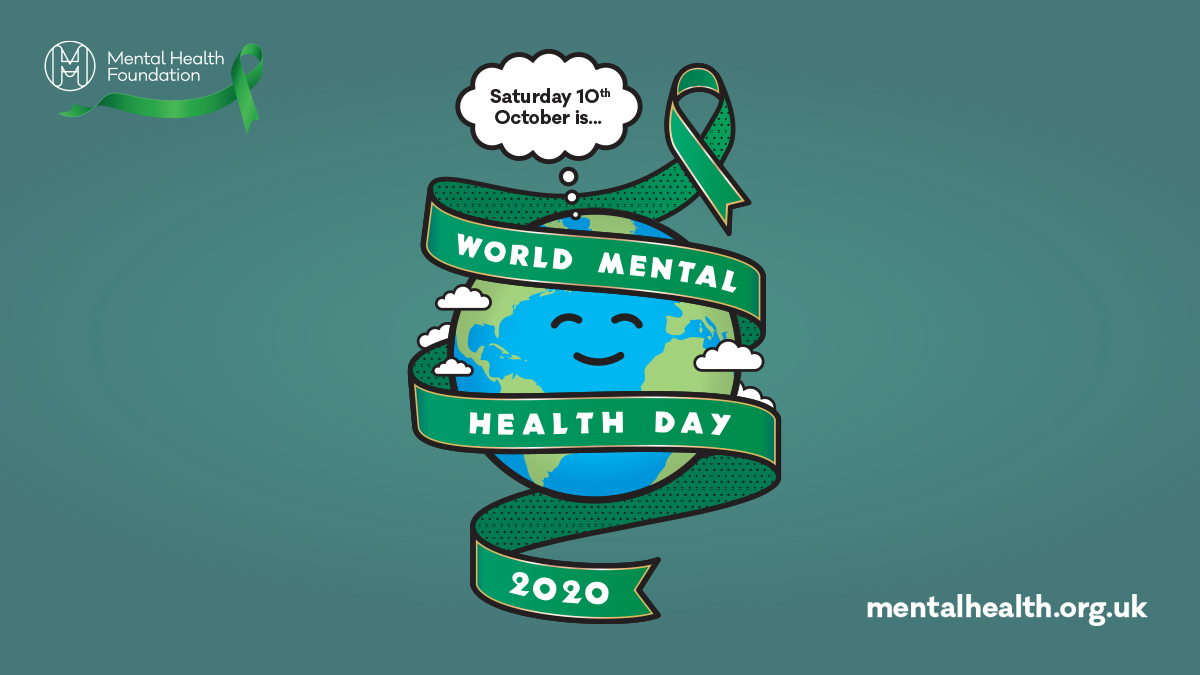
Keep a look-out for the green lapel ribbons today and wear your own if possible – it’s World Mental Health Day (the theme of mental health for all is set by the World Federation for Mental Health and led in the UK by the Mental Health Foundation). Various pieces of research are underway, including MHF’s own work on resilience (or not) across the UK during the pandemic. One finding was that ‘most people (64%) say they are coping well with the stress of the pandemic. However, many are struggling with the current crisis’.  The Resilience Research Centre defines it this way: ‘In the context of exposure to significant adversity, resilience is both the capacity of individuals to navigate their way to psychological, social, cultural and physical resources that sustain their wellbeing and their capacity individually and collectively to negotiate for these resources to be provided in culturally meaningful ways’. ‘Resilience’ has become a controversial concept in the mental health field because it’s felt in some quarters to put disproportionate responsibility onto the individual to resolve their difficulties, to justify offering fewer services on the NHS, and to ignore the underlying systemic issues such as poverty and poor housing which contribute to mental ill-health in the first place. On the other hand, it is a necessary personal quality to cultivate, so the term needs treating with some caution.

https://bit.ly/2SHbn1D

At the same time is the not surprising news that, based on research carried out for the Royal College of Psychiatrists, one in four are waiting more than three months for mental health treatment – this is putting it mildly. We hear of much longer waiting lists, longer than a year in some places. ‘The delays are leading to patients ending up in A&E, seeing their mental health decline and experiencing problems with their work, finances or relationship. RCP warned that the big increase in mental health problems caused by the Covid-19 pandemic could result in even longer waits for care’. We already know there’s a ‘mental health pandemic’ and this research reinforces earlier findings. A Department of Health and Social Care spokesman acknowledged the pandemic-related need and said: ‘We are committed to increasing the mental health workforce. Mental health services will expand further and faster thanks to a minimum £2.3bn of extra investment a year by 2023/24 as part of the NHS Long Term Plan.’ The problem is that this ‘expansion’ has been left vague and the amount is insufficient to even plug earlier gaps in services: professional bodies like the BACP (British Association for Counselling and Psychotherapy) are regularly pressing the government on what this boosted workforce will look like, when the desperate need is for more qualified and experienced professionals to offer psychological therapies of choice (not restricted to CBT, which many find doesn’t touch the sides).    

https://bit.ly/2SV9b6Z

This year the Queen’s Birthday Honours have especially recognised people’s contributions during the pandemic –  two high profile ones being fitness guru Joe Wicks, the ‘nation’s PE teacher’ and footballer Marcus Rashford, who forced the government to U-turn over free school meals. Both get MBEs. Yet again, though, it does prompt the wider question of the uses and abuses of the honours system, which too often, especially in the recent Prime Minister’s Honours, is seen as a route to bribing or acknowledging cronies.

https://bit.ly/2GIHWd9

You might be interested in the new series on Radio 4 of the Moral Maze, which involves a panel of public figures interviewing a series of ‘witnesses’ on a key topic, this week being the role of lived experience in policymaking. How much of a role should it have? Is it essential or does it cloud judgement? This is a key theme in discussions on mental health policy but I don’t think this episode focused on that, interestingly. 

https://www.bbc.co.uk/programmes/m000n4yf

Finally, fans of the Sicilian detective Salvo Montalbano will be delighted that he’s back on BBC4 tonight, and yes, it’s new, not a repeat, with actor Luca Zingaretti credited as co-director for the first time. Even if you don’t care for Montalbano, it’s worth tuning in for the ‘gorgeous Sicilian backdrops’ and the opening sequence of that inimitable theme music accompanying the swooping camera shots panning the mountains and bays of South-east Sicily.

https://bit.ly/3lxFoNW

Saturday 3 October

Not eclipsed by the news about POTUS, another eventful week, to put it mildly, and perhaps we should no longer be surprised that both our PM and skills minister Gillian Keegan on Tuesday couldn’t answer questions on the detail of local lockdown restrictions, which of course makes them less enforceable. It’s been very telling that there was such a backbench rebellion and Speaker condemnation about Parliament not being consulted on COVID legislation. Boris Johnson seems to have quelled this for now, but it was noticeable that Parliament was only promised consultation ‘as far as possible’, keeping the government’s door open for unilateral imposition. And local government is still not being properly involved in local lockdown decision making and in crucial data sharing. This time it was the turn of Secretary of State for Business, Energy and Industrial Strategy, Alok Sharma, to defend the indefensible. In a car crash interview on Radio 4’s Today programme, he was very defensive and kept repeating that people should consult the government website to check the regulations for their areas. Quite apart from the fact that all ministers should be abreast of the changing regulations, there’s the issue of the digitally excluded, who would not be consulting the government website any time soon.

https://bit.ly/3jt3yZ5

In one of his habitual eviscerations, Guardian sketch writer John Crace dissected the PM’s poor performance at Prime Minister’s Questions and even poorer one at the later press briefing. ‘We will fight and beat the disease, Boris said, as if every other country had just given up on the idea. ‘We will not throw in the sponge’…. Though, in truth, it rather looked as if Boris had done precisely that. He looked dreadful, his eyes puffy and bloodshot and his complexion pasty, as he repeated the measures he was taking that were clearly not really working that well. He sounded like a man waiting on a miracle’. I can’t have been the only one half expecting Boris to follow the ‘sponge’ comment with a reiteration of the previous week’s proverb, ‘a stitch in time saves nine’, although, manifestly, there have been no ‘stitches’, or the wrong ones, that failed to keep the knitting together.

https://bit.ly/3jqKBGE

On the subject of performances, surely one of the most disgraceful for some time, (astonishingly, not picked up by the Speaker) was when Slough MP Tanmanjeet Singh Dhesi asked when the Slough test centre would be back up and running, some locals having been forced to go to the Isle of Wight for a test. Instead of answering the question, Matt Hancock said how hard work test centre staff had been working and ‘I simply won’t have it, this divisive language’. This is a shocking example of misrepresenting legitimate concern and scrutiny.

https://bit.ly/33oF5ia

As COVID cases continue to rapidly rise and fears of another general lockdown increase, a poignant article in the Guardian highlighted the existence of a frailty scale (endorsed by NICE, the National Institute for Health and Care Excellence, which determines NHS policy and treatment). This is said to effectively ration treatment for older and disabled people who become COVID patients. Of course we’ve heard statements on this issue before, but this is the first time I’ve heard of a firmly documented scale. The Clinical Frailty Scale is described as ‘a worldwide tool used to swiftly identify frailty in older patients to improve acute care’, but the article’s author doesn’t see it as a tool to ‘improve’ care. ‘Rather than aiming to improve care, it seems the CFS – a fitness-to-frailty sheet using scores from one to nine – was used to work out which patients should be denied acute care. NICE’s guidelines advised NHS trusts to sensitively discuss a possible ‘do not attempt cardiopulmonary resuscitation’ decision with all adults with capacity and an assessment suggestive of increased frailty”. Chilling stuff: it’s not hard to imagine the fear this would strike into the hearts of vulnerable patients. The NICE statement is worded diplomatically (some may say euphemistically) but we have to wonder whether a properly resourced NHS would have to resort to such a thing. ‘The human race has progressed to an era where diversity and inclusion enriches us all, but a deplorable NICE Covid 19  policy has instead regressed 100 years to the darkest era of social Darwinism where medical care could be denied to those of us who are less fit and healthy’.

https://bit.ly/3ju9qRN

Radio 4 recently serialised ‘Dear Life: a Doctor’s Story of Love, Loss and Consolation’ by palliative care doctor Rachel Clarke, aka ‘doctor_oxford on Twitter, where she often takes Matt Hancock to task for misleading statements and the like. Described by the blurb as ‘a thoughtful and uplifting meditation on mortality and end of life care’, it’s another reminder of the difficulty much of society still has around death. You may have heard an excellent series a while back, presented by the inimitable Dame Joan Bakewell – We Need to Talk About Death. The pandemic has increased awareness of this need to talk about it and not to push it under the carpet in the stigmatised way it used to be. The blurb is right to use the word ‘uplifting’: despite the subject matter it’s not at all gloomy and the part about her father’s illness, decline and death is almost unbearably moving.

https://www.bbc.co.uk/programmes/m000mrzh

A number of articles have recently focused on how well Italy has managed the pandemic overall, when it might have been thought at the start that the exuberant Italians wouldn’t have been prepared to comply with rules. As one Italian author puts it: ‘My native land is usually depicted as a beautiful place whose abundance of natural and cultural treasures is entrusted, alas, to its disorganised, corrupt, unruly inhabitants… Now, an article on the US website Foreign Policy presents Italy in almost mystical tones, as the country that “snatched health from the jaws of death”… Is this global surprise at our collective behaviour flattering or patronising? Most of all, our national pride is sobered by the understanding that things are far from over’. No hubris here.

What follows is a useful analysis of the contrasting approaches of Italy and Sweden, at the same time being very clear that we’re not ‘out of the woods’, cases are rising again and that it’s too early to say which country will be shown to have had the best strategy. She believes the main issue is the contrast between governments which are ‘taking full responsibility for their actions and those that leave their citizens in a haze of uncertainty, and have unaccountable leadership’. Which ones could she possibly be talking about? She finally suggests a new understanding of the nature of democracy: ‘Accountability and transparency no longer look like the outer frame of democracy into which the more relevant policy details are placed. We now see them clearly as democracy’s very fabric. Something without which everything else – health, society, peace, life itself – is in grave danger’.

https://bit.ly/36uSg2M

An article in Psychology Today (How COVID 19 hijacks a psychological vulnerability) focuses on the still-neglected area of the pandemic’s effects on mental health, inter alia puncturing the myth that ‘the virus doesn’t discriminate’. The intertwined relationship between our physical and mental health has been known for some time, yet it still doesn’t filter through to common understanding or what we experience from GPs, who often continue to treat only the physical symptoms. ‘Our psychological states, especially the experience of chronic stress, may present a major vulnerability for severe COVID-19 complications. Even more worrisome, COVID-19 may be worsening the very mental patterns that are contributing to our current predicament’.

Evidence now shows that the virus does ‘discriminate’, for example by disproportionately affecting older people, black and Asian people, the obese and those with underlying conditions such as heart disease and cancer, these very conditions strongly correlated with increased stress. ‘Scientific research also sheds light on the strong tethers between chronic stress and immune dysfunction. This is a central focus of the growing field of psychoneuroimmunology’. The article then describes the important links between these health conditions, stress, inflammation and compromised immune systems and makes a case for the role of stress in COVID 19 to be more generally acknowledged and addressed. A key point it doesn’t mention is that stress and anxiety are greatly exacerbated when we cannot trust our leaders to devise and implement an effective pandemic management strategy.

https://bit.ly/30sV1xK

Still on mental health, it’s good to hear that, following earlier work this year on the importance of touch, which invited us to participate in a survey, psychologist Claudia Hammond will next week be presenting a series of short programmes (Anatomy of Touch), focusing on the effects of COVID 19. There had already been a decline of touch in society but overnight it plummeted, given social distancing requirements, and the effects of this are rarely openly discussed. The programme blurb’s allusion to ‘touch hunger’ made me think this was the kind of concept there’s often a long, compound German noun for. I’ll be checking with a few Germans. A social media source had a discussion about this, some saying there wasn’t a word for it, but one suggestion was Nähebedürftigkeit (craving closeness).

https://www.bbc.co.uk/programmes/m000n5f1

Some positive news this week was that in the smart Surrey town of Walton-on-Thames, a letting agency has opened in a prime site, one designed for homeless people, thought to be the first of its kind in the UK. RentStart has been operating for a few years but perhaps in a less prominent and upmarket location. CEO Helen Watson pointed up the levels of deprivation in that area despite its initial impression, saying ‘I thought ‘why don’t we seize the high street back for us? And why don’t we make our clients have the best experience? We’re making a stand about it, saying ‘come in’, removing the stigma and being proud of who we are’.

Exemplifying the level of hidden housing need, about 450 contact RentStart every year, 150 finding accommodation with the 30 private landlords who work with RentStart to offer accommodation to low income people. Good for these landlords but it’s reassuring for them that they’re given a written guarantee that any unpaid rent will be covered and one month’s rent will be paid in advance. Even more positive is that the charity offers more besides accommodation, helping clients with skills training, such as budgeting, CV writing, or setting up meetings with potential employers. It also runs and runs a matched-savings scheme to help people start saving, so enabling them to put into practice some of this skills training.

What a great example of meeting need, in contrast with the longstanding chaos of the housing market. Ms Watson wants to see similar organisations all over the country and ‘is interested in helping others replicate what it does’. She believes that the pandemic has made people see more clearly that ‘personal circumstances can change in a nanosecond and that homelessness can affect anyone, even in leafy towns and villages’.

https://bit.ly/3juSDOB

Finally, you might be interested to see this lovely little film, made during lockdown by a local film director about a community café many of us visit around here. A great example of community engagement, even more important during these surreal times, it’s the story of the café and its owner, a French-speaking Algerian brought up in Normandy, what the café means to him and also to locals, several of whom (including me, looking too serious) feature in it.  

Sunday 27 September

During a week when the Support for Jobs scheme pushed the descriptors ‘viable’ and ‘non-viable’ to the fore, with robust debates about how ‘viable’ jobs should be defined, using the terms in other contexts has been too tempting for some to resist. John Crace has written about ‘our semi-viable leader’, whose position is looking increasingly uncertain given his own poor performance, the rise of Young Pretender Rishi Sunak and demands for cross-party consultation on restrictions and lockdowns. ‘Sunak did get a slightly harder ride from journalists at the Downing Street press conference. He couldn’t totally explain what was and was not a viable job – some jobs that are not viable now may be so again in a year’s time- – the latter being a key argument not yet responded to by the government’. Of Sunak, he observed: ‘For an hour or so it felt like there was an adult running the country. Or as close as we’re likely to get to one in the Conservative government during the coronavirus pandemic. It might still all be an illusion, of course…’

https://bit.ly/3j9ZmNL

Being PM is proving a lot harder than Boris ever expected – he has no desire and no idea how to build cross-party consensus at a time of crisis and the chickens of his erosion of democracy over the last few months are coming home to roost, eg suspension of normal tendering procedures, handing £m to private providers, and not consulting Parliament or local government about restrictions and lockdowns. ‘An extraordinary cross-party backlash against Johnson’s “rule by diktat” from Downing Street was taking shape on Saturday – ahead of a key vote on Wednesday – as a new poll for the Observer showed Labour has overtaken the Tories for the first time since Keir Starmer became leader in April’. 50 Tory MPs have apparently written to the PM to ask for a vote on COVID restrictions prior to their imposition: if this had been purely opposition parties it could be ignored but the fact that it’s the PM’s own party spearheading it should give him pause for thought. (Correction – give Cummings pause for thought).  

https://bit.ly/2HtZppG

Meanwhile, still taking centre stage is the very worrying situation about the testing and track and trace programmes, which, despite ministerial bluster, continue to underperform in the numbers of tests actually carried (not ‘capacity’!) and contacts traced. The new COVID19 app everyone’s been urged to download has come under fire for not working on some phones (and what about people with dumb phones or no mobile at all?) but, most scandalously, not being enabled to use NHS data – only Serco programme data can be  processed. Since it’s supposed to be an NHS app (and media people continue to misrepresent it as such), this would be risible if it wasn’t so concerning. There’s also a significant body of people not planning to download it because they don’t trust its data gathering properties or don’t want to risk being asked to self-isolate.

Thanks to Emma for the heads-up on this useful article in Wired: it’s very informative and also states that ‘from September 28 it will be illegal for people not to self-isolate once they been contacted by Test and Trace and the government can issue £10,000 fines to people who break the rules’. We already know, though, that 20% of those asked to self-isolate have either not done so or have reneged on the conditions so it will be interesting to see if the threat of such a fine makes a difference. The article is quite reassuring on the issue of use of personal data, but it does discuss risks eg the possibility of false positives. Crucially, it reminds us that its success will depend on large numbers of people using it, but a key issue is surely around confidence in the government, which seems at an all time low. ‘Trust in the government will play a big part in this’. Interestingly, whereas the failed app was said to need 80% to sign up, it’s thought 60% will be enough this time to rein in the virus. Even more important is an understanding that an app alone isn’t going to do the business. ‘Contact tracing apps may be one small way of reducing Covid-19 spread. Equally important are robust testing and human-led contact tracing systems. All of these elements need to be functioning correctly to control the spread of the virus’.

https://www.wired.co.uk/article/nhs-covid-19-tracking-app-contact-tracing

There’s an obvious interest in how other countries are coping. This is quite a lengthy read but a very useful listing of what different countries are doing in essential areas, such as mask wearing, opening schools and leisure venues, limits on gatherings and so on. Some surprising facts are that in Sweden masks are not recommended and in Croatia bars and clubs don’t have to close before midnight (not much of a hardship), although restaurants can only serve people outside. More use of outside space has an environmental downside, in that it’s bound to increase the installation of patio heaters, unless the Croatians are a much hardier lot than Brits.

https://bit.ly/2EBIG2E

This week’s Briefing Room on Radio 4 usefully looked at Sweden, criticised for its strategy of not locking down but perhaps with some benefits to that approach which weren’t apparent at the start. Sweden was described as a compliant society, and presenter David Aaronovitch explored the Swedish experience of the pandemic, which eschewed lockdown but which still instituted ‘significant changes to everyday life, from school closures to social distancing and the cancellation of theatre shows and concerts’.

https://www.bbc.co.uk/programmes/m000mqpv

Depressing but predictable is news about how the UK is seen abroad, one headline reading: ‘Mr Brexit to Mr U-turn: German commentators befuddled by Johnson’s zig-zagging’. We learn that an editorial in the Süddeutsche Zeitung was titled: ‘Johnson’s skittishness endangers his country’; Wirtschaftswoche weekly business magazine said “one of the main reasons for the ongoing coronavirus chaos” in Britain was Johnson’s decision ‘to occupy lots of ministerial posts with Brexit hardliners’, and perhaps most impacting, given his experience and conservative stance, the ‘veteran Britain watcher’ for Die Welt, Thomas Kielinger, observed: ‘The perplexity of the British public is rising ….Its government appears to be stumbling through a forest of lunacy … and it’s dawning on many that Boris Johnson is the wrong man to cope with an emergency’. He also points up the irony of a Brexit-committed government in copying a longstanding (since the early 1900s) German approach – Kurzarbeit (short work), whereby ‘workers can be sent home or their hours significantly reduced, and the state will pick up a large portion of their lost income’. 

https://bit.ly/3i271fK

Not surprisingly, there seems to be an increasingly febrile and anxious atmosphere at the rapid rise in COVID cases and fears of another general lockdown, since some experts believe the current restrictions don’t go nearly far enough. Yvonne Doyle, Public Health England Medical Director, said the number of new cases was “a stark warning for us all…The signals are clear. Positivity rates are rising across all age groups and we’re continuing to see spikes in rates of admission to hospital and critical care’. We’d better do what we want to do and go where we want to go within the next fortnight, because after that we can’t be certain we will have that freedom.

As featured in previous posts, the mental health ‘pandemic’ is growing, with need manifestly not being met by the inadequate NHS primary care services and many unable to afford private help. Many are just trying to manage on their own and being encouraged by various articles and pundits to reframe and develop a positive mindset. While a certain amount of mental wellbeing work and self-talk is helpful, it’s not sufficient for those with longstanding conditions and a level of anxiety which needs much more than this. There’s also a strong argument that the emphasis on ‘wellbeing’ is used cynically by policymakers responsible for reducing and underfunding mental health services in order to shift the entire responsibility from the state to the individual.

Besides the rise in anxiety and depression, there’s the obvious trauma resulting from all the COVID-related deaths which have occurred this year, when those bereaved could not even hold the usual kind of funeral or be with the dying at the end. Covid-19 Bereaved Families for Justice, together with organisations, including the British Association for Counselling and Psychotherapy (BACP) and the National Bereavement Partnership, are pressing the government to use the comprehensive spending review to fund ‘culturally specific’ measures addressing particularly traumatic forms of grief. Psychotherapist Kathryn de Prudhoe, a representative of Covid-19 Bereaved Families for Justice who co-wrote the submission to the Treasury, lost her 60-year-old father in April. She said: ‘The majority of people are floundering and don’t really know where to go or what to access…There is the constant reminder of the virus, the anxiety that people have that they’re going to fall ill, or that another family member is going to die. If we don’t act now, in six months’ time we’re going to have a mental health crisis on our hands as well as well as a viral one’.

https://bit.ly/3i6agmn

At the risk of verging on ‘wellbeing’ territory it’s quite interesting and useful to read about how the Norwegians approach the lengthy winter, by developing a mindset which helps cope with the ‘long polar nights’. A psychologist studied what gave rise to the Norwegians’ resilience and concluded that much was due to what we’d call reframing but it sounds more like ‘framing’, because of it being so embedded in the psyche, not requiring the conscious process of mindset change. The psychologist designed a ‘winter mindset scale’, which requested agreement or disagreement with statements such as ‘there are many things to enjoy about winter’ or ‘there are many things to dislike about winter’. Confirming longstanding evidence that experience can follow the attitude adopted, she found that participants’ responses determined their wellbeing over the coming months; ‘the more they saw the winter as an exciting opportunity to enjoy a glacial climate, the better they fared, with high levels of life satisfaction and overall mental health’. It’s quite a cognitive approach, acknowledging the role of choice in how we experience things, not just believing our mindset is set in stone. People ‘feel like they’re just someone who hates the winter and there’s nothing they can do about it… But once you put it in people’s heads that mindsets exist, and that you have control over your mindset – I think that that’s tremendously powerful’. Hmmm – it might take more than this to persuade some of us that there’s ‘much to enjoy’ about winter.

https://bit.ly/3mTP72p

As a bit of an antidote to what the BBC’s Paddy O’Connell this morning called a ‘diet of doom’, the Guardian predicts that during the next lockdown the last one’s focus on sourdough and banana bread (guilty here) will move to much more exotic creations. With the headline ‘Let us eat cake: Britain turns to baking to banish the blues… As nights draw in and months of uncertainty loom, many are seeking the therapeutic benefits of creating elaborate treats’, it describes the therapeutic process of baking, the grounding effect of using family recipes, the role of this sharing and kindness and the Instagram effect of constructing increasingly elaborate cakes. Waitrose has reported huge rises in sales of both cakes and baking ingredients: does this mean that the flour shortages experienced months ago are now a thing of the past? Two of the photos in the article feature the bakers’ ‘sculpted’ heads – great for social media pics but I wonder how many would feel comfortable consuming such a thing!

https://bit.ly/30fJh1M

Thursday 24 September

This blog post is late because I was in North Wales over the weekend, where I found people much more compliant than in London about wearing masks and venues much more consistent about requesting contact details for Track and Trace but the most nightmarish part of the journey was the third ‘leg’, courtesy of Transport for Wales (formerly Arriva Wales). The two carriage train from Chester to Holyhead was packed to the rafters, marshalls seemingly having no choice but to allow this and the driver had the nerve to tell anxious passengers ‘You shouldn’t be travelling’. One rejoinder was ‘You shouldn’t be selling tickets, then’. Another pointed out that more carriages should have been attached. This week Transport Minister Grant Shapps announced (finally!) that rail franchising was to be brought to an end because of ‘fragmentation’ – not a minute too soon.

Again, it was an eventful news agenda last week, notably the second reading, which passed by 77 votes, of the Internal Market Bill, with controversial clauses potentially leading to breaches of international law. Many, including senior Conservatives, have been appalled that such a thing would even be entertained, and despite obfuscation by some ministers, Brandon Lewis, Northern Ireland Secretary,  admitted that it ‘does break international law in a very specific and limited way’. This gave rise to a series of amusing (if it wasn’t so alarming) social media posts, about something reprehensible being ok, as it would only be done in a ‘very specific and limited way’. Many politicians and commentators, including former PMs Blair and Major, spoke out against this legislation and former Attorney General Geoffrey Cox accused Boris Johnson of doing “unconscionable” damage to Britain’s international reputation. In what sounds like an example of brinksmanship, the Times told us that ‘in a move being seen as an attempt to assuage European concerns, ministers have indicated that the internal markets bill may not be debated in the House of Lords until after a make-or-break summit with EU leaders in mid-October’.

The severely underperforming Covid testing and Track and Trace programmes came in for more flak, when further evidence emerged of there being no tests available in many areas and people being directed to test centres hundreds of miles away. It was barely credible that the Health Secretary then sought to blame the public for ‘frivolous’ use of tests and some politicians, notably Jacob Rees-Mogg, accused desperate self-isolators waiting endlessly for tests, of ‘carping’. It’s been estimated that as many as 20% of those meant to be self-isolating are not doing so: in some cases this will be wilful non-compliance but in others it will be those unable to get a test and not being able to afford time off work. Even now, ministers continue claiming that 240,000 tests are carried out daily, whereas it’s more like 80,000, because the first figure is actually the much-trumpeted ‘capacity’ – a point Fiona Bruce pursued at some length with Nadhim Zahawi on BBC’s Question Time. Health Secretary Matt Hancock continued to defend testing boss Dido Harding, despite her rough ride at the Commons Science and Technology Committee, at the same time as admitting testing will take 3 weeks ‘to sort out’. His various claims were deconstructed as skilfully as ever by the Guardian’s parliamentary sketch writer, John Crace: ‘MPs try to talk Matt Hancock down from the heights of delusion’.

https://bit.ly/2FSDTKM

Concerning as all this clearly is, it’s been supplanted by the announcement of further restrictions in response to the marked rise in COVID infection rates. Typically, the PM made his announcement when the ground had been well and truly prepared by the media and by Chris Whitty and Patrick Vallance the day before. I doubt whether I’ve ever seen a more abjectly embarrassing political broadcast than the ‘Covid briefing’ last night: packed full of clichés, faux Churchillian rhetoric and over-optimistic reassurances, its blustering and over-emphasised delivery was painful to watch. John Crace began his analysis: ‘Where to start with the prime minister’s TV address to the nation? The trademark smirk? The nervous hand gestures? The fact he thinks he’s fighting a war, not a pandemic? Or just the brazen cheek as Boris tried to claim the credit for what he called the stunning triumph over the coronavirus so far?’ Many fear that the measures don’t go far enough – perhaps, not for the first time, England won’t be too far behind Scotland in adopting stronger measures, if not full lockdown then restrictions on numbers of households meeting. Such restrictions capture the key dilemma: the health of the nation or the health of the economy? High profile hospitality figures such as Tim Martin (Wetherspoons) and Julian Metcalfe (founder of Pret a Manger and Itsu) are livid about the restrictions, their stance seen by some as concern for their workers and their jobs and by others as more cynical concern for their wallets.

https://bit.ly/2HiTALE

With rather more focus on the PM’s increasingly bizarre performances at Prime Minister’s Questions, contrasting with the increasingly impressive one of Labour leader Keir Starmer, it shouldn’t be overlooked how impressive shadow Business Secretary Ed Miliband was when standing in for Starmer. Described as having ‘comprehensively ripped Boris Johnson’s facile and fraudulent arguments to shreds….. Miliband knew he had Johnson bang to rights as a second-rate conman and wasn’t going to let him off the hook. All his arguments were delivered with the panache and flourish of a man who knew he had right on his side. Even the Tories sensed it with only Bernard Jenkin foolish enough to intervene on the prime minister’s behalf…It turns out that Boris does have a humiliation threshold after all. And Miliband had just found it’. Good to see Miliband back on fighting form and let’s hope this isn’t a flash in the pan.

https://bit.ly/2RS2hP1

It remains to be seen how the Chancellor’s newly announced Job Support Scheme will be received, already thought to be far less generous than furlough. It looks generous at first sight but there are key omissions, eg the 3m freelancers (again). Rishi Sunak has been firm that they won’t be supporting ‘zombie’ businesses – many more job losses are predicted. An estimate of a million newly unemployed has been made, partly due to the hospitality industry having to operate shorter hours.

https://www.bbc.co.uk/news/uk-politics-54277943

The mental health ‘pandemic’ resulting from COVID19 and restrictions has been increasingly recognised in recent months, if not acknowledged and acted upon by the government. The latest set of restrictions and the fact that a significant areas of the country are already in lockdown will further aggravate this situation. A major study (University of Nottingham and King’s College, London) found that in the early stages of lockdown 57% of participants reported anxiety symptoms, with 64% recording common signs of depression. The situation improved when lockdown was eased but there’s concern that difficulties will recur as restrictions are reimposed in response to the rising infection rate. Gloomy winter weather will also not help. ‘Women, young people and those in high-risk categories for Covid-19 were most affected, the researchers found, though different factors probably drove the mental health difficulties in each group. While the fear of catching the virus was likely key to those with underlying health conditions, young people and women may have felt more distress through work insecurity, loneliness and domestic violence’. Although the government has got a lot on its plate, it needs to recognise this other, very damaging crisis and reengineer and fund NHS mental health services to enable availability to those who need them, rather than putting obstacles in the way such as eligibility threshold tests.

A separate, large scale study based at University College, London, concluded there has been an “explosion” in anxiety in Britain over the past decade. Anxiety is thought to have tripled among young adults, affecting 30% of women aged 18 to 24. It also increased generally among people under 55. The study is one of the largest of anxiety undertaken in the UK for many years, examining trends in diagnosis and treatment by GPs since 1998 by analysing 6.6 million patients at 795 practices across the UK. This anxiety has been attributed to the financial crash, austerity, Brexit, climate change and social media but (as per the theme of this blog) it will also be attributable to the lack of psychological ‘holding’, known as ‘containment’, offered by this government which many have lost trust in. Generally but especially in dire circumstances, people need to at least feel that their leaders are actually in charge (not just in office), know what they’re doing and have well-reasoned and consistent strategies for addressing the crises we are having to navigate.

https://bit.ly/2FTiOA0

Partly thanks to the Black Lives Matter movement, the issue of unconscious bias has come more to the fore and now a crossbench peer and anti-racism campaigner, Simon Woolley, has spoken up when it emerged that up to Tory MPs are thought to have refused to participate in classes. ‘Every parliamentarian should undertake unconscious bias training if asked so they can be better at their jobs’, he said, ‘appalled’ that any MP would refuse. Mansfield MP Ben Bradley (described in his Twitter profile as The first blue brick in the red wall), said: “In my view we should be unabashed in our cultural conservatism, sticking up for free speech and the right to ‘make my own bloody mind up, thank you very much’, and stepping in to block this ‘unconscious bias’ nonsense.” I was struck by how very nice, tolerant and jolly Simon Woolley sounded when he was interviewed about this alongside Conservative stalwart Sir John Hayes.

https://bit.ly/3hXxoU7

It’s long been known that diagnosis of concerning symptoms was way below the norm during the pandemic, partly due to patients’ fears of contracting COVID19 but also due to lack of resources and constant pressure to ‘protect the NHS’, despite this being a legitimate use of the NHS. More research has now emerged which puts figures on these concerns, including analysis of GP records which reveal diagnoses of conditions from cardiovascular problems to mental health problems were up to 50% lower over the spring than expected. (This research only covered Salford, but the researchers were confident that these figures could potentially be extrapolated to other areas of the country).The government’s guilt tripping was successful, demonstrated by an NHS England poll in April, showing that 40% of patients said they were avoiding contacting their GP so as to avoid ‘burdening the NHS’.

Urging anyone concerned about symptoms to come forward notwithstanding a COVID19 second wave, Professor Martin Marshall, chair of the Royal College of GPs, said: ‘During a pandemic, other health conditions do not cease to exist, and we’ve seen from health crises in the past that there are sometimes more deaths from conditions unrelated to the pandemic than the virus causing the pandemic itself’. Related to this is the anger some GPs are now  experiencing for being criticised by the government for not having seen more patients, at a time when the government was urging as many virtual GP consultations as possible. Various GPs and their representative professional bodies have been warning for some time that much can be missed via virtual consultations. Let’s hope the GPs get sufficient resources to deliver more in person consultations, which would save resources long term by enabling early diagnosis of conditions potentially missed via virtual appointments.

https://bit.ly/3cpMAIk

Housing is such an important issue in its own right, but especially as it links to mental and physical health and other aspects of living. It’s been clear for some time that the situation facing older people in this country is far from ideal, not least because so many people living alone is a key contributor to loneliness and social isolation in this age group. Now a Swedish experiment in multigenerational community housing is attracting international interest. In the UK we’ve seen several innovatory schemes which co-locate nurseries with care homes, with good results. Sällbo ‘a radical experiment in multigenerational living’ is located in Helsingborg, a small port city in southern Sweden. We’re told its name is a combo of the Swedish words for companionship (sällskap) and living (bo), summing up the project’s goals of combating loneliness and promoting social cohesion by giving residents incentives, and the spaces, for productive interaction. About half the 72 residents are 70 and older, the other half aged 18-25, described as ‘a mix of personalities, backgrounds, religions, and values’ and including some refugees. Everyone had to sign a contract promising to spend at least two hours a week socialising with their neighbours. Some touching examples are given, such as older residents teaching English to refugees, and the younger ones helping the older ones with social media and new technology. We’re told the Swedes are fiercely independent, with social policy aimed at enabling people to stay in their own homes. It could be Brits would also like to be more independent but housing and social policies have militated against that. British policymakers, take note.

https://bit.ly/2ExL4Yk

This relates to support the public has given to a plan for the UK to become ‘a greener, fairer more equal society’ as it emerges from the pandemic (perhaps that should read if it emerges…).  An inquiry by the All Parliamentary Group on a Green New Deal found that the pandemic had further boosted a strong desire for change. ‘On housing, fewer than one in five thought the government’s housing policy was working and there was strong support for rent caps and more investment in social housing. Participants were also concerned about homelessness and, having seen government intervention during lockdown, want action to end street homelessness permanently’. Effectively, this could amount to a new social contract for the UK and it’s interesting that people are evidently enthusiastic for change, wanting to build on community connections, in direct opposition to what often seem like government attempts to sew division. The Green Party’s Caroline Lucas, the co-chair of the Group, said the UK was at a crossroads: ‘This is not a moment for timid tinkering with the status quo, it’s the time to build a fairer, greener Britain where the national effort is focused on health and wellbeing. There is a popular mandate for deep-rooted changes in our economy and society. The government must seize this moment and deliver on people’s hopes for a better Britain’.

https://bit.ly/3kLsuvi

Finally, it was interesting to read that, as part of last weekend’s London Open House festival, a company of tour guides put on walks which focused not simply on the general history and architectural details, etc but on the less savoury aspects of history, such as links to slavery. The walks were fully booked but the company plans to run the same walk on various dates in October. This reminded me of someone some years ago who offered alternative tours of galleries and museums, again highlighting the less positive aspects of the exhibits. I can imagine that directors of cultural institutions may not have been too keen on this initiative, but in recent times, related to the Black Lives Matter movement, organisations such as the National Trust have come to terms with the colonial history associated with many of the objects and properties in their care, with some actively promoting better understanding of these issues.

Sunday 13 September

It seems every week packs a punch in terms of hefty and impacting news items, but this last one must be in pole position, with (quietly and predictably) Portugal once more removed from  England’s non-quarantine list, the worrying rise in new COVID cases, the lack of test availability, the limit of 6 gathering inside or out being reimposed from Monday, Birmingham hovering on the brink of lockdown and now the outcry over the government’s Internal Market bill, which seeks to break international law ‘in a small and significant way’. It seems only now are some senior Conservatives, including Theresa May and Lord Howard, seeing what the last few months have led to, some reacting with dismay as it if it couldn’t have been predicted. It’s seen as an example of extreme bad faith and an overturning of the Good Friday Agreement. Labour peer Andrew Adonis tweeted: ‘A European ambassador in London said to me last night: ‘It is a real problem for the west when Britain has rogue government which announces it won’t abide by treaties it has signed. My country did that in the 1930s. Look what happened’.

This international embarrassment also caused the government’s top lawyer, Sir Jonathan Jones, to resign, the 6th senior civil servant to depart this year. The Financial Times first broke the story, linking his departure to “suggestions that Boris Johnson is trying to row back on parts of last year’s Brexit deal relating to Northern Ireland”. The FT reported people close to Sir Jonathan as saying ‘he was very unhappy about the decision to overwrite parts of the Northern Ireland protocol’. Such upheavals will no doubt cause more to supplement their No Deal stockpiles during the next few months.

Meanwhile, Matt Hancock was reprimanded for issuing the Rule of 6 (sounds like something from a conspiracy theory) via Twitter rather than first announcing it in Parliament. Not for the first time, the plan was announced without consultation with local government as to how the proposed enforcers (COVID marshals) were to be funded and recruited and at least one Police Federation head has said enforcing this limit won’t be their priority. It also sounds as if the police are becoming increasingly resentful about the additional duties imposed on already stretched forces. Those planning big gatherings before the rules kick in on Monday might feel less pressure because there’s such a low chance of enforcement. John Crace offered another eviscerating account of the Health Secretary’s ‘rant’ in Parliament, when derision greeted his announcement of ‘moonshot’ testing. ‘One of the glories of Matt – the thing that makes him a near national treasure – is that he has no idea that it is the seriousness with which he now takes himself that makes him a laughing stock to the rest of us’.

https://bit.ly/3bOIWHZ

In The Guardian, George Monbiot rails against what he sees as the UK’s corruption: ‘Every week, Boris Johnson looks more like George I, under whose government vast fortunes were made by political favourites, through monopoly contracts for military procurement. Any pretence of fiscal rectitude or democratic accountability has been abandoned. With four more years and the support of the billionaire press, who cares?’ He says that although people may be shocked when the words UK and corruption are mentioned in the same breath, as the UK is low down the official international corruption rankings, these listings’ criteria are narrow. What’s not fully considered is corruption of a more sophisticated kind, especially via laundering the money of other countries’ illegitimate activity and organised crime. This is the first time I heard that the City is protected from FOI: ‘The City of London’s astonishing exemption from the UK’s freedom of information laws creates an extra ring of secrecy’. Monbiot believes the situation will become even worse as a result of a no deal Brexit: ‘When the EU’s feeble restraints are removed, under a government that seems entirely uninterested in basic accountability, the message we send to the rest of the world will be even clearer than it is today: come here to wash your loot’.

https://bit.ly/3inM148

As the working from home vs returning to the office debate rumbles on, the BBC has continued its interesting Rethink series, looking at how life could change as a result of the pandemic. This episode specifically focuses on cities. It asks ‘does a combination of Covid-19 and new technology mean that the need for dense concentrations of people is lessening? Many city dwellers – especially those recently forced to work from home – have wondered why they were paying high urban prices during lockdown and looked enviously at those in larger homes in suburbs or the countryside. Is now a moment to rethink conurbations – in terms of transport, planning and amenities – to move from a concrete jungle to a green and pleasant cityscape?’ This seems very likely, as a good number of workers welcome the absence of a stressful commute, can spend more time getting to know their local area and supporting that local economy rather than the anonymous central one, and estate agents are seeing higher demand for properties by the sea and in the countryside.

The question would then be what happens to the resulting central ‘ghost towns’ like Canary Wharf, which CBI head Carolyn Fairbairn warned about. Maybe people are less worried about this than she expects, as the urging back to the office is often seen as a cynical way of boosting corporates’ businesses at workers’ risk. ‘We have to get closer to nature’, said one contributor, rather than continuing with faceless blocks built for the benefit of developers rather than the welfare of those working in them. ‘Cities have to be about more than economics’, says presenter Amol Rajan, the BBC’s Media Editor. The programme also features a global panel of contributors based in Copenhagen, Beijing, Washington, Sao Paulo and Kampala. At least some experts agree that we have to get together at work (at some points), otherwise we’re just many isolated units, with all the implications this has for the organisation’s mission and esprit de corps, so a consensus may emerge of WFH some days and going into the office on the others.

https://www.bbc.co.uk/sounds/play/m000mcgm

Two well-known newspaper columnists, Nigella Lawson and Oliver Burkeman, have recently written their last columns, both giving tips on how to live well. Burkeman’s were particularly worth thinking about: ‘…..these are the principles that surfaced again and again, and that now seem to me most useful for navigating times as baffling and stress-inducing as ours’. All his eight ‘principles’ are interesting and invite reflection, eg ‘There will always be too much to do – and this realisation is liberating’ (…you needn’t berate yourself for failing to do it all, since doing it all is structurally impossible) and ‘When stumped by a lifechoice, choose “enlargement” over happiness’. Burkeman has written in at least one book about the illusory pursuit of ‘happiness’, a goal and expectation embedded in our culture, which needs challenging and deconstructing. He credits Jungian therapist James Hollis for the advice that ‘major personal decisions should be made not by asking, “Will this make me happy?”, but “Will this choice enlarge me or diminish me?” Well worth a read: he will be a hard act for the next columnist to follow.

https://bit.ly/3bU4tiw

An online lecture last week from Birkbeck College, University of London, featured Professor of Psychology Renate Salecl (author of The Tyranny of Choice and other works) talking about her latest book, A Passion for Ignorance. Informed by philosophy, social and psychoanalytic theory, popular culture, and her own experience, she explained how the passion for ignorance plays out in many different aspects of life today, from love, illness, trauma, and the fear of failure to genetics, forensic science, big data, and the incel movement. Interestingly, she concludes that ignorance is a complex phenomenon which isn’t always a bad thing – in some circumstances she argues that it can benefit individuals and society as a whole. Her arguments about the ‘post-truth’ world reveal how some react to the ‘constant flood of information and misinformation’. If people feel overwhelmed and sceptical, unable to distinguish truth from falsehood, it can lead to a distrust of expertise and a preference for some kind of certainty, however dubious, rather than engage with the complex, nuanced and messy entity which actually characterises human existence.

Professor Salecl would have been writing this book for some time but her lecture felt very central to what we are seeing now, for example a government economical with the truth and groups of people resorting to conspiracy theory or preferring to believe COVID doesn’t exist or climate change isn’t happening because it’s easier than coming to terms with the sheer uncertainty of our situation and the fear this can generate. She refers to Nancy Tuana’s Four Kinds of Ignorance (which we learned in psychotherapy training as the Johari Window), the worst being ignorance of ignorance, how the mechanics of power help keep people ignorant, and the quality of blindness preventing us from seeing, preferring the preservation of illusions. It’s certainly a timely exploration of (as the blurb suggests) ‘how the knowledge economy became an ignorance economy, what it means for us, and what it tells us about the world today’.

At a time when much of the culture and heritage industry is under severe financial pressure, it was good news to hear this week that the Bronte Parsonage Museum has received a grant of £20k from the estate of T S Eliot. The museum had been closed during lockdown and had launched a £100k crowdfunding appeal when this boost arrived, apparently made possible by the royalties the estate receives from the musical Cats.

Finally, The Week reported a serious but amusing prank, which took place in Israel last week. Hundreds of bags of cannabis were dropped by drone onto Tel Aviv, organised by advocates of legalising cannabis, who messaged on the Telegram app: ‘Is it a bird? Is it a plane? No, it’s the green drone handing out free cannabis from the sky’. The two drone operator suspects were later arrested, but we’re not told how many bags made it into people’s homes.

Sunday 6 September

This last week has seen yet another U-turn (the PM now refusing to meet COVID 19 Bereaved Families for Justice UK), the return of Parliament from its summer recess, the return of Dominic Cummings from surgery and growing disillusionment with the government on the part of senior Tories, including Sir Charles Walker and Huw Merriman. You could wonder how it’s taken them so long to see the light. On Wednesday the PM gave what some commentators have called his worst ever performance at Prime Minister’s Questions, and was effectively skewered by Keir Starmer, who began by describing the series of U-turns over the summer as ‘serial incompetence’. Disgracefully (to the extent he was even reprimanded by the Speaker), Boris Johnson tried to counter this by several untruths, such as Labour had never wanted children to go back to school and the Labour leader was an IRA supporter. There was no apology.

‘After that, Johnson had a full-on meltdown’, said John Crace in the Guardian ‘Even the few Tories in the chamber had the grace to look embarrassed. Many prime ministers have discovered that being in the top job requires a different skill and mindset to that of getting the top job. The difference with Boris is that he shows no signs of being willing to learn how to adapt to the change. Rather, he appears to be getting worse and worse at being prime minister. Limitations that are increasingly being exposed in laziness, short-temperedness and forgetfulness’.

https://bit.ly/2F7Pi92

We now learn via The Observerthat Johnson was so furious after last Wednesday’s prime minister’s questions, having been told by the Speaker to withdraw his comments about the Labour leader, that ‘he turned on his staff for leaving him under-prepared, and asked them to come up with more attack lines on the Labour leader’s career as a lawyer’. Let’s hope the Speaker is ready to do some more reprimanding.

Perhaps the main concern has been the rising rate of new COVID cases, highlighted by the return of children and young people to schools and universities. Some areas in the north of England won’t know whether they’re coming or going, given the hokey-cokey of restriction imposition and easing (in, out, shake it all about), in some cases within a matter of hours. Around here the director of public health felt compelled to issue a statement of concern about the rising number of infections, linked to the oblivious behaviour on high streets including lack of distancing. Unfortunately, there’s never enough effort to get messages across to different sections of the community: how many are going to see the local government website unless they have a specific reason to consult it?

The abolition of Public Health England at such a vital time is seriously worrying clinicians and health organisations, 70 having written to Boris Johnson about their concerns, including the important question of where key work areas like obesity, smoking and alcohol misuse will go since the replacement will only be focusing on pandemic prevention. Signatories include the Academy of Medical Royal Colleges, which represents the UK’s 240,000 doctors, the UK Faculty of Public Health and the Richmond Group of health and care charities.

Quarantine policy on returning air passengers continues to be awkward for the government and infuriating to tourists when the countries they’re visiting are suddenly taken off the ‘safe’ list, leading to last minute scrambles to book replacement flights and ferries before the deadline. This has shone a light on devolution, as the latest example of Portugal has shown the four nations at odds, on England’s safe list but Welsh and Scottish governments insisting passengers quarantine for 14 days. Public Health Wales, with its own track and trace system sounds better at checking up on returners than England, where it’s the task of the discredited Serco scheme. Only one in four are allegedly followed up and now Border Force officials are asking for ‘further action’. In the context of the number of new infections being at its highest since May, the Guardian tells us that ‘leading scientists are warning that the UK is fast approaching a pivotal moment. With another surge in the number of positive cases recorded on Friday, they urged people to keep following the rules or risk the return of widespread lockdown across the UK’.

Quarantine rule breakers may be unconcerned for various reasons, not least because despite the government’s bullish ‘instructions’, fewer than ten fines have been issued since June. Another reason for non-compliance is that many cannot afford to miss work, especially if self-employed and not eligible for financial help. Others simply don’t see themselves as a risk or think the rules don’t apply to them, like the man interviewed on R4 Broadcasting House, who spoke about his own safety, seemingly oblivious of the risk he could pose to others.

Meanwhile, the debate about returning to the office versus working from home rumbles on, some workers determined to stick with WFH, without the stress of commuting and uncertainty over how COVID secure workplaces are, and others keen to return as their mental health may have suffered through lack of interaction with colleagues. The government, retail and catering lobbies are very keen for people to go back because of the effect on city centre economies, with shops and cafes taking a hit, but there’s a powerful argument for instead boosting local economies enabled by WFH. The government also doesn’t seem to realise that, having scared people half to death for months on end (‘Stay at home’, ‘Protect the NHS’ etc) it now can’t expect to turn the tanker around mid-ocean overnight. It will take time for people to get used to using public transport and getting out more. A more sensible approach emerging is not the polarity of one of the other but a hybrid solution, people working at home some days and going into the office on others.

Given the departure of five senior civil servants this year, including the Service’s head, Sir Mark Sedwill, you may be interested in this succinct profile of his replacement, Simon Case. At only 41, and a CV which includes GCHQ, Kensington Palace and the role of PPS to Theresa May, he’ll nevertheless have his work cut out to steer an effective path between the demands of an erratic government directed by Dominic Cummings and the needs of his staff, some of whom are now threatening to go on strike if they’re forced to return to their offices. Case is said to have ‘a muscularity of mind’ – he’ll need it.

https://www.bbc.co.uk/programmes/m000mbq7

Many would agree it’s nothing short of shocking the way care home residents have been treated since the start of lockdown. Contrary to the narrative of having from the start thrown ‘a protective ring around our care homes’, we learn that care homes have only just received testing kits, much later than promised. We regularly hear heartrending accounts of those unable to visit residents, being urged to stay away and about the limited care residents receive. This was always the trouble with opening up social care to the private sector, where profit is the bottom line. An article in the Guardian rightly argues for much more attention to the care sector, how visits can be managed and how residents can be kept occupied and cared for in such a way which enables them to live, not just be kept alive. ‘We need to find better ways of protecting the people who live in our care homes without isolating them, or we risk forcing vulnerable people, and their families, to choose between their physical needs and their emotional ones’.

The way care homes have been left to cope on their own, with no real support, has been appalling and an undeniable argument for the long-awaited overhaul of the entire social care sector. ‘Nobody realistically thinks we can be back to normal by Christmas, and care home managers, already exhausted by the outbreak and still grappling with the day-to-day challenges of sourcing PPE and testing kits, need help and support with these questions that are not even acknowledged in the national guidance’.

https://bit.ly/2Z9UhgA

Last week also saw the resurgence of Extinction Rebellion, in the news for protests against Murdoch newspapers, demonstrators blocking access to two print works in Hertfordshire and Merseyside, causing delays to newspaper deliveries. Some news media have portrayed this as ‘censorship’, rather than drawing attention to what the protesters see as Murdoch newspapers’ ignoring of climate change issues.ER activist Gully Bujak, 27, said: “You cannot have a functioning democracy with a mainstream media that is ruled by a small, unrepresentative sect of society, who are in bed with politicians and the fossil fuel industry. The climate emergency is an existential threat to humanity. Instead of publishing this on the front page every day as it deserves, much of our media ignores the issue and some actively sow seeds of climate denial’. And you couldn’t make it up: the PM has now has accused XR of trying “to limit the public’s access to news” and Matt Hancock was pictured in weekend mufti, without his regulation pink tie, saying how ‘outrageous’ the protests are. What’s surely very worrying is news that ministers are now considering designating ER ‘an organised crime group’: this is how police states start. 

Mental health has been a key concern in the wake of lockdown and as further uncertainty continues, seriously aggravated by the lack of trust in our politicians. It’s doubtful that already struggling NHS services will be able to cope with the predicted mental health ‘pandemic’ and not everyone can afford to seek help privately. While not a panacea, a number of activities like gardening and being close to nature are well known to contribute to mental wellbeing. Recently it was National Allotments Week and, having requested people’s personal stories, the Guardian featured the lockdown experiences of allotment holders and community gardeners. ‘…many found new solace, sanctuary and community spirit over the course of the summer. Those working from home found extra time to spend at their plots, while key workers gained particular pleasure from the quiet after exhausting shifts’. Some used their space for outdoor meetings and to run classes, facilitating community engagement, many spoke of the joy of seeing things grow, others said it was the only place they felt safe, and one took comfort from having been offered an allotment just after her wedding had been cancelled. This comment seems to capture what’s important about this activity and how it can enhance mental wellbeing. ‘Whenever I got to my allotment, I was able to focus on repetitive tasks and stop worrying about the pandemics and what ifs. I found great comfort in the predictability of nature and the changing seasons. The great wheel was still turning, despite us being in a scary and strange limbo’.

https://bit.ly/2Z9G8A0

Still on the subject of the importance of nature and the environment, a YouGov survey for the National Trust found that for 38% of adults spending time in nature was the moment they looked forward to most each day during lockdown. A third said their interest in nature had increased since they were confined to their homes. The Trust is said to have lost up to £200m this year due to the pandemic and has now launched an appeal for funds to continue projects which had to be cancelled. These include restoring and creating new species-rich grasslands to conserve more than 50 threatened species, such as the Glanville fritillary and Duke of Burgundy butterflies and flowers like early gentian and ground-pine. It will be interesting to see how the appeal goes, as many are finding their incomes reduced and there seems to be an ever-increasing list of organisations asking for donations. This is such an important one, though, because of the need to counter the damage of climate change besides enabling beautiful places for people to visit.

https://bit.ly/2F2y50P

Not least because of our experience of lockdown, you might be interested to catch up with a new series about the important but often overlooked topic of solitude (not to be conflated with loneliness, as many mistakenly do). This first episode, accompanied by appropriate poetry and music, examines extreme forms of solitude eg the closed religious order or living as a hermit, and also reveals how, partly due to the lack of domestic privacy at the time, being alone was regarded as terrifying in the 17th century.  This topic has strong mental and emotional health dimensions, because the capacity to be alone, besides the capacity to be with others and form relationships, is important for psychological development

https://www.bbc.co.uk/programmes/m000m57l

Finally, a news item which has deeper implications than initially apparent relates to a German university’s scheme to issue grants for successful applicants to study ‘active inactivity’, jokily alluded to as ‘idleness grants’ by some news sources. ‘Applicants for the €1,600 grant have been set four questions to answer: What do you not want to do? For how long do you not want to do it? Why is it important not to do this thing in particular? And finally, cutting to the chase, why are you the right person not to do it?’ It may sound comical or downright weird at first, but it’s not such a bad idea, given recent dissatisfaction across the board with target-driven cultures, recognition of the need for more mindful lifestyles, concern about climate change, the likelihood of mass unemployment and discussions in the UK about a Universal Basic Income. Designed by prominent architect and design theorist Friedrich von Borries, the project is predicated on the conviction that “inconsequential” is not a synonym for “unimportant”. ‘Doing nothing, properly understood, can be an enriching way of experiencing the world without needing to extract something from it or do something to it’. It will be very interesting to find out who gets the grants and (if they’re in the public domain) perhaps read some of the reports when they emerge in January.

https://bit.ly/3lRoBGB

Sunday 30 August

Apart from the latest government U-turn, this time on facemasks in schools, the key news items generating much heat and some light continue to be the return to work debate and the series of departures following the A levels debacle. There seems to be a strange belief in government that throwing other key players under the bus, in this case Sally Collier of Ofqual and senior civil servant Jonathan Slater, is a reasonable substitute for the resignation which should actually take place, that of Education Secretary Gavin Williamson. Of course these departures were presented as the individuals’ choice but there’s little doubt they were ‘asked’ to fall on their swords. Williamson could then afford to be gracious in victory, paying tribute to Slater: “I would like to thank Jonathan Slater for his commitment to public service, including over four years spent as permanent secretary in the DfE. Like the prime minister, I appreciate the hard work of officials across government, particularly during this unprecedented time’.

Dave Penman, the general secretary of the FDA, the senior civil servants’ union, said Slater’s abrupt departure was proof that “ministerial accountability is dead and the message to civil servants is that they are expendable the moment life gets tough for a minister’. There’s something primitive and survivalist about this shameful strategy which I think marks another downward step in this government’s conduct. An Any Questions listener tweeted: ‘There was something very primal about the enforced ritual sacrifice of Sally Collier and Jonathan Slater, redolent of ancient Greek mythology but it doesn’t absolve Gavin Williamson from blame. The government is naive in believing it does’.

In the Guardian Gaby Hinsliff discusses the abdication of responsibility which characterises this government. ‘Whatever happens, it is never, ever their fault. Disasters may come and disasters may go, but the defining characteristic of this government is a cast-iron refusal to accept responsibility for any of them. If pushed, then deputy heads must roll. But in general the buck stops – well, anywhere but here…. If the purge of civil servants is intended to restore public confidence then it’s having exactly the opposite effect’. Slater’s departure takes to five the number of senior civil servants who’ve lost their jobs – no mean feat for a government only elected in December.

Besides the premature blame attributed to Collier and Slater, she also discusses the problematic abolition of Public Health England: it’s not only the dangerous timing, during a pandemic, but the organisational challenges of setting up a new organisation which, it appears, isn’t charged with the non-pandemic responsibilities PHE had, such as prevention, anti-smoking and obesity strategy work. Again, this smacks of an apparent conviction that being seen to take action and blame something or someone will convince the public that something useful is being done when this is not the case. ‘While neither Ofqual nor PHE have entirely covered themselves with glory this year, and any inquiry might well find reasons to criticise both, for now all we’re getting is one suspiciously flattering side of the story’.

https://bit.ly/2DapubH

The PHE blunder is discussed at some length in the Guardian: ‘…borne on the tidal wave of his self-confidence, Matt Hancock crashes from one unforced error to the next, never troubling himself to pause to count the financial and human cost. His latest masterstroke is to abolish the country’s public health agency in the middle of a pandemic… Everyone who works in the UK public sector knows that endlessly demolishing and rebuilding its structures undermines morale, wastes time and money, haemorrhages expertise and experience, and rarely solves problems’. The article points out that this not only leads to uncertainty and job insecurity for PHE’s 5,500 staff, but the approach of winter will intensify health challenges and lead to ‘a tug of war between local government and the NHS as the long-term solution is debated’.

https://bit.ly/32Cyzmb

Matt Hancock also managed to make another embarrassing howler when he suggested the government would change the law to allow nurses, pharmacists and technicians to administer flu jabs, when nurses and pharmacists already do. It’s quite something that the Health Secretary for England was unaware of this, further proof of the folly of giving politicians ministerial roles when most have never had ‘a proper job’ outside Westminster.

In a humorous analysis of the litany of government errors, Marina Hyde in the Guardian discusses what appears to be the PM’s new mantra: ‘Leave home. Forget the NHS. Save Pret’. No longer ‘stay at home, save lives, protect the NHS’ or even ‘Stay alert’, the key preoccupation now seems to be getting people back to the office (not work, as some have pointed out) in order to support city centre economies, despite the risks workers expose themselves to by commuting and mingling with others in what might not be ‘COVID safe’ places. The government is now hinting that people could be sacked for not returning (though this is for the employer, not them, to decide) and some ministers have even resorted to moral blackmail, implying that continuing to work from home will threaten the jobs and incomes of their neighbours, quite a guilt trip to lay.

Regarding the PM’s abdication of responsibility and slowness to act, Hyde’s ‘quote of last week came from a longtime ally of Boris Johnson, who told the FT: “At the beginning of every big job Boris takes over, he prefers to stand back and act as chairman … But there comes a point at which he gets fed up and personally intervenes. I think we’re quite near that now.” ‘What can you say? Other than: righto. In your own time, luv’. What an understatement.

https://bit.ly/2EHjIyC

Re the working from home debate, there are complex issues to balance here. There are indeed risks to returning, not to mention the amount of time spent commuting, but I think that despite his vested interests Pret owner Julian Metcalfe does have a point in saying how important it is for staff to get together (and Zoom’s not a substitute) for their own mental health and the health of the organisation. There are those not wishing to return because they don’t get on well with their colleagues and find the atmosphere stressful, and this needs to be considered, but an organisation has to be more than isolated units working individually and effective organisations will foster an inclusive esprit de corps or suffer the consequences.  

Back in March University College London UCL launched a study into the psychological and social effects of Covid-19 in the UK. Researchers recruited a large sample of UK adults to help understand the effects of coronavirus and social distancing measures. Those of us participating had to fill in a detailed survey each week about our activities, experiences and concerns, one aim being to track changes over the course of the study. It felt almost emotional to read this at the start of their last email. ‘It is now 12 weeks since you first joined this study. Your participation has been incredibly valuable in helping us to understand the impact of the pandemic and has already led to dozens of reports and scientific papers’. One of the interesting things is seeing how research is fed into media reports, eg this article asking on whether England has learned lessons from the first wave of coronavirus has input from UCL’s Professor Susan Michie, on the ‘weak link’ regarding contact tracing in the UK.

https://bit.ly/2QyZBVR

The UCL website tells us: ‘As coronavirus spreads around the world, UCL experts are taking a prominent role in advancing public knowledge about the virus by advising world leaders, providing expert comment in the media and urgently researching new ways of tackling COVID-19’. UCL has a multidisciplinary research team studying these issues so let’s hope the experts manage to make some impact in government circles. I think at least one UCL expert is on Independent SAGE, the body the government and BBC often seem to ignore, which has often advised strategies differing markedly from those advocated by official SAGE.

https://bit.ly/2FZZhgT

Mental health has naturally been an important focus for researchers during the pandemic as a whole and lockdown in particular. One survey, perhaps not surprisingly, found that the mental health of the LGBTQ community worsened considerably, partly due to people being cut off from their normal networks and being in close proximity to ‘bigoted relatives’. 69% of survey respondents reported suffering depressive symptoms, rising to about 90% of those who had experienced homophobia or transphobia. ‘Many younger people said they had been unable to access the support of LGBTQ peers or allies while with their families, and those who had moved in with relatives during lockdown felt they were being pushed back into the closet’. That closet could feel especially suffocating if that individual hadn’t come out to their family at all or perhaps had to only one family member. It would be impossible to live authentically in such a situation. Two LGBTQ helplines reported receiving many more calls than usual during lockdown, up from between 25% and 33%, giving rise to requests for more government support for the charities running these helplines. We’d better not hold our breath for any response to this.

https://bit.ly/3hFzsRb

This week there was news that the attorney general for England and Wales, Suella Braverman, is considering trying the wife of a US intelligence officer in absentia on a charge of causing the death by dangerous driving of the teenager Harry Dunn. This ‘consideration’ was facilitated by the family’s MP, Andrea Leadsom. The Dunn family and their representatives have done well to get this far, it seems, as diplomatic attempts to get Anne Sacoolas extradited didn’t get far, partly due to the Foreign Secretary Dominic Raab’s reluctance to sufficiently challenge the American authorities on the extradition refusal. Although crown court trials in absentia are rare, we learn that a landmark ruling by Lord Bingham (House of Lords, 2002) supported the principle that they can be conducted where a defendant will not participate. It seems the family’s lawyers are envisaging Sacoolas attending virtually but what is the law if she still refuses to take part? Could some kind of trial still go ahead if she refuses, based on statements and evidence previously submitted? That could constitute one form of trial in absentia, but lawyers would obviously have to decide on such a possibility.

One aspect of this which doesn’t seem to have received any attention is the mental health effect, the corrosive effect this continuing situation will be having on Sacoolas herself, her family and friends. The fact that it’s been so widely reported and commented on means that whatever she does, wherever she goes, there can be no escape from it. One thing’s for sure, this isn’t going away any time soon.

On a lighter note but still an important one, as it concerns our heritage, is a competition urging us to bring to light overlooked or forgotten follies, castles and monuments. ‘Few things are more atmospheric than an ancient stone circle, the overgrown remains of a hill fort, or centuries-old chapel left to return to the wild. The UK is scattered with such ruins, telling tales of the past – and we’d love to hear about a favourite you have discovered. We’re looking for lesser-known suggestions, please. So, tell us about a wild folly, an abandoned castle or remote sacred site – and why (or how) it became special to you’. It should be interesting to see what emerges, though I’d personally pass on the prize of a glamping voucher!

https://bit.ly/3lwnuvy

An under-recognised aspect of the working from home debate has been the effect on clothing manufacturers, since the need for smart clothes has declined dramatically. The Financial Times carries an article about the death of the middle market in menswear (‘the toughest part of every industry’, since ‘most men today’ have their best stuff and jeans and tshirts (what about the track suit bottoms?) but nothing much in between. The author worries that those who enjoy ‘variations in sartorial tone have become oddball hobbyists, like birdwatchers or opera buffs’. Something similar is probably happening with womenswear as well, since many women won’t have had the opportunity to wear smart stuff in recent times, so this could signal yet more job losses as these manufacturers and retailers are threatened with bankruptcy.  

Finally, remember turkey twizzlers, which became a byword for junk food 15 years ago due to celebrity chef Jamie Oliver’s campaigning? They’re making a comeback. Bernard Matthews will now produce a healthier version, with less fat, at least 67% meat and no E-numbers. It will be interesting to see Oliver’s reaction to this and how the take-up goes. A key question surely is, will they pass muster with the government’s anti-obesity strategy?