Sunday 13 April

When I began this blog during the first 2020 lockdown, the key theme, which has continued ever since, was the deleterious effect on our mental wellbeing caused by leaders’ (such as employers and governments, which in psychoanalytic theory serve as proxies for our original source of authority – parents) failure to take care of us in an overarching sense. Back then it was due to incompetence, corruption and deliberate lack of caring – if you need a reminder check out the Covid Inquiry live stream to see the arrogance of those having facilitated the notorious PPE VIP lane still very evident in the performances of people like the blatantly unrepentant Matt Hancock and Lord Agnew). These days there’s far less incompetence and corruption but still massive uncertainty over government policy, for example regarding benefits, and the government’s capacity to repair the large black hole, especially given the onslaught of Trump tariffs. And that’s before you even factor in the overturning of the international world order, which, while far from perfect, brought about a measure of consensus and stability.

But unlike the laissez faire Tories, who sat on their policy laurels for fourteen years, the government is urgently seeking to address the steel manufacturing crisis (origins with Conservative heroine Margaret Thatcher, of course) by recalling Parliament in order to push through takeover of the Scunthorpe plant. We’re reminded thatBritish Steel makes the vast majority of UK rail track and the government has been seeking a deal to keep the plant open. Although the government is maintaining that the problems aren’t related to this it’s hard to believe that Trump’s 25% tariff on steel exports to the US aren’t central to this sudden course of action. It seems staggering that for so many years the Conservatives thought outsourcing manufacturing industry and privatisation of essential utilities were a good thing. It’s taken the shocking, narcissistic antics of Donald Trump to wake politicians up to the dangerous reality of depending on states like Russia and China for our supplies. Having watched part of the debate, it was clear that quite a few MPs had not, for one reason or another, managed to make it back for this crucial debate. I wondered whether the Conservatives were even whipped to attend. The Steel Industry (Special Measures) passed through the Commons and House of Lords on Saturday and now awaits royal assent.

There’s been non-stop media coverage and speculation about Trump’s tariffs and further uncertainty caused by his switching back and forth between implementation and their pausing or cancellation. Pro-Trump commentators seem at pains to present his apparently economically illiterate strategy as a carefully thought through plan, but many economists are pointing out how damaging this will be for the United States despite Trump himself making statements like ‘it’ll be a beautiful thing’. We might have thought we’d seen it all concerning Trump’s contradictory bragging media performances but the most appalling so far for someone occupying such high office must surely be his vulgar boast that countries were queuing up to ‘kiss my ass’, pretending to mimic diplomats’ voices begging for a tariffs deal, coupled with his narcissistic admission that tariffs on China were raised to exorbitant levels because they failed to pay him ‘respect’. On the contrary, as expected, they came out fighting, are refusing to capitulate and are resorting to quite clever tactics to get Trump to climb down. At least one journalist has pointed out that those who sidestep the news will soon have it brought home to them PDQ because of the impact of tariffs will soonbe felt.‘What is still for the cheerfully news-avoidant just a faintly incomprehensible story about rising and plummeting stock markets will, in coming weeks, start shaping everyday lives for the worse’.

https://tinyurl.com/mpfzw9z9

A key reason for Trump’s 90 day tariffs pause was investors’ dumping of treasury bonds: as a non-economist I found this a useful explainer, setting out what a bond is, how they’re traded, what are the yields and the effect on bonds of the tariffs. ‘Investors have sold US bonds in huge quantities, driving down their value and sending the yield higher, making future government debt more expensive to issue… there was a fear in the White House that paying a higher interest rate on national debt would increase the government’s annual spending deficit, adding pressure to an already stretched budget and increasing the overall debt mountain. Worse, the $29tn market in US treasuries is the bedrock of the global financial system and heavy selling could put pressure on other parts of it, forcing banks or other institutions to default and causing a wider financial crisis’.

I bet he hated backing down on this but it seems he had no choice in order to head off a total crisis. Although bond markets have settled a little, the yields are apparently high and his fan base could be undermined if banks start charging more for mortgages. The final mischievous question was whether this was Trump’s Liz Truss moment, the conclusion being that although Trump had more resources to deal with the situation there were clear similarities.

https://tinyurl.com/59b8urzv

For all the yes-men surrounding Trump, there are quite a few others, such as Democrat politicians and economists finding fault with the strategy. Simon Johnson, a Nobel prize-winning economist and professor at MIT’s Sloan School of Management reckons the administration is ‘floundering’. The official version of Trump’s fantasy allegedly anti-globalisation strategy is that the tariffs will ‘lure an influx of manufacturers to set up plants in the US, while at the same time enabling the US to tax the world, not its citizens, prompting a stream of countries to strike new deals with Washington and eliminate US trade deficits – the gap between what it imports and exports – with other leading economies… Economists can’t see this working’. Indeed, even the first bit about companies moving manufacturing to the US and setting up factories is grossly unrealistic given the practicalities and funding requirements in such uncertain times. But this is one of the biggest annoyances: Trump has the world (aided and abetted by the complicit media with their wall to wall coverage) dancing to his tune (so he thinks), subject to every passing whim expressed by this emotional two year old. ‘Nothing is certain under this president. From longstanding geopolitical relationships to constitutional term limits, he has little time for established norms. Erratic policymaking is a feature, not a bug, of his administration. Trump has forged this uncertainty, and uses it as a short-term political tool – leaving the world to hang on his every word, be it uttered in the Oval Office, or posted on his social network. But it has a longer-term economic cost, too’. Yes, stagflation and/or recession.

https://tinyurl.com/25axjbac

A number of commentators have picked up on Trump’s casual reaction to what’s still a crisis. ‘After lighting a fuse under global financial markets, Donald Trump stepped back – all the way to a Florida golf course. A week later, having just caved to pressure to ease his trade tariffs, the US president defended the retreat while hosting racing car champions at the White House. Trump had spent the time in between golfing, dining with donors and making insouciant declarations such as “this is a great time to get rich”, even as the US economy melted down’…. his attitude as markets fall suggests man detached from anxieties of ordinary voters – and surrounded by yes men’. Democrat Kurt Bardella didn’t hold back: ‘He’s certainly living up to the caricature of being a mad king…When you’re addressing a ballroom in a tuxedo, telling people to take the painful medicine, or on your umpteenth golf vacation while economic chaos is rippling throughout this country and others, at best you’re completely out of touch. At worst, you’re a sociopathic narcissist who doesn’t give a crap about anyone suffering. Ultimately there will be a political price to pay for that’. Trump laments that we haven’t heard about the American Dream for decades, shamelessly exploiting this outmoded concept to deceive his followers even more. How long will it take the MAGA crowd to see the light?

https://tinyurl.com/yn82dyau

Of course there’s been no shortage of contributions from UK commentators, including veteran journalist and economist Will Hutton, whose marvellous opener reads: ‘Liberation Day was, of course, a tragic idiocy based on a bewildering inversion of reality. The rest of the world has not been ripping off or pillaging and plundering the US, as claimed by Trump launching his salvo of tariffs, the highest for a century. The truth is the opposite. We have lost at least 5% of GDP from leaving the EU; now Trump will cost up to another 1% or worse, according to the National Institute of Economic and Social Research, and more again as the world potentially embarks on a full-scale trade war, heralded by China’s tit-for-tat tariffs on Friday.

In his great book The Great Crash, 1929, JK Galbraith wrote that the interaction of the self-feeding unwinding of a stock-market bubble, trade-crippling tariffs, overextended financial institutions, massive income inequality, economic ignorance and collapse of trust in economic leadership that were the proximate causes of the Great Depression would be unlikely to happen again’. But now it could well be, is his message, and we should be forging key relationships with other countries rather than dancing attendance on Trump. ‘Trump’s America has forfeited global trust. The world has other choices apart from paying tribute to him and his sycophants now running what was once a great country with the prime aim of self-enrichment’.

https://tinyurl.com/29tjn4ep

Here political parties have been preparing for local government elections on 1 May, yet it seems to me the media have been very quiet about the Runcorn by-election scheduled for the same date. This is the one triggered by the resignation of Labour’s Mike Amesbury, who stepped down following his conviction for assault. Reform UK is targeting this seat besides many in local government – it will be interesting to see how successful their disingenuous and racist rhetoric proves.

It could just be coincidence but it has been suggested that news of Rishi Sunak’s resignation honours was deliberately released at this very politically busy time. And what terrible news it is, bringing the honours system even more into disrepute. Reward for failure is illustrated in the key figures of the last government getting knighthoods (eg Jeremy Hunt, Mel Stride and Grant Shapps, who has already altered his bio to this effect) and erstwhile Brexit, disastrous education reform and PPE VIP lane architect Michael Gove gets a peerage. It must be so galling for peers who work hard in the Lords, sitting on key committees and contributing to debates at all hours, to be surrounded by such disingenuous lightweights.  Indeed, ‘Sir’ Grant’s entitled tweet suggests that he actually believes the deserving narrative and that he did a good job. ‘Honoured to receive a Knighthood in the former Prime Minister’s Resignation list. It’s always been a privilege to serve our country, albeit through some incredibly challenging years’. Some X users didn’t hold back: ‘Lord Gove. Tory Brexiteer in a government that failed for fourteen years. A backstabbing traitor, as responsible as anyone for wrecking the country. Rewarded with a job for life in the House of Lords, at our expense, to legislate on everyone. Sickening’. ‘Sir Jeremy Hunt. A man who used a loophole to avoid paying £100,000 in stamp duty when purchasing seven luxury flats in Southampton. His failure to declare it was an “honest mistake”. Arise Sir Jezza – Great Britain 2025’.

And on the subject of undeserved privilege, monarchist BBC News informs us that following their return from Italy Queen Camilla said that King Charles ‘loves his work and it keeps him going’ and that as his health is ‘getting better… now he wants to do more and more’. Of course this is media gaslighting because these activities aren’t ‘work’ yet the constant media spin is what a workaholic Charles is. (I would concede, though, that the knighting of the afore mentioned Tory failures would feel like work). Asked by a journalist whether the King will now take it a bit easier Camilla said ‘dream on’ andThat’s what he’s driven by – helping others’ – you couldn’t make it up. Besides his massive sovereign grant he’s helping himself to all the income from the Duchy of Lancaster.

Same thing with Prince William and the Duchy of Cornwall, which is charging us £1.5m a year for an abandoned prison on Dartmoor, set to continue for another 24 years. This separate ‘private estate’ system needs to stop and the funds diverted to the overarching Crown Estate, which is at least subjected to public scrutiny. And hot on the heels of his father’s trip to Italy, William has taken his family on an Easter skiing trip when it’s not very long since the last holiday. There’s also been plenty of comment about the media’s attempt to airbrush out of history the actual start of the Charles and Camilla relationship. ’Who could believe it was 20 years?’, the Queen mused about their marriage.

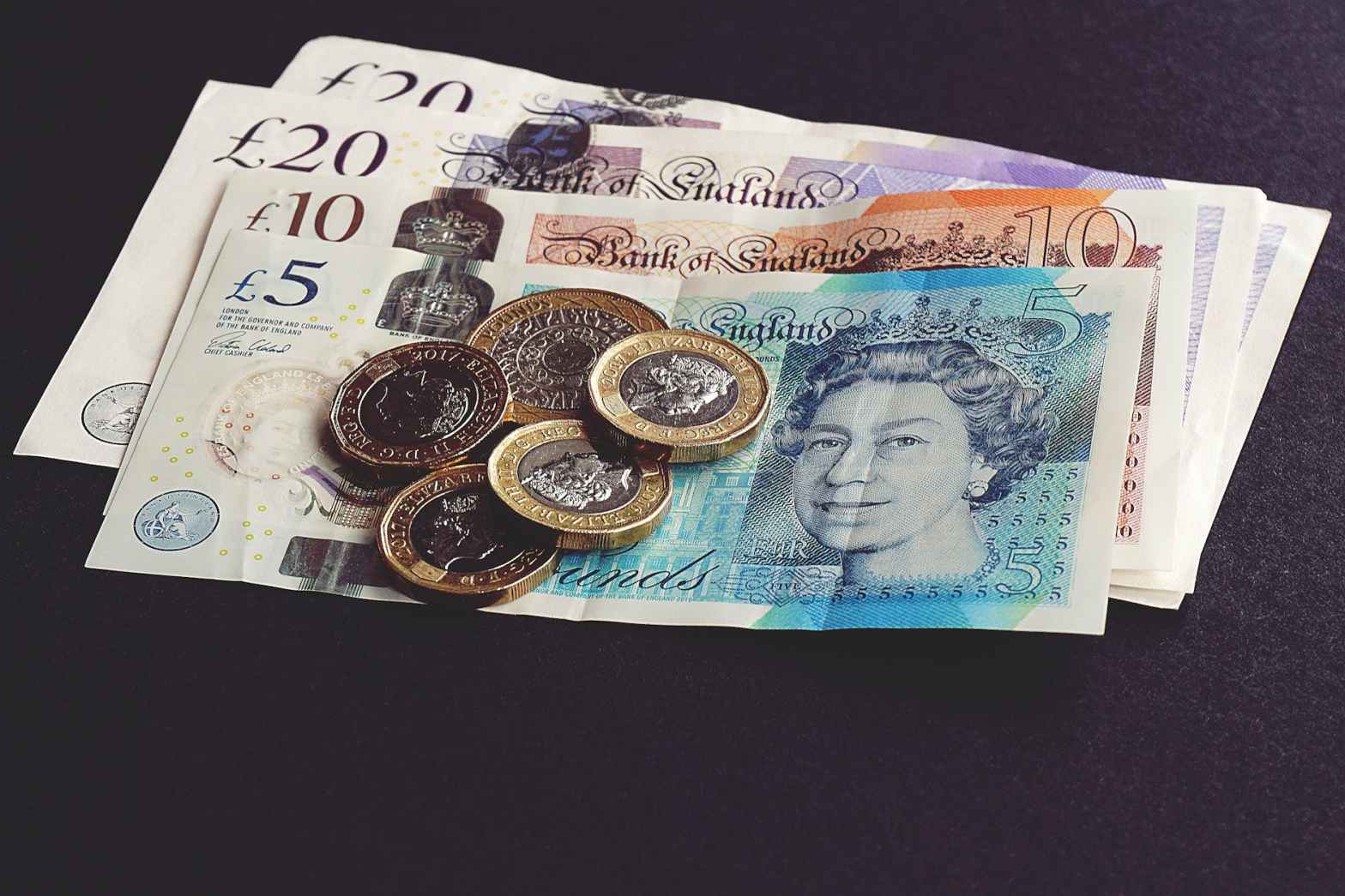
Prices are rising due to both general and Trump-fuelled inflation, hospitality partly attributing this to the rise in the living wage and employers’ national insurance contributions. But you really notice when a restaurant bill, say, used to be around £30 per head (I remember one place costing £10 in the late 90s!) and it’s now at least £40. Socialising is more important than ever in these uncertain times and, while people might find the cost of dinner too high, meeting friends for coffee or tea has been a good and longstanding custom. It’s a relatively low cost event when other luxuries are unaffordable but it could soon be a tenner for two coffees.

An additional factor here is the particular rise in the cost of coffee beans and cocoa due to climate change issues affecting harvests and transport costs bumping up the cost of coffees and hot chocolates in cafes. This is London so items will be pricier but a friend was ‘hit’ by the £4 cappuccino this week. But we also have to wonder about establishments’ profit margins – are these being overly protected and all the costs passed onto consumers rather than being shared?

This problem is being acutely felt in Sweden, because of the longstanding attachment there to ‘fika’, ‘the historically hardwired Swedish tradition of meeting for a catch-up over a coffee and a biscuit or cake’, which happens in the workplace besides the community. An ethnologist said: ‘Both coffee and fika culture are a central part of how Swedes develop both personal and work relationships, so the cost of coffee is a high priority. If you visit somebody you will always be offered coffee and to decline a cup of coffee can be impolite’. Now I come to think of it, we often see this in Scandi crime tv series. Low-cost alternatives include meeting at home or going on walks, but it is not quite the same as fika, ‘which plays a key social role in an otherwise often introverted society’. It will be interesting to see how this goes because the article also reports that young people there are eschewing coffee in favour of energy drinks and the like.

https://tinyurl.com/ye5xrxyf

On a tangentially related topic we hear that some reknowned cultural institutions are getting fewer visitors than in 2019, 30% in the case of the Tate Galleries. Others which also haven’t bounced back since the pandemic include the Royal Academy (visitors down 50%) and the National Gallery (down 47%). I wonder if it’s even crossed their minds that exhibition tickets are very expensive and cafes in these places even pricier than those outside. These cultural venues are supposed to take an inclusive approach and make their offerings appealing to all social classes but these ticket and café prices suggest that quite a few are continuing to prioritise the middle classes who can afford them.

Finally, as we approach Easter (although the timing is almost immaterial with such items available the year round) retailers have once again been falling over themselves to get the most novel form of hot cross buns onto the supermarket shelves. Asda apparently has tiramisu buns, Sainsburys has custard cream flavoured ones, M&S has millionaire’s ones ‘studded with bits of salted caramel fudge’ and in Australia (why not here, you could ask) McDonald’s has launched a hot cross bun flavoured McFlurry. Anyone tried them? These dentists’ nightmares are also a way to put on a few pounds before the chocolate egg feast starts!

Happy Easter to all!

Saturday 29 March

As we approach the quarter year mark there’s as ever no shortage of news, the Chancellor’s Spring Statement, the Signal scandal and Donald Trump’s clumsy political posturing and tariffs stunt dominating the airwaves. But a bit less of this due to the massive earthquake having hit Myanmar and Thailand, rescue operations in the former likely to  be even more challenging due to the military dictatorship there. Over 1,000 have died, with this number expected to rise over the coming days. ‘… the worst of the damage was in Myanmar, where four years of civil war sparked by a military coup have ravaged the healthcare and emergency response systems. Junta chief Min Aung Hlaing issued an exceptionally rare appeal for international aid, indicating the severity of the calamity. Previous military regimes have shunned foreign assistance even after major natural disasters’. But here’s another by-product of Trump’s America First policy – an announced intention to help but ‘some experts were concerned about this effort given his administration’s deep cuts in foreign assistance. The Trump administration’s cuts to the United States Agency for International Development have already forced the United Nations and non-governmental organisation to cut many programmes in Myanmar’. Let’s hope that help promised by the UN, EU, Russia (!), India and China pick up some of this US-induced slack. And chase up whether Trump’s ‘intention’ to help has actually resulted in anything tangible.

https://tinyurl.com/4jxef6s8

Debate continues to rage in the UK over the Spring Statement, the government defending its welfare cuts and the Conservatives saying they would have gone much further but also illogically claiming that they wouldn’t have targeted the most vulnerable. Rachel Reeves was accused of balancing the books at the expense of the poor in her spring statement, as official figures showed three million households could lose £1,720 a year in benefits. The chancellor confirmed welfare cuts of £4.8bn, but insisted the government’s priority was to restore stability to the public finances in the face of rising global borrowing costs’. But this isn’t all – economists have warned that Rachel Reeves could be forced to come back with more tax rises in the autumn, with the Office for Budget Responsibility (OBR) saying that any tariffs imposed by Donald Trump may upend their forecasts.

It’s clear the government is still hoping that the 25% tariffs to come into operation soon will be rescinded. While even a day is a long time in Trumpland and there’s a chance he could change his mind for the UK it’s more likely he will follow through on his tough talk. With his strong desire to attack other nations he considers unfair for bringing about trade deficits, Trump doesn’t seem to understand that his tariffs will hurt the US economy. The Week has a good quote from David Kelly, a J P Morgan employee: ‘the trouble with tariffs…is that they raise prices, slow economic growth, cut profits, increase unemployment, worsen inequality, diminish productivity and increase global tensions. Other than that, they’re fine’.

Reverting to the Spring Statement, has any Tory made a credible stab at explaining what they would do differently? Disingenuous Shadow Chancellor Mel Stride, forever trotting out the lie that previously the UK had been ‘the fastest growing economy in the G7’, has been unnecessarily rude and unfair about Rachel Reeves eg ‘came into ‘office without a plan and talked down the economy…she’s not an economist, she’s lost control of the economy’ etc when the cause of so much of the shortfall was Tory mismanagement of the economy over so many years. Former (hopeless) Conservative Party chair Ric Holden (who was parachuted into a safe seat at the last election) floundered on this week’s Question Time when, for once, Tory presenter Fiona Bruce challenged him about the extent of cuts the Conservatives would have made – twice as much as the government. But it’s not only Tories opposed – numerous Labour MPs have spoken out against the benefits cuts and over 30 are predicted to vote against the government. Meanwhile, many of us are puzzled as to why the Chancellor is sticking so rigidly to her fiscal rules and why Labour didn’t impose a wealth tax on coming into office.

https://tinyurl.com/2hzt7u2k

The huge cynically emotive backlash about ‘disabled people’ from the Tories (who’d do much worse but under the radar) and right wing press has partly sidestepped the significant growth of mental health related claims, when even some of those claimants admit to the oft-cited ‘over diagnosis’ syndrome which has effectively become a trap for them. Of course a proportion of these claimants has a serious psychiatric diagnosis and need to be properly supported but many of those now claiming would not have been deemed unable to work until relatively recently: it’s often not mental ill health people are experiencing as such but natural reactions to the frightening world we’re living in, poor prospects, a neglected environment and poverty. Non-medical interventions such as social prescribing have proved valuable in these situations.

Several claimants interviewed in the media have explained that they (rightly) use their PIP to pay for things which help with their condition, including counselling. But as often said here, this should be available on the NHS but rarely is because of long waiting lists and the massive move in primary care to short-term cognitive behavioural therapy when most people need and want relational therapy. Furthermore, it’s still not well known that counselling and therapy are not statutorily regulated in the UK so seeking private help can be a risky and expensive experience.

Another key issue which often goes unnoticed (I’ve only seen one article properly discussing it – see below) is poor management within the workplace: employers need to step up to understand that with the right support employees can work at least part-time and not feel compelled to leave due to incompetent and/or bullying managers. But as the article points out, many of these managers have been put into these positions with no training themselves so it’s hardly surprising that they don’t all cope with mentally unwell and neurodivergent subordinates.

In five years the number of people out of work due to ill-health has increased by 714,000, to 2.8 million. This is a serious problem for government finances. Within five years, spending on incapacity and disability benefits is forecast to grow to more than £100bn a year. Britain will soon be spending twice as much on incapacity benefits as it spends on secondary schools. For all those saying there should not be cuts we have to be realistic about the dramatic rise in young people’s PIP claims: between 2020 and 2024, the number of new claims for the main health-related benefit (the PIP) by under-18s in England and Wales more than doubled. It’s quite shocking that many are moving seamlessly from study to benefits – if the situation continued we’d get a sizeable cohort of young people with no experience of the workplace. But we do have to question the nature of that workplace – people are no longer prepared to put up with what they did years ago.

The New Statesman opines: ‘Once young people arrive in work, they encounter a product that is still very much made in Britain: a shitty boss. Ineffective, selfish and rude, the Great British Manager might appear to be the real villain of the labour market, but it’s not necessarily his or her (but usually, let’s face it, his) fault. A 2023 study by the Chartered Management Institute found that 82 per cent of people newly recruited into management positions were not given any management training. Half the employees surveyed who had an ineffective manager had said they planned to quit within a year.

This is not just something we like to gripe about. It is a serious defect in our economy’. When young people are interviewed about work the management problem comes up very strongly.  ‘They are often told by younger people working in areas such as hospitality that they don’t know who their manager is, or have no regular communication with them. Contrast this with the experience of a young person at a university with tutors, on-site counsellors and staff dedicated to pastoral care’. Definitely something we should be ‘griping’ about. I wonder if these researchers ever properly interview the ‘ineffective managers’. Years ago one of the many I experienced said people should just get on with their jobs – in other words they want the manager’s salary without carrying out the duties associated with the role.

https://tinyurl.com/28zzzuy4

Another excellent initiative we haven’t heard half enough about, suggesting that the benefits system makes the fundamental mistake of focusing on what people can’t do rather than what we can, documents examples of how young people have been supported. The new Keep Britain Working Review initial report reveals an increase of 1.2 million young people with work limiting health conditions. ‘Former John Lewis boss Sir Charlie Mayfield examines the factors behind spiraling levels of inactivity, and how government and businesses can work together to tackle the issue’. He says (and there are more stages of this review to come) ‘Even at this initial stage of the review, we have found inspiring examples of employers making a difference that’s literally life changing for some people. We need more of these on a greater scale and, in the next stages of the review, we will be engaging with many organisations to establish how that can be achieved’. Following this press release introduction there’s a long statement from Secretary of State for Work and Pensions, Liz Kendall but…. I know she has to do it but I do wonder if all the Green Papers and projects she cites will truly address what is wrong. I get the feeling she doesn’t get it, for example talking up the NHS talking therapies provision when those of us in or recently in the business know how poor it actually is.

https://tinyurl.com/mr3bwsy2

Many will have been flabbergasted this week by the appalling White House security breach,  whereby the editor of the Atlantic journal was invited to join a Signal group used by Trump’s Cabinet, the leaked messages illustrating the astonishing contempt they have for ‘freeloading Europeans’ and detailing a planned US attack on the Houthis in Yemen. Trump’s colleagues seemed oblivious of this embarrassing reflection on their performance and the danger posed by such exchanges via an insecure medium. It got worse because participants insisted to the Senate Intelligence Committee that ‘no classified material was shared in that Signal group’ when it patently was. Trump’s press secretary also doubled down and of course Trump himself claimed to know nothing about it. How Putin must be laughing at this bunch of incompetents. An X user rightly said: ‘Trump has no concept of the nation or of its security. This is not an insult to his intelligence. These are just not cognitive categories for him. He can’t care about national security because it’s not a thing in his world’. Another said: ‘The thing about Trump is that, because he is entirely consumed by his own needs, he is unable to process anything that is not directly relevant to them’. Meanwhile the world is forced to dance attendance on his hugely damaging mental and emotional deficiencies.

Further ‘flabbergastation’ will have been felt at Trump and J D Vance’s outrageous claim to Greenland, citing US ‘national security’ and clearly confusing need with want. If his previous statement was sinister (‘we need it and I think we’re gonna get it, one way or another’) the latest is positively belligerent: ‘I think Greenland understands that the United States should own it…And if Denmark and the EU don’t understand it, we have to explain it to them’. Of course Greenlanders ‘understand’ no such thing and Denmark and the EU won’t be in the business of accepting one-sided ‘explanations’. We hope – at least Canada’s Mark Carney is doing a good job of standing up to Trump. Quite a few including me have been asking why the Greenlanders even accepted the ‘visit’ of Vance and his wife – their plane should have been turned back.

Back in the UK, the need to increase NHS and defence spending has seen another casualty in the form of significant cuts to the civil service. ‘The government is targeting a 15% cut in “admin” costs of the civil service by 2030, saving £2.2bn and leading to about 10,000 job losses’ although some commentators suggest the plans will cost as much as they save for some years, due to redundancy payments and the cost of a ‘transformation fund’ to drive forward public service reform. It could be thought that former Starmer Chief of Staff Sue Gray, brought down, some believe, by certain colleagues and the media, was attempting to get her own back by making the cuts the subject of her House or Lords maiden speech.  Talking up the skills and commitment of civil servants, she said: ‘What these and other civil servants are doing is central to the government’s – and the nation’s – mission to bring growth back into our economy and security to our society. That is why I would caution all of us to be careful, not only about our decisions but our language also. When we hear phrases with ‘blobs’, ‘pen-pushers’, ‘axes’, ‘chainsaws’ and other implements, they hear it too. Difficult decisions are needed, of course, and the civil service will be keen to be part of any reform journey, but we need them and other public servants to succeed. I will continue to support a progressive civil service. I hope others will do the same’. Oof.

https://tinyurl.com/4byh2bur

I won’t be the only one disgusted by clips (the full thing on Laura Kuenssberg’s Sunday morning programme) of former Archbishop of Canterbury Justin Welby’s first media interview since his resignation last December. Before you even consider the appalling content his pretentious delivery (eg heavy emphases on certain words and theatrical pauses) is enough to set your teeth on edge. Welby said that the sheer scale of the problem was ‘a reason – not an excuse’ for his failure to act after taking the job in 2013 when the scale of the abuse committed by John Smyth and others was first known. An independent report suggested that around 100 boys both in the UK and Africa (where Smyth had moved to) were victims. Their mental health will have suffered considerably because of the abuse itself and the cover up. ‘Every day more cases were coming across the desk that had been in the past, hadn’t been dealt with adequately, and this was just, it was another case – and yes I knew Smyth but it was an absolutely overwhelming few weeks…It was overwhelming, one was trying to prioritise – but I think it’s easy to sound defensive over this’. Too right – I find it appalling that this man occupying the Church of England top job had allowed this overwhelm (leading to passivity and turning a blind eye) for so long to take priority over dong the right thing, that is involving the police.

His apparent humility is belied by condemnation of ‘judgement’, which many will feel quite entitled to make. ‘The reality is I got it wrong. As Archbishop, there are no excuses…I think there is a rush to judgement, there is this immense – and this goes back half a century – immense distrust for institutions and there’s a point where you need institutions to hold society together’. Right – like the Church of England has held society together? I’d say ‘the reality is’ that there’s a good reason why there’s such distrust of institutions. But this is an institution that has seriously brought itself into disrepute: after Christmas the media went quiet on this but the Archbishop of York, Stephen Cottrell, has effectively been acting Archbishop of Canterbury prior to a permanent appointment being made, yet Cottrell himself was involved in cover-ups. One or two brave bishops were interviewed in the media and were firmly of the view that he also should have resigned but just as many other Church interviewees danced on the head of a pin to defend the Church and its clearly faulty safeguarding policies. Surely the Church will lose all credibility if Cottrell is appointed to the top job.

It’s always interesting to hear what goods are admitted or excluded from the basket of commonly purchased items, this basket of 752 items being the way the Office for National Statistics estimates inflation. Newcomers include virtual reality headsets (it sure must beat actual reality at the moment), yoga mats and pre-cooked pulled pork, whereas gammon joints, DVD rentals ad ads in local papers are out. You could ask what took them so long…

Finally, on a cheerful note, this time of year gives us lovely sights of dancing daffodils, masses of cherry blossom and magnolias about to burst into flower.

Saturday 15 March

For many of us the world has never felt a more unsafe place, due to President Trump’s casual destruction of the rules-based international order and the resulting fall out. From his initial executive orders, to his Ukraine/Zelensky debacle, from his absurd claims to Canada and Greenland to his massive tariffs, we barely have time to recover from one salvo before he lobs another grenade in. And we’re still only eight weeks into his administration so God only knows what further damage he can wreak over the next few years. If he lasts that long. His suspicion of other power blocs which could pose a threat to dependency on the US, threatening its perceived supremacy, is evidenced by his latest crazy statement (clearly perturbed at seeing Europe take serious action to reduce that dependency) being that the EU was only set up to ‘screw the US’. Another recent stunt in the wake of the dramatic fall in Tesla share price and ticking both lies and corruption boxes was using the White House as a backdrop to a Tesla promotion, accompanied by a diatribe about people ‘illegally’ boycotting ‘Elon’s baby’ and what a ‘great jarb’ Elon was doing.

On the subject of boycotting American goods, it was cheering to learn how widespread this campaign now is: Trudeau had made it very clear that Canada was not going to be cowed or spooked by Trump’s threats and incoming Mark Carney is following suit. ‘A growing international move to boycott the US is spreading from Scandinavia to Canada to the UK and beyond as consumers turn against US goods.While Canada and Mexico have been at the frontline of Trump’s trade war, the boycott movement is visible far beyond countries whose economies have been targeted.A lot of what we are seeing is coming about organically, people putting stuff on TikTok. People are so furious, and this is about taking back power’. That last point is key because we feel impotent in the face of Trump’s actions when it seems no individual or organisation can stop him. But will the media be reminding us that this boycott also needs to include Starbucks, McDonalds and all the other American junk food venues?

https://tinyurl.com/3srazhc4

But lest we imagine we’re all on the same page re Trump and his disastrous regime, we’re reminded of fans including Boris Johnson (no surprise there) who are still attempting to straddle two horses. ‘Some of the president’s Tory fans seem to find the grim reality of the president’s actions invigorating rather than terrifying… To Johnson’s way of thinking, detailed in numerous Daily Mail columns, it is Trump-doubters who are always the ridiculous, panicking, hysterical, whingeing headless chickens… With all the usual caveats, it is striking, sometimes uncanny, how often tributes to Trump by his UK supporters have echoed rhetoric in praise of an earlier political disruptor with territorial ambitions….. Lord Rothermere (erstwhile Daily Mail proprietor) would assure readers disconcerted by the public shrieking that the private Hitler was “a perfect gentleman”, who “brings to Europe the blessed prospect of peace”.

So how do Tory Trump idols navigate this reality check conundrum without losing face? Not, of course, by admitting that their judgement had been seriously faulty, but by emulating linguistic Houdini Boris Johnson. ‘Step by step, they should advance from simple Trump idolator to the role of senior Trump interpreter. Supposing Trump comes up with something like (to Zelenskyy) “you should never have started it”, requires a Johnson, fluent in Trumpspeak, to translate: “Trump’s statements are not intended to be historically accurate but to shock Europeans into action.” A cowardly and dangerous cop-out but this is where hubris leads them. Sooner or later these idolisers, including Truss, Rees-Mogg, Braverman and Jenkyns will be faced with such incontrovertible evidence of Trump’s malign conduct that they will no longer be able to reconcile their two positions.

https://tinyurl.com/6fkzyfbx

What I find totally appalling is that so much political, media and personal time and energy are being stolen in trying to figure out what this orange narcissist thinks and means besides speculating about what he could try on next. The latest stunt is a massive tariff on European wines… unless the EU cancel their own tariffs. Trump hasn’t got anything intelligent to offer, no careful consideration or nuanced thinking: all he’s got are bullying and threats. In social media posts he manages to combine outright fibs, threats and childishness, repeating the lie about why the EU was formed and accusing the bloc of putting ‘a nasty 50% on (US) whisky’ before threatening a 200% tax (in capitals) on European wines, ‘which will be great for the wine and champagne business in the US’. Quite apart from the fact that he can’t call US sparkling wine ‘champagne’, a description restricted to that particular area of France, US wines are expensive here anyway so consumers aren’t likely to make a beeline for them and, the way things are going, many Americans are sufficiently disgusted with their own president’s actions to boycott them.

Nor does Trump doesn’t seem to get that his tariffs will harm his domestic producers. ‘Tariffs are about making America rich again and making America great again… and it’s happening. And it will happen rather quickly. There’ll be a little disturbance but we’re ok with that. It won’t be much (!)’. What’s especially worrying, no doubt brushed off by Trump and his acolytes, is China saying if the US wants war, they are ready for ‘any type of war’. His comment about US wines and ‘champagnes’ carries more significance, however, when we learn that Eric Trump has a winery, which boasts a wine called Presidential Reserve at $245 a throw. Trump’s paranoid thinking, which pushes him into ill-advised areas, is clear to see: ‘The US doesn’t have Free Trade. We have “Stupid Trade.” The Entire World is RIPPING US OFF!!!.’ Jonathan Freedland suggests that Trump’s approach results from being surrounded by sycophants unable to challenge him and being ‘drunk on fake news…. Addicted to Fox News and outlets even more extreme, the president finds support and justification for actions disastrous to Americans and the world’. Zelensky was quite right to say Trump is living in a ‘disinformation bubble’, one that’s having the reverse effect from the one he planned, that is, investors spooked, share prices plummeting, ‘orders on hold, workers without work, less money in everyone’s pocket’.

https://tinyurl.com/3cc2b69h

Meanwhile, Trump seems surprised by Putin’s response to the latest ceasefire discussions: yet again we see the impulsive, naive and dimwitted bully just expecting everything to fall into place at his say so – no grasp whatsoever of negotiation. And no doubt he’ll have plenty to say today to detract from the European collaboration.

The intense focus on Trump and his antics could cause some to take their eyes off the ball elsewhere (eg the dire situations in Sudan and Gaza, and alarming unrest in Serbia) and there’s plenty going on here, of course. We knew that substantial job reductions were proposed for NHS England but Thursday’s surprise announcement was that it will be scrapped altogether in order to tackle bureaucracy and duplication of effort. Not before time, this job creation outfit (over 13k staff there) being a by-product of the Tory Lansley ‘reforms’ which fragmented the NHS even further, reducing transparency and accountability. Commentator Steve Richards said: ‘An excellent speech this morning from K Starmer..recognising the waste and lack of accountability arising from the vast numbers of ‘arms length’ bodies.. began in the 1980s and intensified after 1997/2010…NHS England a vivid example…who was in charge…the Health Secretary and their vast department or head of NHS England and their staff? During the Covid press conferences the Health Sec never appeared with head of NHS England because powers were so blurred and duplicated. Right call to abolish it’. An NHS employee said: ‘I know all too well as a nurse how NHS England wastes so much money on unnecessary items and management staff who have endless unproductive meetings and often act as a barrier for projects that could make real change. Keir Starmer is doing a lot of good getting rid of NHS England’.

At times like this quite a few media interviewees will bend over backwards to suggest they knew this was coming when, actually, they’ve been blindsided. Leading health think tanks are said to opine that while they can appreciate the case for this abolition, patients may not see much benefit. Unions have reacted more strongly, Unison saying it has been ‘shambolic’.

Said The King’s Fund: ‘The most important question is how will the abolition of NHS England make it easier for people to get a GP appointment, shorten waits for planned care and improve people’s health? That hasn’t yet been set out – ministers will need to explain how the prize will be worth the price’. On top of this ICBs (Integrated Care Boards, the organizations which commission and organize local health care services) have been asked to make savings of 50%. Altogether this could mean 30,000 jobs to be lost in the health sector.

‘Sir Jim Mackey, NHS England’s incoming new chief executive, has also ordered the 220 NHS trusts that provide care across England to cut the number of people working in corporate services, such as HR, finance and communications. That could lead to thousands more officials losing their jobs, insiders say….. He outlined the NHS’s need to undertake budget cuts on a huge scale as part of a “reset” of the service’s finances to help it avoid overspending by the £6.6bn in 2025-26 that initial estimates said was likely’.

Needless to say, such far reaching cuts have caused extreme consternation within the NHS and commentariat, too, some suggesting that job losses on this scale will undermine the policy objectives Labour came into office with. The words ‘terrifying’ and ‘disastrous’ have been used but in some quarters at least NHS England is regarded is a ‘bloated quango’ way overdue for overhaul, a cosy bolt hole for some wanting to escape frontline service delivery. NHS commentator Matthew Taylor (the one the BBC keeps platforming) said: ‘As well as leading to thousands of redundancies, the danger is that the scale of change and insecurity will distract organisations from the daunting task of achieving recovery and reform in the context of an unprecedented financial squeeze’. Keep our NHS Public opines that the abolition, while good in some respects, is a bit of a cover up for extended privatisation of services, the alleged agenda of Streeting and his appointees from the Blair/Brown era. It will certainly take time for this upheaval to shake down, with shockwaves felt in numerous quarters.

https://tinyurl.com/ybz3fhn5

Although the precise proposals haven’t been published yet, there’s been no shortage of speculation as to where the benefits cuts axe will fall, the media being accused by some of whipping up fear and alarm. There’s widespread agreement that the benefits bill is unsustainable – 3.3m people in Britain are on incapacity benefit, 700k more than four years ago. Of these, 2.5m are claiming the highest rate (which doesn’t require the individual to seek work), up from 1.8m in 2018. The Times quoted £65bn as the total of all health-related benefits, estimated to rise to £100bn by 2030. It’s no surprise that the debate is quite polarized: some politicians and commentators lambasting ‘benefits scroungers’ (though apparently in some places as many as one in four of working age are in receipt of benefits) and others condemning cuts as cruel and counterproductive. Radio 4’s Moral Maze focused on this issue last week (Is there a moral case for cutting welfare?), its host unfortunately reinforcing the stigmatization of claimants by stating in his introduction that ‘more than 3,000 a day go on the sick’. Numerous commentators have said that rather than cut welfare payments, the government should (as per its manifesto) impose a wealth tax, but there are no signs of this happening.

 It’s shocking, though, that 63,000 young people between 216 and 24 moved straight from education to long term sickness benefits. As ever the situation won’t be black and white, but full of grey areas, with a failure in some quarters to acknowledge the effects of Covid and long NHS waiting lists. The system itself has been criticized for being too rigid to respond to today’s conditions and the lack of safety net is a key issue: many are scared to start a job in case they find they can’t continue with it, so stay on benefits to feel safer. There needs to be a safety net for those whose job doesn’t work out for whatever reason, so that they don’t lose total access to benefits but with sufficient incentive to persevere with the job for a reasonable period of time.

It’s frustrating to hear so many in the media (including Lord Blunkett on the Today podcast) say how important work is for young people and how many lives are being wasted by their being parked on benefits, yet not recommending how the situation could be remedied. A substantial number of claims are for mental health issues, but although it’s well known (despite what some politicians try to sell us) that the process of getting PIP (Personal Independence Payment) is very hard, the criteria need to be different for mental health or neurodevelopmental conditions than physical conditions. More could work if they received appropriate support from the NHS and from employers but how many employers are prepared to provide it? One respondent to Radio 4’s Any Answers more or less said it wasn’t fair them being paid the same when they’re only producing half the work, leading to ‘people getting upset with each other’. An autistic young man interviewed recently said he had to leave his job because he was ‘overwhelmed’: it sounds as if no one at his workplace had considered his situation and attempted to make the appropriate adjustments.

All this reminds me of the under acknowledged issue of whether we regard disability as an individual matter or a collective one, where the whole of society is reckoned to be responsible for those needing support.

 Besides lengthy waiting lists the ill-advised removal of counsellors from GP practices in 2006 in favour of a wholesale shift to short-term CBT delivered in other settings has led to the many who need relational therapy not getting it unless they seek private help. Apart from the cost (a single session costing over £80 in some cases) there’s still no statutory regulation of counselling and therapy in this country and many struggle to find a suitable practitioner, the number of complaints to professional bodies rising. (As a retired therapist I know that the training is of very variable quality, with numbers of ‘qualified’ counsellors having taken a poor training in the first place then, in order to recoup their expenses, setting themselves up in private practice long before they’re ready. And that’s not even counting those who undertake this work when they’re totally unsuitable for it in the first place). We need much more NHS mental health support but from qualified and experienced practitioners (and yes, this costs money but at least won’t lead to false economies) whereas it’s all too common to recruit the insufficiently trained, including in Job Centres, too. It seems to me the greatest need at present is to establish a more efficient yet compassionate system for distinguishing genuine need (some will never be able to work) from those who could work if given the right support.

A final thought on this: is it a reflection of the cosy bubble media folk and politicians occupy that they seem baffled by so many young people suffering from anxiety and depression? The fact that very restricted lives were enforced during Covid just at the time most would be deeply involved in study and social life, plus the very uncertain world we’re living in, with poor economic prospects for many including the impossibility of ever being able to afford their own property, work opportunities falling way short of expectations, especially for graduates, not to mention global existential concerns – the combination of these factors makes it surely no surprise. 

https://tinyurl.com/yc3fbj6j

I might not be the only one thinking the media have devoted much too much time to the Reform UK row at the expense of other important issues. One that seems to have gone under the radar somewhat is that of corruption within the House of Lords. At a time when the government is considering reform of the upper chamber (not a minute too soon, some may say, given the number of Tory cronies in there for no other reason than having supported Boris Johnson or Rishi Sunak) a Guardian project found, shockingly, that nearly 100 peers were paid to give political advice by commercial companies, amid concerns that their activities are not being properly regulated. In order to prevent conflicts of interest and ensure probity, the House of Lords rules ban members from contacting ministers, officials, MPs or other peers on behalf of paying clients, including connecting or introducing those clients to members of the government. It’s clear these rules are being flouted and, as I keep banging on about, since the law breaking Johnson regime it’s clear that parliamentary rules need to be clear and, crucially, enforceable.

The project’s investigators mounted a sting operation to test adherence to the rules by posing as property developers who wanted to convert high street department stores into a mixture of flats and shops, and who wanted to have their voice heard in government. They approached eleven peers already thought to be engaged in activities contrary to the rules, inviting them to join an advisory board in order to ‘better understand the political landscape and make the introductions both within government and the opposition’. Although this should already have been a red flag, ‘six peers did not respond or declined the offer. Two others responded but did not meet; one of them said they were unsure as they would have to check whether making such introductions was within the rules. The other would only attend if their lawyer was present’! Of three who agreed to meet ‘the developers’, two said they could not lobby (so why meet them in the first place?!) but the third, who fell for the sting, was Lord Dannatt. This would have been a surprise and disappointment to quite a few because this Tory top army man (former Chief of the General Staff), comes across as solid and is always being platformed by the media, for example for views on the Gaza and Ukraine crises.

I hadn’t known that since becoming a peer, Dannatt had been ‘a director and adviser to a series of companies and he has recently been employed by a lobbying business to advise the Armenian government on how to develop warmer relations with Britain’. So he has form in terms of operating at the edge of the rules or clearly breaching them. What’s surely astonishing is that not only was he also caught in a sting ten years ago but while falling for another, he told the ‘developers ’I have to keep myself scrupulously above board to make sure that what I’m doing is declared and is well above board and not below board’. He was secretly filmed making quite extensive undertakings as to what he could do to help them, including making introductions within the government, getting to know the best placed minister and the ‘right people’ in the Lords and ‘rubbing shoulders’ with them, etc. Even more extraordinary, Dannatt maintained that he had not broken rules and that he had always acted on his personal honour. It seems the Lords watchdog is now investigating him following the Guardian’s revelations, but since he was cleared of wrongdoing on the previous occasion is it not likely that he will be cleared again? What’s the point of rules if those breaching them are regularly exonerated? A clear case of cowardly whitewash.

https://tinyurl.com/4t7nzrbz

Finally, an interesting and positive piece of news which could have implications for environmental projects here. A dam project in the Czech Republic which had been stalled for seven years was apparently completed in an unexpected way. £1m was saved by putting eight beavers to work on the wetlands restoration project, the beavers felling trees and creating ponds in a matter of days. There seems to be a lot of controversy around beavers, farmers and environmentalists often at odds about them, but on this occasion it seems to have paid off!

Sunday 23 February

‘There are decades where nothing happens; and there are weeks where decades happen’ (Vladimir Ilyich Lenin) – a timely quote from the BBC yesterday considering we’re now at one of those historical junctures. Many were plunged into despond at the election of Donald Trump in November and, following a brief respite for the Christmas and New Year, even more when Trump took office and immediately issued a slew of far-reaching executive orders. But politicians, media and the public were blindsided by his almost casual overturning of the international world order, becoming progressively more alarming over the last fortnight. What’s crystal clear is that the US is no longer an ally and the myth of the ‘special relationship’ needs firmly putting to bed.

At every stage Trump has increasingly demonstrated zero understanding of the process of government, which for him is a matter of doing ‘deals’: there’s no nuanced and intelligent consideration of ‘grey areas’, everything is just black and white, ‘shooting from the hip’ and directed to stoking his ego and benefiting his business interests. First, we had his lawless proposals for Gaza, suggesting that it would become a kind of Riviera of the Middle East, this Gaza a Lago necessitating total displacement of the Palestinians. Trump opined that the ‘only reason’ they don’t want to leave is that ‘they have nowhere else to go’, but of course his ideas as where they should be exiled takes no account of homeland or statehood. All is transactional.

Second, we had Vice President J D Vance last weekend at the Munich Security Conference astonishing attendees by attacking European defence spending and insisting that the biggest threat to Europe was coming from within, the threat to democracy allegedly emanating from limitations on ‘free speech’ (aka hate speech). Vance’s attack was designed to suggest that European democracies may not be worth defending because of this alleged inner threat, Le Monde calling this tactic ‘a declaration of ‘ideological war on Europe’.

Third, several commentators having observed that contrary to Trump’s inflated view of his deal making skills, they’re actually pretty poor, eg Afghanistan, he did a terrifyingly similar thing with Putin, effectively capitulating on Ukraine and throwing Zelensky, who hitherto had relied heavily on American support, under the bus and excluding both him and European leaders from negotiations.Historian Timothy Garton Ash compared such a ‘senseless capitulation’ to the appeasement of Hitler in 1938 after the invasion of Czechoslovakia.

Then we had Trump’s astonishing projections and lies about Ukraine, suggesting that they had started the ‘war’, calling Zelensky a dictator, criticising him for not holding elections and saying he only had a 4% approval rating when it’s actually 57%. Trump also suggested that the US had given Ukraine far more aid than Europe had: not so. Together Europe has given Ukraine £132bn since the start of the war. America has given £114bn.While so many politicians have remained silent during these onslaughts or danced on the head of a pin to distance themselves from Trump’s statements without criticising him directly, Zelensky tackled him head on, only to be ‘advised’ by Trump henchmen to ‘tone it down’ when he rightly diagnosed that Trump occupied a ‘disinformation bubble’. But lo, we now hear that Trump later admitted that Russia invaded Ukraine, begging the question of how many more absurd statements he might feel compelled to withdraw.

It was surely very telling, too, that following the meeting between Zelensky and US special envoy Keith Kellogg, the press conference was cancelled – by the US. One commentator suggested that Kellogg felt ‘sidelined’ by Trump and this view has been supported by others eg a comment on the BBC website: ‘The well meaning old man Kellogg is being used by Trump as cover for his pact with Putin’. Indeed, a split with Trump appeared stark as Kellogg called Zelensky ‘the embattled and courageous leader of a nation at war’. It’s breathtakingly imperious for Trump to so casually decide that Zelensky isn’t necessary for negotiating the end of the conflict. ‘I don’t think he’s very important to be at meetings, to be honest with you’. How ironic is that – ‘to be honest with you’, being just the opposite, of course, but pretending to honour journalists with his innermost wisdom. It’s good that unlike the charlatan Boris Johnson, who’s still sitting on the fence, Keir Starmer publicly came out in support of Zelensky and Ukraine.

The media haven’t held back with their (justified, for once) dramatic headlines and article titles eg ‘The awful price of Trump’s ‘peace’ plan for Ukraine becomes clear as Washington upends the transatlantic alliance and embarks on a historic realignment’; ‘the doctrine of ‘America First’ seems to imply the demise of the liberal international order’; as Trump empowers Russia and the Far Right he is laying the foundations for undermining democracies around the world;’ The new world order is exactly what it looks like – are we too frozen with fear to name it?’. Nor, of course, have social media users: one X user tweeting: ‘This is such an important moment for the world, seeing how much Trump is a Russian asset and what European countries do about it. The US is surrendering its global position for ever, becoming a rogue far right state’. Another said: ‘Pretty disturbed by some of the framing being widely used on the Trump talks. It’s as if the genesis of the war is entirely forgotten. This isn’t a conflict which needs mediation. It was an illegal unprovoked act of aggression. It could end tomorrow if Putin just withdrew.’

Regarding the asset observation and Trump being owned by Putin, this has been attributed to Trump allegedly having been recruited by the KGB back in 1987 and has been blackmailed ever since. Said an X user: ‘No one should be shocked by Trump’s betrayal of our allies. Trump is a Russian asset. The Biden DOJ was foolish for not investigating Trump’s Russian ties and the election hack’. Even more alarmingly, a commentator said ‘French media outlet Le Point is reporting Trump will join Putin in Moscow for Russia’s May 9th Victory Day celebrations. America’s humiliation is now complete’. This sounds quite genuine and not a conspiracy theory – time will tell. No wonder Trump Unfit For Office has been trending on X.

Meanwhile, besides wanting to claim credit for ending the war, the key reason emerged for Trump’s relentless involvement – access to valuable mineral resources located in Ukraine. No surprise there – same reason for his acquisitive strategy on Canada and Greenland. An initial US proposal apparently asked for (demanded?) a 50% stake in Ukraine’s natural resources, including critical minerals, oil, and gas, as well as stakes in ports and other key infrastructure through a joint investment fund. Disgracefully, the demand was framed in terms of needing to repay the US for wartime support. A source also told media that Ukraine was threatened with the loss of Starlink if it didn’t reach a deal, Starlink providing crucial internet access to Ukraine and its military. This audacious request was rejected by Zelensky for lacking ‘concrete security guarantees’, yet we have arrogant Trump henchmen insisting that Zelensky ‘will’ sign an agreement within days. Again, time will tell.

Needless to say, numerous politicians, historians and journalists have opined on these events and shifting of political tectonic plates, including Sir John Major last weekend on the BBC. Journalist Robert Reich reminds us that post-war liberal democracies stuck together, on the opposite being autocracies Russia and China. The relatively rapid recent change has been the US effectively joining those two in the rich oligarchy stakes ‘at lightning speed under Donald Trump and Elon Musk’. Until recently it would have been unimaginable to hear an American Secretary of State state their intention to ‘explore the incredible opportunities that exist to partner with the Russians’, both geopolitically and economically. As we’ve seen, these Americans are, probably unwittingly, using the psychological mechanism of projection to justify this volte face. Last weekend VP J D Vance,  ‘the man who refuses to say that Trump lost the 2020 presidential election – accused Europe of abandoning the values of democracy by excluding the far right Alternative für Deutschland (AfD) from government…. There should be no doubt about what is happening. The Trump-Vance-Musk regime wants to empower the nationalist far-right in Europe in order to divide European democracies and weaken the western alliance. This potentially emboldens further Russian military incursions like the 2014 and 2022 invasions of Ukraine’.

https://tinyurl.com/37hcu2n9

George Monbiot reflects on the possibility of systemic collapse in the US (and of course, such an event could trigger a global political and economic meltdown. ‘… we cannot now rule it out: the possibility of systemic collapse in the United States. The degradation of federal government by Donald Trump and Elon Musk could trigger a series of converging and compounding crises, leading to social, financial and industrial failure…But the hazards extend much further. Musk, calling for a “wholesale removal of regulations”, sends his child soldiers to attack government departments stabilising the entire US system. Regulations, though endlessly maligned by corporate and oligarchic propaganda, are all that protect us from multiple disasters’. He goes on to point out that already fragile systems are far less resilient to sudden shocks and within such a situation, the far right and the wealthy benefit from chaos and everyone else is left to sink or swim. ‘A consistent feature of globalised capitalism is an unintentional assault on systemic resilience…Trump presents himself as the hero who will save the nation from the ruptures he has caused, while deflecting the blame on to scapegoats’. (The cynical manipulation bit MAGA cultists still don’t get).

https://tinyurl.com/2hk4cjyh

A different view is taken by commentator Simon Jenkins, to the effect that we have to accept the reality of what we’re seeing. Jenkins: ‘The US has chosen the worst possible moment and the worst possible way to say it, but it is right to call for a realignment….We must try to understand the case they are making, whether we agree with it or not. Yes, these men are mendacious and hypocritical… (but)Trump/Vance have cut through half a century of consensual waffle about the US’s God-given destiny to lead the world to goodness and freedom. Whether the issue is peace and war, immigration or tariffs, they claim to seek the US’s self-interest and nothing else. Why should Americans fork out billions each year to defend a Europe that fails to defend itself? Why should they arm distant nations to fight their neighbours, or tip staggering amounts of aid into Africa’s basket cases?… In reality, these talking points are not new, though they have not previously been expressed so brutally by an administration’. You can say that again. Naked realpolitik.

https://tinyurl.com/ph9v85

Possibly the worst version of Trump we’ve seen so far (he sounded demented in clips played by media last night) is his performance at the Conservative Political Action Conference (CPAC) in Maryland (at which Liz Truss has made another treacherous and deluded appearance). ‘Drunk on power, Donald Trump spent Saturday afternoon before adoring fans, boasting of his victories, taunting his enemies and casting himself as America’s absolute monarch, supreme leader and divine emperor rolled into one….a man who has never felt so sure of himself, so contemptuous of his foes and so convinced of his righteous mission to make America great again, even if it means breaking china, cracking skulls and leaving global destruction in his wake…this was a man who has never felt so sure of himself, so contemptuous of his foes and so convinced of his righteous mission to make America great again, even if it means breaking china, cracking skulls and leaving global destruction in his wake’.

This writer describes how the conference illustrates the inverted reality world Trump inhabits, bragging that ‘we stood up to all the corrupt forces that were destroying America. We took away their power. We took away their confidence … and we took back our country.” ‘When someone wakes up knowing that, when their self-aggrandisement is so monumental, they are like a golfer who believes they will never miss. But as Volodymyr Zelenskyy of Ukraine put it, Trump is living inside a disinformation bubble. The iron law of politics is that all bubbles burst’. The question must be will it burst before Trump has caused irreparable damage across the entire globe?

https://tinyurl.com/hes29shy

Trump’s antics at this conference must be in the minds of those focused on this week’s visits to the White House by Macron and Starmer. Key questions on political programmes have been around how should Starmer approach the meeting – usually expressed in an unhelpfully polarized way eg should he flatter Trump or tell the truth? Of course it’s neither – it’s a question of navigating a careful path between frankness and diplomacy and staying on that tightrope. From what Trump has said so far about Europe and its politicians one can’t help feeling that he considers the French and British leaders as mere buzzing bluebottles to be squatted away. We will see, but in the meantime, it seems terrible that so much time and energy in numerous quarters have to taken up handwringing and speculating as to what the Orange One thinks and ‘means’. Indeed, charlatan Boris Johnson has devoted his weekly Daily Mail column to just this subject, posing as ‘interpreter’. Besides raising fear and alarm, another side effect of this intense focus on Trumpery is the danger of other important news going unreported. There’s certainly an intense focus on the German election but this very much relates to the Trump focus because of the rise of far right AfD (Alternative fur Deutschland).

In usual timely fashion, this week’s Radio 4 Profile features NATO chief Mark Rutte, described by one observer as a ‘Trump whisperer’ and by many others as ‘able to talk to anyone’. Having this former businessman, politician and PM as NATO top man could prove vital to preventing Trump-catalyzed anarchy. ‘During his tenure, he steered the Netherlands through times of significant national and global upheaval. From economic crisis, to the coronavirus pandemic. And now, as the North Atlantic Treaty Organization’s 14th Secretary General, he faces his next challenge – leading Europe’s response to recent Russia-US talks over Ukraine’. Well worth a listen.

https://www.bbc.co.uk/programmes/m0028995

It should go without saying that this dramatic political realignment and autocratic rejection of democratic and diplomatic norms is seriously damaging for our mental wellbeing. But going under the radar of media coverage doesn’t make it less important. As George Monbiot’s article made clear, the effects of systemic collapse leads to ‘an assault on everyone’s wellbeing’. Every government should hope for the best and prepare for the worst. But, as they do with climate and ecological breakdown, freshwater depletion, the possibility of food system collapse, antibiotic resistance and nuclear proliferation, most governments, including the UK’s, now seem to hope for the best and leave it there. So, though there is no substitute for effective government, we must seek to create our own backup systems’. He goes on to describe how we could do this, eg via neighbourhood support networks and activism. ‘We also – and urgently – need national and global action, brokered by governments. But it’s beginning to look as if no one has our backs (my italics). Prepare for the worst’.

This gets to the heart of the mental wellbeing conundrum because (in psychoanalytic theory) we unconsciously transfer the authority originally vested as infants in our parents/caregivers, whose role it is to look after us and do the psychological ‘holding’ (known as containment, protecting us from anxiety) to authorities in later life such as employers and governments. We elect the latter to look after the country and thereby look after our interests. During the pandemic we saw good and bad examples of this – a good example being Angela Merkel, who effectively created a partnership between the German government, scientists and citizens and a bad example being the corrupt and incompetent government of Boris Johnson, which lurched from crisis to crisis while managing to line its pockets from crony contracting. Such an approach can make us feel very alone, unsupported and justifiably frightened.

Politicians agonise about the size of the benefits bill but a high proportion of it, especially with young people, is due to mental ill health. This should not be surprising given the world we’re living in and the seeming inability of these politicians and policy makers to effectively address it. This would be, for example by properly funding psychological treatments that genuinely help instead of (since the mass move to CBT after 2006, Tony Blair having been seduced by the neoliberal agenda) over reliance on medication, short term cognitive treatments (which in many cases are false economies in the long run) and cosmetic tinkering. I guess we have to live in hope…

Finally, on a positive note, as the winter approaches its end (we hope) it has been very uplifting to see swathes of snowdrops, crocuses, hellebores in bloom, with daffodils well on the way. Despite the threat posed by climate change, it’s comforting to see these beautiful displays, a reminder of the persistence of the seasons regardless of whatever else is going on in the world…

Sunday 26 January

Phew – the first week of the Trump second term many of us have been dreading, with good reason. The 47th president declared: ‘Starting tomorrow, I will act with historic speed of strength and fix every single crisis facing our country’. The sycophantic media excelled themselves with their obsessive and excessive coverage of the inauguration itself (yes, it’s important, but not to the exclusion of other news), followed by endless discussion and speculation about his immediate executive orders – a bit more useful. Regarding the ceremony itself, if you could put up with Trump’s cringingly bad and hyperbolic speech, it was interesting to see who was there and what they wore. One wag dubbed Melania Scary Poppins, with her severely tailored outfit more suited to a funeral and massive wide brimmed hat seemingly intended to deflect the President’s celebratory kiss. But also very noticeable was the amount of ‘work’ the Trump women had had done. There was much speculation as to who Trump had actually invited and who had just turned up and obtained a public seat in order to be close the centre of power, as they see it. Boris Johnson did apparently get a well positioned seat, no surprise there – not so Farage and Truss. Elon Musk’s fascist salute, alarming stuff, caused more to finally leave X in disgust, although it didn’t prevent various efforts to pretend that it was something else instead.

‘As executive orders rolled in on Monday, the accelerated pace amounted to a shock-and-awe campaign. Trump promised in his inaugural speech that these orders would amount to a “complete restoration of America” ‘. As could be expected, though, many of these are big talk which doesn’t stand up to scrutiny. His undertaking to take Greenland is unhinged and he has not ended the Ukraine War ‘on Day 1’, instead posting on his Truth Social platform an amateurish and inflammatory message to Putin about ‘ending this ridiculous war’ which will have the opposite effect. Everyone knows Putin doesn’t respond well to threats. Trump is sending his country backwards with the reversal of diversity, inclusion and equality initiatives and giving the green light to reclassifying multiple federal hirings, making them easier to fire. The president sees this as part of his campaign to tackle the so-called ‘administrative’ or ‘deep state’ – smacks of conspiracy theory.

Several major executive orders, including the one to end birthright citizenship (automatic citizenship for US-born children of immigrants) and the pro-fossil fuels measures (‘drill, baby, drill’ etc) are already attracting legal challenges. ‘Birthright citizenship, which guarantees citizenship to anyone born on US soil, is protected by the 14th amendment and any attempt to revoke it will likely bring immediate legal challenges’. However, if the orders are overturned by state courts, Trump can be fairly sure of getting them through the Supreme Court as he packed it with Republicans during his first term. Trump’s latest attack on standards and due process comes in the form of firing with immediate effect 17 independent watchdogs at multiple US government agencies, said to violate federal law, which requires the president to give both houses of Congress reasons for the dismissals 30 days in advance. Democratic US senator Chuck Schumer reportedly called the firings ‘a chilling purge’: absolutely – there seems to be zero accountability here and who could stop him?

https://tinyurl.com/ypr9ra8x

Regarding the performative vow to  rename the Gulf of Mexico – apparently there’s no international maritime authority which dictates nomenclature so Trump can order ‘Gulf of America’ to be used by US authorities but that doesn’t have to make an ounce of difference to the practice of other jurisdictions. Some orders seem unworkable and self-sabotaging, for example the deportation of undocumented migrants. Apparently in some areas they’re already being rounded up, no doubt leading to a climate of fear and despondency, but (not that they should be thus restricted) who do Trump voters think will do the jobs they won’t to do themselves? On Farming Today Radio 4 interviewed an agricultural union representative who made clear how dependent the US is on undocumented farm workers and who wants a route for their citizenship to be developed.

https://tinyurl.com/5cyyu7se

As for the motley crew he’s appointed to major posts (the latest being Secretary of Defense Pete Hegseth, with very murky credentials) and the massive number of pardons for those convicted of 6 January offences, it’s almost as if Trump has thought out what’s the most he can possibly do to undermine the international order and stick two fingers up to law, justice, decency and equality. Common sense, too, when it comes to taking the US out of the World Health Organisation and the Paris climate change agreement.

https://tinyurl.com/4rkwtb7n

Commentator George Monbiot observed: ‘Musk, with a fortune of more than $400bn (£330bn), has warned: “We have to reduce spending to live within our means.” But he doesn’t mean “we”, he means you. Trump and Musk want to cut the federal budget so they can slash taxes for the ultra-rich. This benighted class needs all the help it can get. Since 2020, the wealth of the 12 richest men in the US has risen by a mere 193%. Collectively, the poor dears now own only $2tn. We can endlessly debate whether or not Trump and his acolytes are fascists, as if that somehow solves the problem. It is more useful to recognise them as representatives of a much longer tradition, of which fascism was just one iteration. The emperors are back.But the billionaire class will move swiftly to consolidate the oligarchy, and will meet almost no resistance. US institutions, the established media and foreign governments are completely unprepared. Despite copious warnings over many years, they know only how to appease oligarchic power, not how to resist it’. (My italics).

https://tinyurl.com/bdh4ms8c

Of several pieces of important UK news, there was no shortage of coverage of the Southport murders perpetrator sentence (not surprisingly a multi agency failure to address what were clearly early indications of disturbance with Axel Rudakubana, Tory cuts to youth and mental health services being firmly in the frame). In my view this is a crucial point:  ‘We live in a world where human beings can do unspeakable things; where society’s job is to find and fix the cracks through which such horror slips’. What’s crystal clear is that ‘society’ didn’t do its job, conditioned as it was by a Conservative administration prioritising bigotry over effective strategy. ‘…the then Home Secretary Suella Braverman seemed mainly preoccupied with whether too many far-right suspects and not enough Islamists were being investigated, attacking “cultural timidity”’.

https://tinyurl.com/yh6m32ub

In contrast, another major news item became yet another example of news omission by the BBC: on some bulletins there was zero coverage or only very late mention of PrinceHarry’s striking victory over the Murdoch press. It’s nothing short of disgraceful that it took this amount of money and legal action to get a verdict on phone hacking offences going back to the 1990s. Some are now calling for criminal proceedings as it has become clear that some of the accused during previous legal action must have perjured themselves.

https://tinyurl.com/4e9a3nea

Contrary to her intentions, the efforts of Conservative Party leader Kemi Badenoch to rewrite history and portray herself as a powerful leader fell rather flat. Her performances on two sessions of Prime Minister’s Questions and her party political broadcast (carefully timed, I suspected, to coincide with Rachel Reeves’s presence at the World Economic Forum in Davos) have been described as ‘woeful’, yet she always seems very pleased with herself. I hadn’t been expecting this many but parliamentary sketch writer John Crace devoted three witty articles to eviscerating her and she has yet another problem which seems out of control – what to do about Liz Truss, who will not shut up and who brings the party into even more disrepute as she strives to rehabilitate herself.

‘Call it a combination of arrogance, laziness and delusion, but KemiKaze’s usual approach to prime minister’s questions is to burble on about the latest conspiracy theory. One of her many failings is that she believes whatever she reads on X… It seems the more you see of Kemi, the less there is of her to like…. She longs to distance herself from Boris, Liz and Rishi – but it’s as if she has given up already.’There’s a lot that needs fixing,” she continued… No shit. “The economy. The NHS. Immigration.” And who broke it? Kemi didn’t care to join the dots. That it was the Tories who had been in power for much of the last 14 years’. For me her worst faults are her incessant lying and misrepresentations, the unjustifiably haughty air and that pretentious delivery. It’s been predicted she won’t last as leader till the next election.

https://tinyurl.com/yc55nt2p

Several ostensibly separate strands of business news seem to be coinciding, starting with a report in The Economist about how there are fewer jobs in the US these days for MBAs, the ‘traditional destinations such as consulting, finance and tech all hiring fewer of them’. In the UK the Chancellor’s tax raising budget is thought responsible for fewer hires, top white collar recruiter Page Group for one example having experienced a drop in share price after a profit warning, but AI must also be in frame for obviating the need for more junior roles. In the Guardian Gaby Hinsliff warns against the ‘fury of frustrated graduates’ as vacancies and graduate salaries have fallen markedly in recent years, some salaries barely above what a minimum wage shelf stacker could earn.

One problem is surely the over-production of MBAs and other graduates and another is the higher than realistic expectations of those graduates, few of whom seem to know much about the Labour market, not helped by the higher education institutions which compete for bums on seats. Hinsliff points up a dangerous dimension of this situation: ‘an economy  in which there are more educated, ambitious young people than there are jobs to meet these ambitions is a breeding ground for social unrest’. The frustrated could move even further away from mainstream parties towards far right organisations making unrealistic promises while having no policies to fulfil them. ‘The revolt of the frustrated elites is only getting started’. ‘In his 2023 book End Times, the US academic Peter Turchin identifies “elite overproduction” – essentially an economy creating far more educated, ambitious potential elite members than it has prestigious jobs to offer them – as a key trigger for revolutions and civil wars, especially when combined with deep economic inequality and high public debt…Though the two lines are still a long way from crossing over, for gen Z and millennials in particular the boundaries between white-collar and blue-collar worlds are getting blurrier’.

https://tinyurl.com/yzay694k

With other job losses announced recently (eg Sainsbury’s letting 3,000 staff go despite bumper profits over the festive season), maybe that ‘leisure society’ forecast some years ago is gradually coming to pass, but not in agood way for many young people. It would meanneeding to look again at the Universal Basic Income ideas which were occupying policymakers a while back.

Meanwhile, it seems businesses have had it their own way for too long under the laissez faire Tories and, not unlike the farmers, start squawking when measures to correct an imbalance or loophole kick in. The forthcoming Employment Rights bill has 28 measures including ending exploitative zero hours contracts, banning hire and rehire tactics and dating rights and protections from the start of a job rather than after the existing one year period. Added to all this the rise in employer National Insurance and the minimum wage, we can understand how bosses are concerned but they need to get real rather than play the victim card.

Polly Toynbee observed that ‘Business leaders may thunder about job cuts, but their threats could backfire: union membership is only growing’. She cites a large food distribution business which has derecognised the Unite and GMB unions, a move which members hadn’t seen coming but which they take to indicate the company’s plan to stick to fire and rehire tactics. When Polly spoke to the company they pointed her to their statement, which sounds avoidant and disingenuous to me, to the effect that they want ‘to work with our teams directly through our employee engagement forums, which we believe represent a wider range of our employees’ views’ and that “a number of employees” are “voicing concerns and frustrations over long delays in resolving issues” via the unions’.

‘The radicalism of this bill is its intent to tilt power back from capital towards labour. Often overlooked is the bill’s obligation on employers to allow unions in to address their workforce, hoping to recruit from the most vulnerable workforces in social care, fast food outlets, warehouses and deliveries’. Predictably, bodies like the CBI and British Chambers of Commerce warn of ‘dire consequences’, plummeting business confidence in the government, etc, but the government has reiterated its intention to stick to its guns. ‘Make work pay” is Labour’s rubric for this act: growth depends on better pay, it says. Polls show overwhelming support for these working rights. People see the need for stronger protection of a workforce that has become more insecure and vulnerable’.

https://tinyurl.com/t3bhwxns

Very relevant to this debate is an interesting episode of Radio 4’s The Bottom Line, presented by economist Evan Davis, about ‘unbossing’ – the phenomenon of organisations getting rid of layers of management. It’s an idea Amazon, Meta and Citigroup are exploring. But generally, even in the private sector, let alone the public, this tackling of the very notion of hierarchy to bring in flatter organisations would be seen as revolutionary, at the very least an upheaval. Where would all the offloaded managers go? The programme opens with an interviewee reporting revealing reactions to his questions at a business conference, the first being how many here are managers (many hands shot up) and the second being how many here feel the need to be managed (very few hands shot up). The mismatch is glaring. Of course it could be that some are rather deluded in believing they don’t need to be managed, but perhaps many more could benefit from increased autonomy and escape from micro-management, making them happier and more productive in the workplace. It then goes on to hear the views of those for whom ‘unbossing’ has worked and those for whom it hasn’t. Interesting stuff.

https://www.bbc.co.uk/programmes/m00274y3

It could be argued that yet another thing that needs fixing in the workplace is the inequality driver of unpaid internships – effectively beyond the reach of young working class people. ‘Research by the Sutton Trust found that middle-class graduates made more use of internships as stepping stones into sectors such as finance or IT, even in cases where the internships paid nothing or below the minimum wage as required by legislation. Nick Harrison, the chief executive of the Sutton Trust, said: “Internships are an increasingly critical route into the best jobs, and it’s shocking that in this day and age, many employers still pay interns below the minimum wage, or worse, nothing at all. They should be ashamed’. I was right in thinking that unpaid internships had been banned in 2018 but they persisted – no surprise there given years of Tory laissez faire and that their own contacts would be the ones benefiting from these legs up enablers. ‘Only 40% of those who went to state schools had done an internship, while 71% of those who attended private schools did so’. Let’s hope that this government shows more resolve than previous ones.

https://tinyurl.com/k3tz8vty

Finally, on a positive note, it’s good news to see in The Week that over 300 acres of low lying farmland on the Severn estuary are to be turned back into saltmarsh – these coastal areas which are regularly flooded by incoming tides. The restoration on the Awre peninsula will be carried out by Wildfowl and Wetlands Trust, to include creating habitats such as creeks and ponds to encourage wildlife. Good to know that farmers have generally been supportive of this endeavour, which also aims to reduce flooding and capture carbon. Good luck to all involved!

Sunday 19 January 2025

As 2025 gets underway, it feels as the last couple of weeks have been accompanied by a strong whiff of suspended animation, with endless media speculation about the responses of the combatants in the Gaza ceasefire deal and about what Trump will do when he takes up the presidential cudgels again. Agonizes one newspaper: ‘Faced with Trump’s threats, US allies are torn between outrage and fear of antagonising the incoming president and his tech backers’. How this unpredictable egoist must be enjoying all this. Following the outrageous interference of Elon Musk in UK (and German) politics, though, some will be looking forward to the surely inevitable falling out between Musk and Trump – a titanic clash of egos could be on the cards. Trump has certainly selected such a motley crew to take up key posts in his administration that no doubt the media will have plenty more to talk about.

While the media sound so excited about the ceasefire deal, we have to wonder whether phases 2 and 3 will simply be kicked into the long grass and whether the ceasefire will hold at all. Israel has continued to bomb Gaza, a strident member of Israel’s Religious Party said during an interview that ‘there will be no Palestinian state – we’re done with that’ and two extreme right wingers in the Cabinet based their reluctant acceptance of the deal on the ‘war’ being recommenced after their hostages had been handed back. Surely one of the worst things Netanyahu has said is that he ‘reserves the right to continue the war (sic), with American backing’. And thereby lies the huge problem, of course. Skulduggery on both sides can’t be ruled out – after the initial delay let’s hope that today’s exchange of hostages and prisoners will now proceed as smoothly as it can.

Ahead of Trump’s inauguration (predictably to be covered by the BBC’s US obsessed Justin Webb despite having plenty of reporters already there) we hear that it will be moved inside due to the extremely cold weather. Some commentators have suggested that it had been colder when previous presidents were inaugurated and this was more a reflection of Trump’s doubts about the size of the crowd. Those doubts might be well founded: although many will be attending, it sounds like quite a few Washingtonians are planning on avoiding it like the plague. Alluding to Trump’s re-election one said: ‘It represents the ugly side of America that people don’t want to acknowledge. I guess I maybe mistakenly had a lot of faith that people saw what happened during the first administration and I figured we as a country wouldn’t regress’. Another said: ‘I have a fundamental set of beliefs and values that differ greatly from the supporters of the president-elect, so it is best that I just remove myself. It says to me that we’d rather have a criminal leading our country than a person of colour, or a criminal rather than a woman’.

Perhaps not surprisingly, anything to get one over the government, they imagine, the Shadow Foreign Secretary (yes, ministerial code breaking Priti Patel) took to X to announce her planned trip to Washington ‘to represent the Conservative Party’. I wouldn’t have thought Trump would care two hoots if the Tories were represented or not, being such an obviously irrelevant spent force.

https://tinyurl.com/3xrak7nd

Meanwhile, in the UK, the relentless right wing attacks on the government continue and some perpetrators are cock-a-hoop, claiming credit for what they see as a volte face, that Home Secretary Yvette Cooper has announced an additional raft of investigations around the grooming gangs scandal. In their protests vociferous right wingers shamelessly expressed anger and indignation that Cooper didn’t initially announce a statutory public inquiry, when a) they’d never spoken about the issue in Parliament when it was all happening and b) totally ignored the fact that Professor Alexis Jay’s 2022 public inquiry had come up with multiple recommendations which have never been implemented. Some have also demonstrated a worrying preoccupation with ‘Pakistani grooming gangs’, sidestepping the fact that grooming and abuse have and do take place across all ethnic groups and all social classes. 

https://tinyurl.com/2bfdwt9y

Conservative and Reform politicians are constantly snapping the government’s heels, often aided and abetted by the media, when their points are often based on misinformation, the grooming gangs issue being a prime example. Conservatives still seem not to get that they’re out of office, ‘calling’ for or demanding this or that intervention. And hypocrisy is off the Richter scale, for example the bitter jibes about the Chancellor’s China trip when Rishi Sunak spent a great deal of time and money jetting around the world, often to avoid confrontations like Prime Minister’s Questions. They’re busy whipping up alarm about the ‘dire’ state of the economy when authoritative sources have challenged this ridiculous hyperbole, although it’s clear to all that the government does need to act decisively. For once it’s worth tuning into the latest Today programme podcast, which focuses on the economy and during which the presenters speak to some good interviewees. It’s also worth listening to the new series opener of Radio 4’s Political Thinking, for Nick Robinson’s ‘conversation’ (as the trailers stress, not an interrogation though it kind of is) with Rachel Reeves. This presenter’s agenda is very clear but the Chancellor manages to keep her end up very well, in my view.

https://www.bbc.co.uk/programmes/m00274r2

Unfortunately one of the worst at misrepresentation and downright lies is new Conservative leader Kemi Badenoch, who gave ‘an important speech’ at the Institute of Directors last week. Despite Tories pretending that she’s a great leader doing a great job, the evidence to the contrary is only too clear. The way she presented herself and Conservative resolve, you’d never know that she was a member of the administration which presided over 14 years of misrule. There’s a splendid evisceration in the Guardian. ‘No one does pointlessness quite like KemiKaze. She is the queen of futility. If it was a relaunch, things got quite meta on Thursday afternoon – the question became “What was she relaunching as?” At a wild guess, a standup comedian. Because the speech was one sick joke. Then there was the nonsense about doing things differently. New broom, new team. Except the new team looks suspiciously like the old team. The same men and women who screwed up the country filling the same shadow cabinet jobs. No hope. No insight. No apology. A speech that was best described as an absence…. Hopeless at Prime Minister’s Questions and seemingly already out of ideas, many in the party are already looking around for possible successors. Even Robert Jenrick. Things really are that desperate’.

https://tinyurl.com/82knne4f

But it could be argued that even Kemi comes across quite well compared with Liz Truss, who seems determined to wreck her reputation even further through ever more absurd attempts to rehabilitate herself and rewrite history. The latest was a ‘cease and desist’ letter she had lawyers send to Keir Starmer, who’d repeated in the Commons the truism that she ‘crashed the economy’. You have to wonder what kind of lawyers she recruited because a lawyer’s blog pointed out how legally weak this 5 page letter was. Its main argument seemed to be that she hadn’t ‘crashed the economy’ because (dancing on the head of a pin) the definition of crashing would mean a fall in GDP or rise in unemployment, neither of which had happened, and that any fault lay with the Bank of England. Tell that to the millions subjected to much higher mortgage costs as a result of her reckless actions, not to mention those affected by the bond markets and pension funds having been thrown into turmoil.

‘When the value of government bonds dropped dramatically after the disastrous mini-budget, pension trustees were forced to sell their holdings at speed to raise cash, which further drove down the value of bonds, creating a ‘doom loop’. We could wonder whether this latest attempt to rewrite history resulted from an emboldened Truss successfully getting erstwhile Cabinet Secretary, Simon Case, to delete a reference to ‘the disastrous Liz Truss mini-budget’ from official Cabinet Office briefing document in July after she wrote to him to complain. Needless to say, the PM has taken no notice. One commentator suggested that this was ‘arguably Truss’s most unhinged intervention yet’; another said it was ‘hardly a move befitting a free speech advocate’. As Sean O’Grady said in the Independent: ‘Her mistake was to actually believe in the economic fantasy she peddled to the grassroots, the one where tax cuts always pay for themselves and where it is definitionally impossible for a Conservative prime minister to crash the economy. It was Truss herself who tanked her reputation, and the position is irrecoverable. She may as well sue the lettuce’. This writer also wonders if Truss is familiar with the Streisand Effect. ‘In case it had passed you by, the term refers to how a public figure attempts to protect their reputation from some slight, but where the attempt to do so actually makes matters worse by drawing even more public attention to them and the cause of their embarrassment’. Great stuff – sounds snappier than shooting oneself in the foot.

https://tinyurl.com/yvpc7muu

Many have been understandably disappointed (putting it mildly) that the government has opted for yet another massive review of social care, which won’t result in final recommendations until 2028. Talk about kicking a longstanding problematic can down the road again when the need is so acute. The doyenne of inquiries and reviews, Baroness Louise Casey, will chair an independent commission on building a National Care Service. Health and Social Care Secretary Wes Streeting explained: ‘The commission will publish its interim report next year and conclude towards the end of the parliament. Previous reviews on different aspects of social care, including Andrew Dilnot’s work on care costs, will be fed into the commission. It’s fair to say that it won’t be starting from scratch’.

His article gives useful background to the entire issue, starting with the birth of the NHS and emphasising one of the key problems today: over 12,000 hospital patients a day in November, for example, were ready to leave but couldn’t be discharged because of lack of social care provision in the community. That’s a massive number. It’s now clear to pretty well everyone (or should be) that problems within the NHS can’t be addressed without resolving the massive conundrum of social care. ‘By 2050, there will be 4 million more people aged 65+ in England than today. If we do nothing, real social care costs are expected to nearly double by 2038, compared with 2018 numbers. Many more people will be left without the care they need, the burdens will fall on the health service and our NHS will be overwhelmed. We can’t keep paying a heavier and heavier price for failure. Our NHS can’t afford to keep bearing a heavier burden. We can’t afford not to act’.

https://tinyurl.com/39tzpbnd

In political terms the delay is understandable, it could be argued: the government has said how important it is to build cross party consensus around this key issue against the backdrop of over 25 years of various proposals (including the Sutherland Commission, the Dilnot Commission, Labour’s Andy Burnham’s in 2010, Theresa May’s in 2017). Shamefully, these proved unpopular and those politicians lost the elections. (No doubt the losses weren’t solely due to these proposals but they could well have been a major factor). And we know what happened in 2019, don’t we? Boris Johnson made a dramatic announcement of a plan ‘from the steps of Downing Street’, which got nowhere. Although Covid would have been in the frame here, we’ve seen that Boris Johnson had form regarding his ‘oven ready’ deals which actually never existed. A very useful briefing in The Week (Can the social care system be fixed?) quotes George Osborne as saying ‘working out who pays for social care is incredibly unpopular. It’s much more straightforward politically to keep kicking the can down the road’. The Week observes: ‘He should know: as Chancellor he delayed what is widely seen as the most promising attempt at reform’. So here we have it: the social care so many desperately need is routinely sacrificed on the altar of political expediency. But we, the electorate, also need to take a realistic and more mature stance: whatever is finally decided is bound to cost us.

Staying on related territory here’s an ongoing NHS issue which I’ve long thought needed investigating. Complaints and attempts at rules have been made about ‘revolving doors’ within government and business, whereby, for example, a senior HMRC staffer could switch to the private sector, taking with them knowledge of tax dodges useful to future clients. The anti-regulation Tories effectively disabled regulators and disregarded rules so there’s probably quite a bit of this syndrome going on. But it’s also happening in the health sector, an example being ‘Sir’ Julian Hartley. Formerly CEO of the Leeds Teaching Hospitals under investigation for up to 56 potentially preventable infant deaths, he then headed up NHS Providers for a short time  (one of three NHS organisations including NHS Confederation and NHS Employers why three?) and now heads up the Care Quality Commission. Parents of the deceased infants have argued that this current role at the health regulator constitutes a conflict of interest given his former role at Leeds.

At NHS Providers, he was regularly interviewed by the BBC about the state of the NHS, services under pressure, etc, but it always sounded (like the other usual suspect invitees) like wordsmithing and stating the b obvious. We have to wonder how this individual has been able to so easily and quickly move up the NHS hierarchy. ‘Bereaved parents say they are concerned that the trust’s chief executive during the period most of the deaths occurred is now leading the regulator, saying this could affect its independence in investigating LTH Trust’. Two parents said they ‘don’t think any future CQC investigation into Leeds could be independent with the trust’s former chief executive in charge of the regulator’.  The BBC ‘approached the CQC and Sir Julian for comment and the regulator replied on behalf of both saying it was independent, with ‘robust policies in place to manage any conflict of interest’. This kind of denial just allows injustice to prevail. Where is the accountability?

Besides new and enforceable parliamentary rules this is another area the government needs to take in hand.

https://www.bbc.co.uk/news/articles/cq5gd48v10jo

It was interesting to learn this week about Foreign Secretary David Lammy’s and Culture Secretary Lisa Nandy’s ’new ‘soft power council’ (which sounds as if its objectives can’t be measurable), intended to bring together ‘experts from across culture, sport, the creative industries and geopolitics’ to promote Britain globally and provide a boost to the UK economy… It is understood the council will seek to work alongside institutions including the royal family, which counts the US president-elect, Donald Trump, among its admirers’. Perhaps now the royals will have some real work to do, including supping with the ‘devil’ Trump with a long spoon.  Remember the body language of Princess Anne when Trump first came to meet them? As for the council’s objectives, they sound reasonable enough but it’s hard to see how any particular results could be attributed to it. ‘We are determined to strengthen our soft power abroad, and in turn deliver a major boost to our economy, as we focus on our missions to create jobs and spread opportunity across the UK’.

Finally, there’s optimism for Bradford as the new City of Culture. Said one commentator: We don’t have the swagger of Manchester or the sheen of Leeds, but Bradford has a radical culture all its own The city of culture celebrations will show the truth breadth of our community, from the Brontës to the working-class plays of Andrea Dunbar’. I won’t be the only one to find such places more interesting and attractive than the most obvious ones. The city has certainly had its problems, from neglect and decay to racial conflict, but seems to have a huge amount going for it now. ‘If you grew up in the city, Bradford’s cultural history was drilled into you from an early age. The names Forster, Priestley and Brontë were inescapable, as was the annual school trip to the Industrial Museum to relive life as it was when Bradford was a booming textile centre. But Bradford has also always been radical. It was the place where the Independent Labour party was founded (a mural still adorns the outer wall of the Bradford Playhouse), while in the 1970s the Asian Youth Movement and Bradford Black Collective confronted the far right. The city’s cultural institutions came to embody that radicalism: the Peace Museum grew out of the peace studies department at Bradford University. Cartwright Hall, which sits at the centre of Lister Park, is home to one of the biggest collections of Black and Asian art in the country, compiled at a time when – unlike today – many institutions were completely dismissive of Black British artists’.

Although Bradford will receive £15m from the government, producing an estimated £140m boost to the local economy, it’s visible improvements that excite some locals, such as public toilets at the Bronte parsonage, and, as Andy Burnham alluded to regarding Liverpool’s win back in 2009, the renewed sense of pride and confidence in the city can be a lasting legacy. A good place for UK tourism, then, and good luck to Bradfordians if that’s the right nomenclature!  

https://tinyurl.com/mv9yz5er

Sunday 29 December

So Christmas is over for another year and we’re now amid Twixmas, the travel industry invented name for that no man’s land between Christmas and New Year (therapeutic for some, possibly many) when it’s tricky to know what places and services are open and when. This lack of consistency can make it hard to plan but at the same time it’s good to escape our normal routines for a while, allowing more time for reflection, perhaps. Of course neither Christmas nor Twixmas have seen the news agenda diminishing- indeed, it seems to have accelerated, not least the relentless efforts of right wing politicians and media aiming to undermine the government. Even on the day that Keir Starmer lost his younger brother, some unpleasant characters continued to attack him on social media, one criticising his allegedly luxurious time at Chequers. Never mind the facts, that it’s been the Christmas recess, this Buckinghamshire country retreat was always intended for the PM and his family to have some relaxation away from the public eye and Starmer has made little use of it compared with predecessors like the charlatan Johnson.

Despite the best efforts of the monarchist media and their hangers on, a noticeable aspect of this Christmas was far less interest in the activities of the royals, including King Charles’s Christmas Day address (television viewing ratings way down compared with previous years) and their walk to the Christmas Day church service at Sandringham. No doubt the revelations this year about the exploitation and profiteering from the Duchy of Lancaster and Duchy of Cornwall played a major part in raising awareness of the true nature of this arcane and secretive institution, besides lack of transparency around the illnesses of the King and Princess of Wales, the continuing disgrace of Prince Andrew and the machinations of the Palace PR machine such as the out of touch, privileged and tone deaf videos. Quite a few, too, have commented on the appalling serf mentality of those who did turn up to observe the walk to church and how the royals’ acceptance of gifts was in direct contradiction of the message of Christmas. And the worst media brainwashed thing is that the serfs feel so proud of themselves.

The maelstrom in Syria continues and we have to hope that the attack on security personnel by forces loyal to Assad (14 fatalities) is not a harbinger of inter-factional fighting, since Syria’s de facto leader Ahmad al-Sharaa had been keen to convey the message of acting to the protect the rights of  people of all backgrounds. In the meantime mass graves were discovered outside Damascus and I’m still wondering what will happen to the illegal but highly lucrative drug trade (Captagon) which fuelled Assad’s regime. Although HTS has vowed to cease its production, possibly not all of its apparatus will have been destroyed and the new regime could be tempted to keep it going in order to provide much needed income. Not surprisingly, other countries are jockeying for influence there, if not guilty of outright interference, such as Israel’s land grabs and bombing raids, Turkish proxies attacking US-backed Kurdish forces in the north and the US attacking ISIS targets in the east of the country. They should back off and let the Syrians determine their own future but as The Week credits the New Yorker for pointing out, ‘Syria’s geography means it will always be of interest to foreign powers, ‘a hub for migration, terrorism and drug trafficking’ and where ‘Turkish–Arab and Iranian-Arab competition play out’.

There’s some hope that a huge archive of 1.3 million documents smuggled out of Syria some years ago could provide the evidence to bring Assad and colleagues to justice. Experts reckon that such a war crimes trial would be ‘bigger than Nuremberg’. The latest Radio 4 Today podcast discussed Syria and presenter Amol Rajan rightly said how complex the country is, with different factions and ‘tribal loyalties’ etc. But given the decline in journalistic standards over recent years we have to wonder whether our media are sufficiently skilled to properly analyse the situation in order to inform us.

Back in the UK, the extent of Reform UK self-aggrandizement and indignant attacks on Labour and the Tories based on misinformation beggars belief (Anderson, Lowe and Tice in particular sounding increasingly unhinged in their rants) and what’s been called ‘the war of words’ between Kemi Badenoch and Nigel Farage broke out over his claims of hugely increased Reform numbers now in excess of Conservative Party numbers. Accused by Badenoch of falsifying these figures, Farage threw down the gauntlet of verification via an independent source and has demanded an apology from her. Good luck with that. Although many see the rarely visiting Clacton MP as a destructive influence in British politics, it is quite amusing to see this undignified spat conducted so publicly, once again demonstrating Badenoch’s weird and hopeless performance as Opposition leader when she has such a high opinion of herself.

What’s more dangerous is Reform leaders’ lack of transparency over the nature of their organisation and the failure of the media to carry out their educational role: These supporters allude to ‘members’ when it’s not actually a party to be ‘joined’ but a limited company so people’s donations are going to the directors rather than a party whose policies and modus operandi they can influence. But it’s not only the royals who need to rethink their PR strategy: while presenting himself as a ‘man of the people’ the ‘fagash fuhrer’ (as one X user called him) arranged to have himself filmed with a Boxing Day hunt meet, seemingly unaware of the disconnect.

https://tinyurl.com/4naw6tue

Even more dangerous is Farage’s determination to inveigle his way into positions of influence, for example with Trump and Musk and his latest audacious offer to help incoming US Ambassador Mandelson to cut a US trade deal. Mandelson could be damned if he does or doesn’t take up the ‘offer’ (Farage had the nerve to say he was a ‘fool’ if he doesn’t), potentially accused of letting Farage get a foot in the door and supping with the devil or looking a gift horse in the mouth when Trump is such a tricky individual to do business with. Yet another danger is Musk’s rumoured very large donation to Reform – amounts over £500 must come from UK sources but it could be even more insidious than a straight donation.  It’s thought that especially since they now have the wealthy property developer, Nick Candy, as treasurer, donations could be channelled through organisations under less scrutiny, for example the Restore Trust, which campaigns to prevent organisations like the National Trust explaining to visitors the historic context of their stately properties (slavery and colonialism), attacking what it sees as a ‘woke’ agenda.

It’s essential that the authorities (but so many  like the Electoral Commission have zero clout) and political parties take this threat seriously because we shouldn’t sleep walk our way into allowing malign actors outside the UK to determine election results. A few years ago you’d never have imagined it possible that directors of a limited company purporting to be a UK political party would have an audience in the President Elect’s home with someone like Musk. The statement they issued sounds unhinged: ‘We learned a great deal about the Trump ground game and will have ongoing discussions on other areas. We only have one more chance left to save the west and we can do great things together. Our thanks also to President Trump for allowing us to use Mar-a-Lago for this historic meeting. The special relationship is alive and well’. Everything about it is worrying and misleading – ‘ground game’ (so that’s what it is!); ‘one more chance to save the West’ (melodramatic take on Liz Truss’s book title and unbridled capitalism won’t ‘save the West’); ‘historic’ it might have been but not in a benevolent sense; and ‘special relationship’? That’s a concept mainly located in some Brits’ minds. It’s nothing short of alarming that Nick Candy said Reform (enriched by large donations which apparently could soon include Tory donors switching) would bring about ‘political disruption like we have never seen before’. But while the Electoral Commission has called for the rules to be strengthened, the government has said there are ‘no immediate plans’ to change them.

https://tinyurl.com/53x5k2cd

Reform UK is certainly keeping its finger on the pulse for opportunities to get one over Labour and the Conservatives, now courting voters in Runcorn and Helsby in case the court case involving the incumbent, Mike Amesbury, results in his recall. Said their insider: ‘We are first out of the blocks on this one. The Labour majority is massive, but when you look at the demographics in all areas, it is everything you would want for a Reform seat. If you wanted to win somewhere with such a large majority, you’d probably need an unpopular government, a bad economy and a scandal. Obviously, you’ve got all three. People think their public services are getting worse, and we think we have a story to tell on that. It’s also about community and promoting the family. People forget that we are opposing the two-child benefit cap. We think we can be the party that lets people show their anger at the Labour government’. Meanwhile, Reform is planning to make a big impact at May’s council elections – who knows, they might actually develop some policies before then. They need more than far right rhetoric.

https://tinyurl.com/mr2yx5bh

There’s been much talk about the government’s housing plans, included in a new National Planning Policy Framework and intending 1.5 million new homes to be built in England by 2029. This is a much ambitious target than ever before, pushing the current planning system hard, and a number of councils have said there’s no way they can deliver the numbers demanded. That can’t be the case around here as a huge number of blocks have been erected in recent years, with quite a few still under construction but with no additional infrastructure. We have to hope that green belt land isn’t overly compromised but we’ve long needed a proper focus on brownfield and ‘grey belt’ sites. I’ve long thought the same as a Telegraph correspondent, who made the case for the thousands of unused and empty properties to be brought back into use.

In October 2023 the Office for National Statistics reported 1.5m empty homes in the UK, of which 90% were reckoned to be genuinely empty or abandoned. It would be much cheaper and more efficient overall (despite the work needed by councils to identify and assess them) to regenerate these, which already exist and are connected to services. No doubt developers would be less but this is surely a minor concern. Needless to say, the kneejerk Conservatives found plenty to criticise, as ever an attempt distract us from their own failure in another key policy area. There are indeed genuine problems, of course, like nimbyism, the market dominance of the big housebuilders and the lack of skilled workers to actually build these homes, but governments must tackle these rather than use them (as the Tories did) as an excuse to do nothing.

This weekend we’ve heard about Keir Starmer’s strategy to ask regulators for ideas on how to boost economic growth –  somewhat ironic as these toothless bodies have proved very good at ensuring their own ‘growth’ and disproportionate salaries. Their proposals are due by mid-January. ‘Signed by Chancellor Rachel Reeves and Business Secretary Jonathan Reynolds, it said ministers believed collaboration to be essential to ensure the regulatory environment became ‘more pro-growth and pro-investment’ while respecting the independence of regulators’. Interestingly, Starmer’s letter was sent to Sky News – interesting it wasn’t also the BBC and other media. It sounded initially like inviting the fox into the henhouse but defenders say this is exactly the kind of exercise regulators should be involved in. At least it should ensure they actually do some work. These organisations rightly have a poor reputation with the public – mostly staffed by former water company employees, Ofwat, for one, seems to be working much more for the companies than consumers.

A letter to the Independent pointed out how out of touch their claim to transparency is – ‘Since when have private companies disclosed anything that may damage their bottom line unless forced to do so by legislation? The roughly £10bn spent annually by Ofwat is literally money down the drain..the government needs to show some resolve by ensuring that water companies cease their unfettered discharge of raw sewage and pollution into English waterways. It’s time for meaningful action’.

https://www.bbc.co.uk/news/articles/cy0n14ywzqpo

At this time of year there’s the predictable media coverage of New Year’s resolutions, although it’s now well known that the top three (or maybe now smoking has been shoved down the list) ie losing weight, getting fit and giving up smoking have often run into the buffers by Mid-January. I believe that any time is the right time to make a ‘resolution’, not just 31st December, although for many this timing could prove a useful catalyst. And of course they don’t have to be something tangible or measurable – it could be, for example, changing a behaviour, attitude or expectation. My heart often sinks when I read ‘psychologists say’ but this article had some useful content in it eg ‘the best changes are personal, start small and tackle expectations – our own, and those we might have internalized’; ‘make sure you’re starting with what feels easiest… you want to feel that sense of achievement, of success – because that’s going to keep you motivated to do the harder things down the road; in all cases, the goal of setting the goal should be to get in touch with yourself, your values and your own needs today’,

https://tinyurl.com/3esu2kaw

While we all have our pet hates within corporate jargon (two of mine are ‘going forward’ and ‘direction  of travel’ – over-used by politicians and often signifying the speaker to be a time wasting wordsmith), James Marriott in The Times comes up with some awful ones we may be unfamiliar with if not working in a particular field. He tells us that ‘business is a world of ‘key deliverables’, ‘actionable items’ (what about  items deemed inactionable?) and ‘cross-sllo leadership’…. it is always the most pointless spheres of human activity that are the most prolific sources of jargon’. As someone (and I suspect there are many) who never had a good experience of HR people, this struck a chord: ‘The notoriously bloated human resources industry has developed virtually its own branch of the English language: ‘onboarding’, ‘rightsizing’, employee lifecycle’, ‘performance calibration’. At least with the corporate ones you generally know what they mean – less so with these HR ones. Jargon is used, consciously or unconsciously, to keep others out and make users feel important. It’s a moot point as to when necessary technical terminology which developed in a specific field becomes exclusionary jargon but it seems to me that the media fail by not challenging interviewees over their excessive use of it.  

Finally, some but not all will have been pleased by the news that Christmas dinners would be graced by the presence of larger than usual sprouts. Farmers predicted that this year’s would be ‘whoppers’ because growing conditions have been good, and Tesco said that this year theirs had an average diameter of 30mm, up from 24mm last year. Let’s hear it for the humble sprout!

And best wishes for 2025!

Sunday 15 December

Syria – what a dramatic turn of events which no one saw coming. Just a month ago, a Western diplomat was apparently arguing that sanctions should be lifted from Assad because clearly he had won the war and now we needed to ‘move on’. Although such a rebel operation (Hayat Tahrir al-Sham, HTS) must have been planned for some time eyes have been off that ball because of the Gaza/Lebanon situation. It seemed that no sooner than they’d taken Aleppo, HTS had taken Hama and Homs and made inroads into more and more territory and suddenly it was all over for Assad after 50 years of his family’s tyrannical reign over this strategically important country. Let’s hope that the very understandable jubilation of Syrians, especially at the liberation of thousands of prisoners, isn’t followed by a descent into civil war because of different rebel groups wanting a piece of the action. It will be interesting to see what Saturday’s diplomats’ meeting in Jordan comes up with, especially as some countries are already active there, for example bombing stocks of allegedly chemical weapons to stop them falling into the ‘wrong hands’. Journalists will be relieved that, unlike Gaza, they can actually get into Syria to report from there. The BBC’s Lyse Doucet, for one, does not feel optimistic that other powers will put Syrian interests above their own. Syria must not become another Libya or Iraq.

It’s interesting to learn now about the different factions which came together to achieve this result, especially Operations Room to Liberate Damascus, whichgathered the leaders of 25 opposition factions across three southern provinces. It was formed a year ago with the assistance of HTS, and provided a sense of order to the disparate factions in south Syria. The faction leaders would communicate with one another in a WhatsApp group, then pass on instructions to their respective rank-and-file on a need-to-know basis’. It was clear the government was taken by surprise, first reacting with silence to these advances, then alluding to a ‘tactical retreat’ to protect civilian lives at the same time as essentially accusing the advances as fake news.

But what accelerated the taking of Damascus was HTS urging soldiers to lay down their arms and defect, giving them a phone number to call, which received thousands:  ‘soon, the fighters were marching towards Damascus. No statement came from Assad, and though state media insisted he was working diligently in his office, he had not been seen in days. Soldiers were left leaderless’. It was left to a passer by to tell one general that Assad had fled’ No surprise that Assad just abandoned his army but now we know more about his very limited new life in Moscow it doesn’t sound great for him, perhaps not even safe given the Russian’s propensity to take people out when they become a problem. At only 54, relatively young for a politician, the chances are he will feel increasingly isolated, impotent and irrelevant. How the mighty have fallen.

‘People began to rejoice in their ability to speak freely. Furious debates over the country’s future ensued. In cafes, over cups of coffee and cigarettes, furious arguments were taking place about the direction the rebel-led government would take, voices raised as people tested the new limits of their freedoms’. At least the new regime has announced the formation of a civilian, transitional government – nothing about elections yet but there’s still time for that.

https://tinyurl.com/28yhs7v4

I thought an intriguing discovery was that of the widespread manufacture and distribution of the illegal amphetamine Captagon, the profits of which kept Assad in power for so long. ITV News tells usthat it is cheap to make and vast quantities can be produced in a relatively short period of time. It acts a bit like a stimulant, making the messages between your body and your brain move faster’. This made it good during warfare because (perhaps like giving the men a shot of rum before they went over the top during World War One) it blurred the line between courage and recklessness. Popular in the Middle East, it has apparently been shipped all over the world. A win win all round for the Assad regime, then. ‘Some experts, including those at the Observatory of Political and Economic Networks, suggest almost £10 billion year was generated for Syria through its sale. Two billion is thought to have gone directly to Assad and his family’. Although stashes of Catagon have been found and destroyed by HTS, we have to wonder whether they could change course on this because of the vital revenue it produces. At least one commentator has called Assad’s Syria a ‘narco state’ – HTS might have a difficult choice to make between the right moral choice and tempting profits.

https://tinyurl.com/2hxzpfzw

It’s interesting that so far there’s been no mainstream media reporting on yesterday’s high level meeting of diplomats in Jordan on the future of Syria. Notably, no Syrian representatives were present. Reuters tells us that (no surprise) powers are jostling for influence there, with some going straight to direct action. An X user observed:Appalling that Israel has made 400 air strikes on Syria since the fall of Assad. With Western collusion, of course, this goes way beyond caution that weapons stocks don’t fall into the wrong hands. Nothing short of mission creep’. There’s also concern about the preparedness of Turkey to sign up to a peaceful and inclusive transition as Turkey and the US, both NATO members, have conflicting interests regarding the other groups of rebels operating in Syria. A major aim is to avoid a partition of the country.

Reuters gave the main points as the US making contact with HTS and the US, EU and regional powers jointly calling for an inclusive political process, leading to a joint statement which emphasised ‘full support for Syria’s unity, territorial integrity and sovereignty’. This was thought to be a message to Israel but, as we’ve seen at length regarding Gaza, the chances of any notice being taken are low.

https://tinyurl.com/bdcys7hv

Back in the UK, the relentless right wing politician and media attacks on the government continue: the timing and contents of the Budget and the spending review may not have been perfect but policy areas which the Conservatives sidestepped for years like house building, prison places and the wider justice system are unfairly coming in for flak. Most if not all government policies have had to be put in place due to 14 years of Tory neglect and we surely need an end to the demonisation of tax. The country needs taxation in order to fund the services we all depend upon, but this simple fact seems to escape so many. The Conservatives have predictably leapt upon the latest disappointing GDP figures, but must recognise that it takes time to turn an economy around, not just a few months. And it’s not just about policy – a whole raft of infrastructural issues come into play, as we’ve seen regarding successive campaigns to increase productivity by getting the ‘economically inactive’ back to work.

But the government did miss a trick by failing to introduce a proper wealth tax for all that unearned income which has long fostered social inequality: their timidity over this isn’t helpful. There’s a useful explainer about the Spending Review here, a key question being how much can genuinely be saved via ‘efficiencies’. ‘The sheer number of governments that have leaned into efficiency savings as a way to fund public services or tax cuts does rather suggest that it is a convenient political line more than a serious pursuit.’ The article argues that crucial to the government’s success will be whether the PM and Chancellor can break the longstanding pattern of governments’ ‘efficiency’ tactics actually leading to higher expenditure.

https://tinyurl.com/4uj8cums

A preoccupation both main parties share at present is what appears to be the steady rise of Reform UK, which despite only having 5 MPs still won more votes at the election than the Lib Dems. Party leader Farage is never off our screens and the media have been accused of talking up his chances by constantly platforming him, besides constantly maintaining a right wing narrative, of course. It seems that never a week passes without Reform broadcasting a council by-election win and they’re already planning a major campaign for the 2026 Welsh Senedd elections. But a key criticism levelled at Reform is their habit of lambasting Labour and the Conservatives, for example on the ‘small boats crisis’, while having no clear policies themselves to tackle that problem. It was interesting (if hard work because of the amount of annoying self-congratulatory chortling the presenters engage in) that the latest Radio 4 Today podcast (Nigel Farage, Reform and the future of British politics) discussed the possibility of Reform winning the next general election and Farage becoming PM. Together with guest Tim Montgomerie (longstanding Conservative and recent defector to Reform) they insisted that Reform and Farage must be taken seriously, which I think quite a few would struggle with. Despite his politics I found Montie (as he’s known) quite engaging and interesting to listen to. I wonder whether his defection will last.

https://tinyurl.com/y8bvs42k

Against this political and economic backdrop many have faced a distinctly unfestive advent due to damage inflicted by storms Bert and Darragh – it can feel bad enough in cities battling against high winds and torrential rain but it’s nothing compared with what some areas, particularly Wales, have had to put up with. Some would have hardly recovered from Bert before being clobbered by Darragh and the rise in household insurance premiums affect all of us across the board. I wonder whether some parts of the country struggle to get insured at all because of the likelihood of further flood damage.

On the subject of Christmas many of us will have been inundated by charitable appeals and an article featured in The Week via The Times (Losing our faith and hope in charity) has Libby Purves suggesting that we Brits are falling out of the habit of giving. Ten years ago we were apparently the 6th most generous country in the world for charity donations and we’re now down to 22nd. Of course this is partly due to the cost of living crisis and people wanting to avoid the incessant requests, ‘but a key factor is surely people’s diminished respect for charities’. The professionalization of this sector has led to private sector type remuneration packages for CEOs (eg up to £175,000) and there’s also the revolving doors syndrome, individuals moving from one charity to another. ‘What was born in selfless passion can mutate into comfy careerism…the more people come to regard charities as just another corporate business the less inclined to donate’.

Recently there’s been no shortage of news about the Royal Family, including the Channel 4 documentary Dispatches focusing on the exploitation and profiteering practiced by the Duchys of Cornwall and Lancaster, presided over by Prince William and King Charles, the real cost of the Coronation and the expectation that the £45m Queen Elizabeth statue would be paid for by taxpayers. Perhaps it shouldn’t come as a surprise that Prince Andrew has once more caused damage to his family and this country by exposing us to a security risk via his connection to an alleged Chinese spy. Not yet named (although former Conservative leader Sir Iain Duncan Smith has said he will raise an urgent question in the Commons tomorrow, raising the possibility he could be named under parliamentary privilege) the individual known as H6, taking advantage of Andrew’s desperate financial straits, managed to inveigle his way into the Prince’s circle.

Having been banned from the UK, after a judgement by the UK’s semi-secret national security court, H6 appealed against the ban in March 2023 but the court upheld the original judgement – ‘Judges were told the businessman was attempting to leverage Prince Andrew’s influence’…The court was told that H6 was invited to Prince Andrew’s birthday party in 2020 and was told he could act on his behalf when dealing with potential investors in China. It’s not clear how H6 became close to the Prince, but in November 2021 police officers stopped and questioned him at the UK border under powers to investigate suspicions of ‘hostile activity’ by a foreign state.  Security chiefs feared Beijing was attempting to run an “elite capture” operation to influence the Duke of York because of the pressure he was under, a tactic which aims to appoint high profile individuals to Chinese businesses, think tanks or universities’. I wonder how many will believe the Duke’s assertion that he had ceased all contact with H6 when concerns were first raised. His ‘office’ said he had met the individual through ‘official channels’, with ‘nothing of a sensitive nature ever discussed’. Hmmm.

A key question must be why are we only just learning about this now? Just because the court ruling has been published? Another is whether the Prince is really so arrogant and entitled that his need for finance and for recognition following his forced withdrawal from royal duties were clearly prioritised over the nation’s security. Yet another was how royal ‘advisers’ are selected since one of Andrew’s, a Dominic Hampshire, is on record as telling H6 ‘Outside of [the prince’s] closest internal confidants, you sit at the very top of a tree that many, many people would like to be on..Under your guidance, we found a way to get the relevant people unnoticed in and out of the house in Windsor’. Besides this conduct approaching treason, it hints at a strategy enabling Andrew to flex his depleted royal muscles under the radar, for example the ‘getting relevant people unnoticed in and out’ perhaps being when his family were otherwise occupied. A wider question, which the media don’t seem to have touched on yet, is why there’s never been any proper investigation or bringing to account of Russian infiltration, for example Boris Johnson’s notorious mingling with oligarchs and Russian donation to MPs.

Besides the obvious security issues, this news shines a light on the longstanding opacity surrounding royal finances, which is surely no longer being acceptable if it ever was. ‘His finances have recently come under scrutiny. King Charles is no longer funding him, and there has been speculation about the running costs of Royal Lodge – the security bill alone is believed to be several million pounds per year. The big picture of Prince Andrew’s finances is full of unknowns, such as how much he might have inherited from his mother or how much private money he might have accumulated in his envoy days’. It looks like this story isn’t going away any time soon, several Sunday papers leading on how H6 was photographed with two former PMs, May and Cameron, neither of whom recalled him. It could be argued that this just demonstrates the level of infiltration H6 achieved. The story resulted in two pretty outrageous cop outs: one from the Palace saying they do not act for the prince, who is not a working royal and the other from Beijing, saying China supports ‘normal people-to-people and cultural exchanges with other countries’ and that the UK should stop creating trouble.

https://www.bbc.co.uk/news/articles/cd75vwdg3yvo

There have been some bright spots amid the often gloomy and/or disturbing news (not good for our mental wellbeing), including the re-opening of the iconic Notre Dame in Paris, news that contaminated blood scandal victims were finally receiving their compensation and that Spellow library in Liverpool, torched by rioters last summer, reopened following a campaign raised £250k to rectify the damage. It’s yet another reminder that often overlooked by politicians and the media, libraries are important local hubs, enabling community engagement besides their core function of providing books, information and computer access.  

https://www.bbc.co.uk/news/articles/crk0nk4z25zo

Best festive wishes to all and thanks for reading!

Sunday 1 December

 ‘This is a historic day’, the John Cleese character in the film Clockwise repeatedly intoned to himself as he rehearsed his speech while driving to a conference – a scene which has always stuck in my mind. Whether or not we approve of the Assisted Dying Bill passing its first reading (330 to 275 votes), no can deny that it was indeed a historic day on Friday. If its passage through Parliament succeeds it will irrevocably change society, not least because those with terminal diagnoses can openly access and exercise their own authority regarding end of life rather than be at the sole mercy of medical authority. Although the GMC and BMA have changed their stance on the issue, this bill could be seen by some medics as a blow to their longstanding traditional authority. Opponents of the bill said it would fundamentally change the relationship between the state and its citizens, and between doctors and patients. They argued the bill had been rushed and the safeguards for vulnerable people were insufficient. Yes and maybe it’s high time that this relationship changes and as for judges and doctors not being trained in coercive behaviour, that can easily be rectified prior to enactment of legislation. The bill is about enabling autonomy and dignity.

Political sketch writer John Crace remarked on it being ‘a rare Commons sight: intelligent debate’, although we know that at least 100 MPs who wished to speak got no opportunity to do so. MPs were visibly moved as they heard one heart rending account after another of loved ones’ ends – though at least one X user suggested that these accounts should not determine the decision. But our views on this subject are bound to be at least partially determined by our own experiences.

‘Here the chamber was packed throughout the five-hour debate. Then a vote in which parliamentarians were free to go with their conscience. Governments don’t allow this sort of thing too often. We might end up with far better laws. Heaven forbid. The bill passed its second reading quite easily. Not nearly as close as some had predicted’. It’s noticeable that some opponents unwittingly or deliberately misrepresented the strict conditions the law would involve, for example calling it ‘killing’ and suggesting difficulties for doctors administering the means of ending life when the Bill clearly specifies that the patient must do it themselves. ‘Leadbeater talked through the mechanics. This wasn’t a matter of life or death. It was one of death or death. Only adults who have been given less than six months to live qualify and even then two medical practitioners and a judge had to give the go ahead. Various opponents intervened to raise the issue of coercion. Not so much from families pressurising sick relatives to kill themselves, but terminally ill people believing they had a societal obligation to die sooner.

There were no easy answers to this. We were trading in imperfections. There were no certainties in life. But it was far better to have a situation where these conversations were out in the open. Where doctors were on the lookout for signs of coercion. Because whether terminally ill people were allowed assisted dying or not, they would still be having the same feelings’.

https://tinyurl.com/32zpx4cz

Exactly, but there have been understandable questions about the process, which have to be worked through at Committee stage, not at this point. These include doubts about availability of judges given the appalling state of the justice system bequeathed by the Conservatives, whether said judges would just accept the views of doctors and how the two doctors would be selected. Powerful opposition has come from the palliative care area, demanding that due to insufficient resources its current state isn’t fit for purpose and this should be fixed before any change in the law is entertained. There’s an argument that if palliative care was consistently available and of a high standard there would be no need for such a bill. But one MP (also a doctor) speaking in Friday’s debate was clear that there are some situations beyond the reach of palliative treatment. This issue has put hospices under the spotlight and it’s truly appalling that only 18% of their funding comes from the NHS, the rest left to charitable donations. If hospices didn’t exist these patients would be in hospitals, resulting in even higher bed occupation and strain on the NHS. There’s also the significant ‘slippery slope’ argument, which opponents fear could induce disabled people to conclude their lives were a burden which they should release themselves and others from. I think there could be some useful lessons to learn from Canada’s experience on this.

A leader in the palliative care field, Dr Rachel Clarke, maintains that ‘Making dying easier is not the solution when NHS, social and palliative care are simply not there for patients’. She rightly points out the disconnect and hypocrisy of former prime ministers asserting their compassion for the dying when their administrations did nothing to properly fund the palliative care patients need and deserve. ‘So it’s over to you, Streeting and Keir Starmer. What will you do now about those anguished, frail, pain-racked patients who sit and quake in death’s proximity as they are failed by the NHS, social care and society at large? Surely you are not going to permit MPs to usher in a law that makes dying easier while failing to address the underfunding that forces people with terminal illnesses to conclude that death is their only option?’

https://tinyurl.com/bdt7yp4n

 ‘At present, 600 terminally ill people kill themselves each year. Those that can afford it go to Dignitas. Often alone and sooner than they might ideally like in order not to incriminate loved ones. How is that more humane than a medically sanctioned death at home? Some terminally ill people are going to want to kill themselves regardless. This bill was for them, said Leadbeater’. I was surprised the number is so high. Even more reason to continue debating this issue but as it represents such a massive social change I think it should be decided by all of us via referendum, not just Parliament.

Polly Toynbee is amongst commentators very pleased with this result: ‘Here it is at last, a landmark that will be an enduring symbol and the humane legacy of this Labour government. Parliament has finally caught up with the public, who have long been firmly and unwaveringly in support of assisted dying since the first polls on the issue more than 40 years ago. What took MPs so long?’ Religion, for one thing, but Polly thought this hadn’t been mentioned much in the debate because it doesn’t cut much ice with voters these days and there’s going to be a lot less value attached to suffering: ‘Christianity – with the cross as its emblemhas a peculiar relationship with suffering as a value in itself’. The dogmatic caller on Radio 4 Any Answers yesterday wouldn’t be alone in trotting out ‘human life has always been regarded as sacred’ but these days there’s far from a consensus on this.

Besides deliberate misrepresentation of what the Bill would actually involve, what’s been striking and worrying is the amount of muddled thinking, for example those believing that a religion-informed view is the correct one; one vox pops interviewee saying if the Bill passed ‘we’d no longer be a Christian country’ (that’s surely been the case for a long time); another cliché ‘every life is worth living’ when that should be solely the decision of the individual living that life; and those complaining that there was no right of appeal for relatives. Surely that’s one of the points: it should be the patient’s decision, not determined by the views and agendas of relatives. It’s important to point out that this wouldn’t become law for another three years because of all the stages it must go through and also that best practice from the ten or so countries and around 8 US states already having adopted such legislation need to inform UK policy.

It’s well known that Kim Leadbeater is the sister of murdered MP Jo Cox but it was moving to hear much more about her background and just what challenges she had overcome to take her seat and get as far as she has (Radio 4 Profile, Saturday 30 November). At the very least this debate has shined a light on how little as a society we talk about death, a point reiterated by Dame Joan Bakewell, whose radio series We Need To Talk about Death, very usefully still on BBC Sounds.

https://www.bbc.co.uk/programmes/b09kgksn

The relentless attacks on the government by Tory politicians and right wing media haven’t let up and now, following Sue Gray some weeks back, Transport Secretary Louise Haigh has been brought down for an offence which these days would not be subject to criminal prosecution. It would not be so bad if the media hadn’t long sidestepped the much worse offences committed by Conservative administrations, one irony being the subject of mobile phones and the number of high flying Tories during Covid Inquiry appearances having ‘lost’ their phones containing incriminating messages about crony contracting and worse. Another irony is that a leading opponent of the Assisted Dying Bill, Conservative Danny Kruger, is himself under investigation by the parliamentary standards watchdog for alleged failure to declare donations from far right Christian organisations to the dying well all party parliamentary group. Kruger has repeatedly been platformed during the Assisted Dying media coverage but while Louise Haigh has been lambasted there was no mention of the Kruger investigation. ‘Observer analysis of financial disclosures raises questions about an apparent failure to promptly register several donations from pressure groups. Records indicate that in 2022, the dying well APPG received £37,500 in donations from three anti-assisted-dying campaign groups with strong links to the evangelical Christian right’. Of course what this also shows is the insidious power of lobby groups and political donations the public are largely unaware of but which can markedly influence policy.

https://tinyurl.com/yen7pst9

As the questions regarding Mohammed Al-Fayed’s alleged abuse of female staff  intensify, with now over 110 women coming forward with their accounts, it’s been suggested that this number of victims over four decades would make him one of the country’s most notorious sex offenders. The Harrods staff and Metropolitan police who enabled him are very much under the spotlight, yet another example of how the powerful are allowed to get away with serious crimes via the collusion of authorities. ‘A huge review is also being undertaken into whether opportunities were missed in past police investigations and whether there are grounds to pursue past or current officers over historical corruption claims’. Interesting that it takes a ‘huge review’ to determine something so obvious. We’re also told that besides an independent review, the Independent Office for Police Conduct may carry out its own.

Said a senior Specialist Crime Command staffer: ‘We are aware that past events may have impacted the public’s trust and confidence in our approach, and we are determined to rebuild that trust by addressing these allegations with integrity and thoroughness’. You could well imagine sceptical reactions to such a statement given the Met Police’s failures over a number of years now. What’s the betting that these reviews will enable the can to be kicked down the road, resulting in a few dust gathering reports and victims feeling no better? There’s an excellent French crime drama on BBC4 based on a real life serial rapist case (Sambre), which illustrates the extent of police corruption, collusion and inefficiency spanning more than 40 years and also how traumatised most of the victims still were despite the passage of time. Jo Maugham, who heads up the Good Law Project, observed: ‘Both our lawmakers and our police need to take a good hard look at themselves and ask, why does this stuff tend only to come out when the abuser is dead? The answers will include: our defamation law, which is often the friend of sex offenders; the police, who are under-resourced and often too ready to disbelieve women; and an institutional deference to power’.

https://tinyurl.com/4nyd9epk

Again and again, it seems, we hear of public figures getting into trouble via allegations of sexual impropriety or inappropriate behaviour, and they have been enabled in this by organisations employing and protecting them. The latest is BBC Masterchef presenter Gregg Wallace, who has had to ‘step aside’ while the allegations are investigated. We can wonder who’s advising him because instead of seriously addressing the complaints, he’s foolishly doubled down and dismissed them, because they were made by ‘middle class women of a certain age’. What an own goal. Said one tweeter: ‘Middle class women of a certain age”… a sentence to end any TV career immediately’. Another said ‘As with Prince Andrew he’s not bright enough to see what he’s doing’. BBC News (Wallace refused an interview with them) tells us: ‘Wallace’s lawyers say it is entirely false that he engages in behaviour of a sexually harassing nature. Masterchef’s production company Banijay UK has launched an investigation and said Wallace is co-operating’.    

Since Kemi Badenoch became leader of the Conservative Party, the sixth in eight years, she’s not surprisingly proved herself a poor performer in the Commons, especially during Prime Minister’s Questions – no match for Starmer, who several times now has had to point out that what she’s attacked him for was actually a Conservative policy. The culture warrior’s agenda sounds horrifying and hubristic. ‘She aims, she said, at nothing less than “a comprehensive plan to reprogram the British state. To reboot the British economy … A plan that considers every aspect of what the state does … A plan that looks at our international agreements. At the Human Rights Act. The Equality Act. At judicial review and judicial activism, at the Treasury and the Bank of England. At devolution and quangos. At the civil service and the health service’. Tories accuse Labour of going towards a police state but Badenoch’s approach sounds much more like it to me.

But journalist John Harries raises a key question. ‘Not unlike the US Democrats, Keir Starmer and his colleagues are betting everything on the idea that theirs is by far the bigger political planet, and ordinary meat-and-potatoes politics will prevail. But the nervousness sparked by projections of the budget’s consequences surely highlights the risks of that gamble failing. What if modest Labourism can do nothing about stagnating wages and a flatlining economy? Will such outcomes not show millions of voters that our existing model of power and politics is simply bust, and Badenoch’s claim that Starmer’s government is just “doubling down on this broken system” is true?’

https://tinyurl.com/5dxwnrsk

Following on from its brave edition of Dispatches, which exposed the exploitation and profiteering of members of the Royal Family from the two ‘private estate’ duchys, Lancaster and Cornwall, Channel 4 recently screened a documentary about ‘Queen’ Camilla, the contents of which won’t be a surprise to everyone. ‘Queen Camilla – the wicked stepmother’ shows how, following Diana’s death, we were manipulated by PR into accepting her as the partner of the then future King, the PR having worked successfully first on the late Queen. Prince Harry was quoted throughout, taking a very different view and confirming her as indeed ‘the wicked stepmother’ who had briefed against himself and his wife. It does indeed seem shocking that Charles has effectively sacrificed the relationship with his younger son in order to enable the arrangements with Camilla. What also strengthened anti-monarchist feeling was the revelation of the Coronation, which we did not need to have, costing the nation at least £72m, when we have thousands having to use food banks and unable to afford heating, etc.

Republic, which campaigns to replace the monarchy with an elected head of state and more democratic political system, described the coronation as an “obscene” waste of taxpayers’ money. Its head, Graham Smith, reckons the figure is much higher because of the additional costs incurred by the MoD, Transport for London, fire brigades and local councils – other estimates have suggested between £100m and £250m. ‘It was a parade that Charles insisted on at huge expense to the taxpayer, and this is on top of the huge inheritance tax bill he didn’t [have to] pay, on top of the £500m-a-year cost of the monarchy’. It definitely sounds as if there needs to be much closer scrutiny of expenditure on this arcane institution of monarchy.

https://tinyurl.com/2kyp46m7

Finally, The Week reports on some depressing findings by academics relating to a decline in reading, especially the capacity and appetite for classics. They say students read far less than they used to, taking 3 weeks to ‘plough through one Dickens novel’, blaming shorter attention spans due to use of social media and TikTok ‘dopamine hits’. One academic asks ‘how can students absorb complex ideas and develop their critical thinking if they can’t read long books?’ While one British commentator says what a terrible indictment of education and parenting it is, another says the demise of reading has been regularly predicted but there are signs of hope because trade data show that the keenest customers of book shops are of Gen Z. Perhaps the most convincing diagnosis is that these days tv box sets and podcasts compete with books for pleasure and the acquisition of knowledge. It seems to me that reading is alive and kicking amongst the middle aged and older people, many belonging to book groups of varying kinds. Perhaps younger people will resort more to such enriching gatherings when they get older!

Saturday 16 November

Having been buffeted by various political maelstroms in recent weeks, which can tax our sense of mental wellbeing, perhaps we’re now in a phase of digesting and adjusting to the effects of these key events including the new government’s first Budget and the election of Donald Trump in the US. Add to this the far reaching Assisted Dying Bill, the various NHS reforms proposed by the Health Secretary, COP29 once again focusing attention on the climate catastrophe, the election of yet another new Conservative Party leader, the damning expose of royal finances by the Sunday Times and Channel 4 and the resignation of the Archbishop of Canterbury… – so there’s no shortage of subjects to occupy, confuse and/or rile us.

As always we have to recognize the power of the (mostly) right wing media to set the narrative and a noticeable example regarding the Budget has been the relentless message (promulgated especially by the Conservatives) that ‘tax is bad’. ‘Labour will put your taxes up’ scream the headlines in such predictable organs as the Daily Mail and Telegraph, with zero recognition that major steps were necessary to repair public services after 14 years of cuts and austerity. The latest manifestation is alarm being whipped up about council tax going up – of course it has to because local  government has had millions removed from their budgets by successive Tory administrations, at the same time as demands on council services are rising. The reason there’s such a contrast is that Conservative budgets in recent years have perpetuated the pretence that no tax rises were necessary and National Insurance could be cut because we could rely on ‘increased productivity’ – clearly not the case as the threadbare state of so many public services has made only too clear.

Although the government has been praised for some Budget measures, some have come in for severe flak, especially from some vested interests. Besides the Winter Fuel  Allowance one we already knew about but which data showed that not many recipients actually needed (and those who do are mostly on pension credit or eligible to apply), there was also the long trailed VAT on private school fees, manipulatively billed by critics like Kirsty Allsop as ‘a tax on education’. An X user observed: ‘Labour ‘going after private schools’ = just making them pay tax. Did you know this is now raising £9 billion? No wonder the Tories wanted to keep it in the pockets of the already rich. This money will now be redistributed into public services’.

Two related issues currently causing much alarm and anger are the inclusion of pension pots in inheritance tax liabilities (only exempt since 2015) and changes in IHT tax relief on agricultural property. The first measure seems sensible to those in favour of tackling inequality because in recent years people have been increasingly using (misusing?) pension pots to hand wealth down to family members rather than the purpose for which pensions are intended. The government also had to tackle the tax dodge increasingly being used by wealthy people like James Dyson and Jeremy Clarkson, who bought farmland to avoid inheritance tax. (Almost half the £1bn cost of APR went to 63 estates of median value £8m). Since the Budget imposed 20% tax (half the normal 40% IHT applying to other assets) on agricultural property worth over £1m many farmers are up in arms, saying that farms handed down over centuries to the next generation will have to be broken up and sold to pay the tax, that the measure will jeopardize food security and that ministers don’t understand the rural economy. A huge protest organized by the National Farmers’ Union is due to take place on 19 November, involving lobbying of MPs at Westminster and there have also been threats to blockade ports and supermarkets. And today at the Welsh Labour conference in Llandudno Keir Starmer has been greeted by a noisy farmers’ protest, alongside a massive convoy of tractors.

While Environment Minister Steve Reed insists that the government won’t backtrack on this and that three quarters of farms won’t be affected, farmers say that Defra’s  own figures suggest that 66 per cent of farm businesses are worth more than the £1m threshold at which inheritance tax will now have to be paid. Tax experts have advised farmers to take out a life insurance policy to cover the IHT but this strategy is much harder the older the individual is. Useful contributions to this controversy are two episodes of Radio 4’s Farming Today (5 and 6 November) which featured, respectively, Steve Reed and an agricultural tax expert who has developed a ‘traffic light’ model to determine the best way to deal with the new policy depending on the age of those involved.

In defence of the change, it’s been pointed out that Agricultural Property Relief was only introduced in 1986 (complete exemption only since 1992) and prior to this the full amount of IHT would have been due; that the reason the price of agricultural land has risen so much is the increase in wealthy hobbyists buying up the land, which is then farmed by tenants and that the IHT payment can be spread over 10 years. What’s also fuelled those annoyed with farmers is that ‘farmers voted for Brexit’. This situation doesn’t look like being resolved any time soon. Urban dwellers shouldn’t think this won’t affect them: we will soon feel effects of protests and shortages in the shops and in our pockets.

The lack of action on a wealth tax and on social care was seen as disappointing to say the least and the government should have immediately addressed the Tory rot at the core of the BBC. The right wing bias constantly emanating from this once admirable organization will only continue to undermine the government. As an X user tweeted: ‘Sadly, the BBC is now playing an active role in undermining the health of the country due to its assumed combative approach to news-making. It’s not measured, it’s not informative, it’s not impartial’.

Another missed opportunity, in my view, is levying a steep rise in aviation tax for frequent flyers: research showed that a relatively small group of people account for a substantial number of flights. And maybe a separate tax for private jet travel: data showed that besides the US (top at 69% of flights) the UK, alongside Canada and the US, was in the top 10. A private jet takes off every six minutes in the UK.

https://tinyurl.com/mv9herrf

Two further tweets which capture the nature of this Budget, in my view:

‘Reeves deserves enormous credit for committing to settle compensation for the victims of the Infected Blood and Post Office scandals four months after inheriting ZERO set aside for it. The right wing media ignore it – obviously – but well done folks’.

‘Kudos to the Chancellor for investing for the long term. The payoffs are beyond the political cycle and great to see her bucking trend of the past when such long term considerations have given way to short term politics’.

And in Starmer’s own words pre-Budget, conveying the difference between a real budget and a pretend one: ‘It’s time to choose a clear path, and embrace the harsh light of fiscal reality so we can come together behind a credible, long-term plan. It’s time we ran towards the tough decisions, because ignoring them set us on the path of decline. It’s time we ignored the populist chorus of easy answers … we’re never going back to that.’

https://tinyurl.com/9tacxbzx

Meanwhile, following a long drawn out contest which the media relentlessly covered but which only 31% of voters cared  about according to a poll, Kemi Badenoch was declared victor and immediately made a series of risible, barrel-scraping appointments such as Chris Philp as Shadow Home Secretary, followed by poor performances at Prime Minister’s Questions. Moving further and further to the Right, as they have, will only condemn them to years of Opposition. Tories have been keen to portray this win as an indicator of how progressive they are – first black leader of a major UK political party, second Tory leader from an ethnic minority etc – but none of this is relevant when it’s her intellect, ability and acceptability (or otherwise) of her small state, low regulation Britain views that really count. Meanwhile, the increasingly irrelevant Conservatives continue to snipe at the government from the sidelines, manufacturing causes for outrage on a daily basis,

The hearts of so many of us collectively sank at the news of Donald Trump’s victory in the US election, a victory that included the popular vote, House of Representatives and the Senate. Although we’re now aware of so many reasons for the Democrats losing, there were certainly times when a victory for Harris looked possible. It’s astonishing that a convicted criminal was even allowed to run and Trump’s sexism, racism and mental instability have been plain to see. But (as in the case of Boris Johnson, which took some of us a while to see) narcissists see such qualities not as a cause of shame, a normal reaction, but as a badge of honour, with some sections of the electorate viewing them as indicators of strength.

Of course the US election is a very important event but the excessive amount of media coverage has been striking, going back even before the primaries, when other world news was also pressing. The BBC already has many staff based over there but the US-obsessed Today presenter Justin Webb has spent several weeks there and was given hours of airtime to speculate about this or the other aspect of it. The other channels weren’t that different. Many were appalled that Boris Johnson was invited to participate in Channel 4’s coverage and one of the best pieces of tv I’ve seen in ages is when the charlatan, after ignoring requests to stop plugging his book (Unleashed was constantly shoved at the camera) was first shredded by Emily Maitlis then sacked. No surprise that he later slammed Maitlis on X and said he had to leave early to catch a plane. Forever the liar.

In the (Radio 4) Today podcast, the US election Q&A one dated 7 November) it seems to me that the three presenters made an extraordinary admission: something many listeners have long thought about their ‘journalism’ but one which seemed to strike these BBC veterans  for the first time. This was in response to a key question as to why the Democrats lost and it was suggested, based on CNN broadcaster Scott Jennings’s theory, that they, like much of the media, were obsessed with the polls and focused on things that seemed important to them (in what could be seen as a media/political bubble), like ‘the isms – sexism, racism, transgenderism etc’ – but NOT issues of concern to most voters. Voters’ main issue was seen to be rising inflation, which the Biden administration was seen as not sufficiently reacting to.

Generally acknowledged factors cited in the Harris failure include Biden stepping down far too late, meaning that the primaries were omitted; Harris herself seeming to lack impact; Democrats seen as being out of touch with voters’ real concerns, Harris getting celebrity endorsements and the strength of Trump’s messaging. A friend recently said the voters of ‘middle America’ had put two fingers up to the East and West coast ‘elites’. Trump made the most of this scepticism about politicians by branding himself as a non-politician.

A writer who attended over 100 Trump rallies since 2016 said: Travelling many miles across multiple states, I saw Republicans united in their disdain for facts – and a Democratic party far too relaxed about challenging them’. The phrase ‘turkeys voting for Christmas’ comes to mind with just one example cited by this writer – a woman emblazoned with ‘Arab Americans for Trump’ apparel, a senior figure in the Michigan Republican party’s outreach to Muslim voters. She accurately predicted that Detroit’s majority-Arab suburbs would swing decisively for Trump. And yet…… ‘This is the same Trump who has pledged to reintroduce a travel ban for several Muslim-majority countries. The same Trump who has urged Israel to “finish the job” in its war with Gaza and who will block any refugee resettlement from the region. ‘He promised he would end the destruction and end the killing…He’s going to end all wars’.

This syndrome not only illustrates the gullibility of so many American voters but their preparedness to lap up Trump’s extravagant and unrealistic promises to ‘end inflation and make America great again’. Why did they not stop to consider whether his policies actually run counter to the specific needs and desires of sections of the electorate? Why did they not stop to reflect on the extent to which his 2016 promises were kept? And why are they so intellectually lazy that they allow themselves to be seduced by someone they want to see as a saviour? Part of the answer will be the same that applies here – political ignorance and the power of right wing media but it’s also thought Trump’s messaging was clever.

‘It is telling how little “stolen” elections have been mentioned since Trump’s second victory. But it is within these lies that Trump’s chaos calibrates itself, inside a unified and powerful ecosystem of rightwing news, online content and viral disinformation that has grown more powerful throughout this era, spewing the same falsehoods in unison day after day, on repeat, for years. It is the “political technology” by which swathes of the population have voted in effect to anoint a king in the belief it will amount to more freedom’.

https://tinyurl.com/2p9k26jy

Meanwhile, Trump is making a series of weird and disastrous appointments, including Elon Musk tolead the new department reviewing government contracts, including, ‘in an arrangement open to spectacular corruption, contracts with his own companies’;vaccine sceptic and conspiracy theorist Robert Kennedy Jnr as Health Minister (‘He’s gonna make America healthy again)’;Matt Gaetz for Attorney General (for two years under federal investigation for child sex trafficking and statutory rape, with a separate House of Representatives investigation into allegations of underage sexual abuse, illicit drug use, displaying to colleagues nude photos and videos of previous sexual partners, converting campaign funds for personal use and accepting gifts banned under congressional rules); and the list goes on. Says Jonathan Freedland: ‘He wasn’t kidding. Donald Trump really does want to rule as an extremist strongman, with contempt for the planet, for America’s allies and for the rule of law’.

One of the latest: ‘As director of national intelligence, overseeing 18 separate intelligence agencies including the CIA and NSA, Trump has turned to Tulsi Gabbard, a fringe Democratic congresswoman before she defected to the Republicans, best known for meeting Bashar al-Assad while the Syrian dictator was busy slaughtering hundreds of thousands of his own people, and for parroting Kremlin talking points’. All these appointments have yet to be approved by Republicans in the Senate but the writing is clearly on the wall, the ‘direction of travel’, to use that annoying phrase. Trying to establish Trump’s rationale, there are several possibilities, a key one being Trump valuing loyalty over qualifications. ‘Some hope it’s no more than an opening bid by Trump, the arch-negotiator: offer the Senate something obviously unacceptable, then haggle from there. Others wonder if it’s part of a dark, deliberate strategy, by which Trump, the agent of chaos, appoints those who are not so much disruptors as wreckers, men and women who can be relied on to make the agencies they lead collapse in failure. When the federal government is a smoking ruin, then all power will have to reside in the single man at the top’. It will be interesting and frightening to see what happens. As one X user said: ‘Some very awful people will feel empowered in America today. It will be a country of bullies and misogynists and racists all feeling legitimated by this election’.

https://tinyurl.com/bdfr7h6j

Back in the UK, many have been shocked (why, like the Post Office Horizon scandal, does it take television to make common knowledge what should have been known before?) by the Channel 4 Dispatches expose of the royal family’s exploitation of tenants and public sector organizations, profiteering from the Duchy of Lancaster (King Charles) and the Duchy of Cornwall (Prince William). These two, forever protected by the mainstream media and the armies of hangers on, have particularly been exposed by the joint work undertaken by Channel 4 and the Sunday Times, revealing them as slum landlords and ones which presided over charging cash strapped public sector bodies like the NHS and charities like RNLI massive amounts for use of Duchy land. Until now many have not understood that besides the sovereign grant, which was raised substantially this year, the royals also benefit directly from the duchies, which are termed ‘private estates’, income not going initially to the Treasury and on which no capital gains tax or corporation tax are paid. Amounts raked in by the King include £28 million alone from wind farms because of a feudal right to charge for cables crossing land belonging to the Duchy of Lancaster.

One of the most telling aspects of this documentary (since taken down from the C4 streaming platform – due to Palace pressure?!) were the interviews of the duchy managers by the Commons Public Accounts Committee, both men demonstrating a haughty level of disengagement. One even said ‘I don’t see why this (the Duchy’s affairs) should be anything to do with this Committee’!!

Of course this prompted the usual amateurish fightback from the Palace PR machine, feeding the complicit media stuff about Prince William’s absurd homelessness campaign and  Earthshot gig, the Princess of Wales’s appearance (from a balcony) at the Cenotaph remembrance service, Queen Camilla’s interestingly timed ‘chest infection’ preventing her own appearance, further attacks on Meghan Markle, and the latest: King Charles marking his 76th birthday by visiting a food hub in South London, where the children of that poor community were got to sing to him and donate cards. Just utterly sickening – feudalism in plain sight which this country can ill afford.

The Guardian’s investigation of these issues about 18 months ago (The Cost of The Crown) also found exactly what this team has just found – a huge lack of transparency. It took all three organizations months to build up a picture of the duchies’ holdings. The very least that should happen now is a reassessment of the cost of this family besides procedures to bring these two duchies under Treasury control so that their modus operandi can be properly investigated and changed. Ultimately this archaic institution of monarchy needs to be abolished, but that will take a bit longer.

https://tinyurl.com/3phtfw92

Royal scandals don’t end there, of course: the media are constantly telling us how under pressure Prince Andrew is – determined to stay put in the dilapidated Royal Lodge on the Windsor Estate when the King has now withdrawn his brother’s allowance because he wants to eject him to a smaller property while allocating Royal Lodge to Kate and William. Now we suddenly hear that after all this time someone has stepped forward to support the cash-strapped prince and the archaicly titled Keeper of the Privy Purse has okayed it and with it, of course, the secrecy surrounding its provenance. Of course they would – but what this journalist points out is that it could compromise the UK’s security because of what the donor would expect in return.

‘But in a world awash with dirty cash and decidedly murky geopolitical interests, not to mention billionaires looking for back-door ways into the British establishment – well, let’s just say parliament might like to make some urgent inquiries, and make them more strategically than usual. The mistake MPs have made in the past is to follow public money, demanding to know what taxpayers are being forced to spend on the royals’ upkeep in a cost of living crisis, rather than following the strategic interest and asking who exactly is now bankrolling them instead’.

https://tinyurl.com/2s3938hm

Two weeks after the appearance of reports of MPs calling for the statutory regulation of counselling more articles have appeared. ‘MPs with experience in mental health have urged the government to introduce statutory regulation for all psychotherapists and counsellors, warning that the current system is leaving people vulnerable to harm. Unlike most other healthcare roles, “psychotherapist” and “counsellor” are not protected titles nor statutorily regulated professions in the UK. Only art therapists and art psychotherapists, drama therapists and music therapists are protected titles. This means that anyone can set themselves up as a therapist without qualifications, and can continue to practise after misconduct’.

So many people don’t know this and because of shortage of NHS mental health services they seek private help and it’s a wild west because the only ‘regulation’ is not statutory and enforceable but so-called ‘accredited registers’ of practitioners maintained by the professional bodies. (Who don’t want to lose their authority in this profit making area). As a former therapist I pressed for statutory regulation years ago but came up against a brick wall, the then Health Secretary, Jeremy Hunt, saying that this was not ‘in the public interest’. Of course it was….and is. Current Health Secretary Wes Streeting must respond to MPs pressure – many of us have cause to watch closely.

https://tinyurl.com/mvfr9e2s

On a lighter note, it’s very good news that the former farmhouse home of Ronald Blythe, author of the famous Akenfield, ‘a classic account of rapidly changing rural life in the 1960s, was left to Essex Wildlife Trust. It will take some time for the house to undergo all the repairs needed (on the author’s death last year it was found he’d left quite a lot of money in various accounts which could be used for this) but the plan is for ‘Bottengoms, an overgrown garden home to badgers, hornets and the occasional singing nightingale, to be opened up as a sanctuary for people and wildlife – a place of education and inspiration for writers and artists, young and old’. Parts of the house date back to the 15th century. Both house and its owner sound very interesting. ‘Blythe was born in 1922 and grew up in grinding rural poverty – so poor his family relied on straw from their cousins to stuff their mattresses. Lacking a university education, he read voraciously, and became friends with a lively bohemian artistic set including EM Forster and painters John Nash and Cedric Morris, whose home, Benton End, is nearby.

Akenfield, Blythe’s stark and poetic portrait of a Suffolk village at the time of the second agricultural revolution, was a smash hit: 15 million people watched the film adaptation when it was broadcast in 1975’. I’ve not read the book or seen the film so these are omissions I must rectify in the not too distant future!

https://tinyurl.com/mtw3mv5x