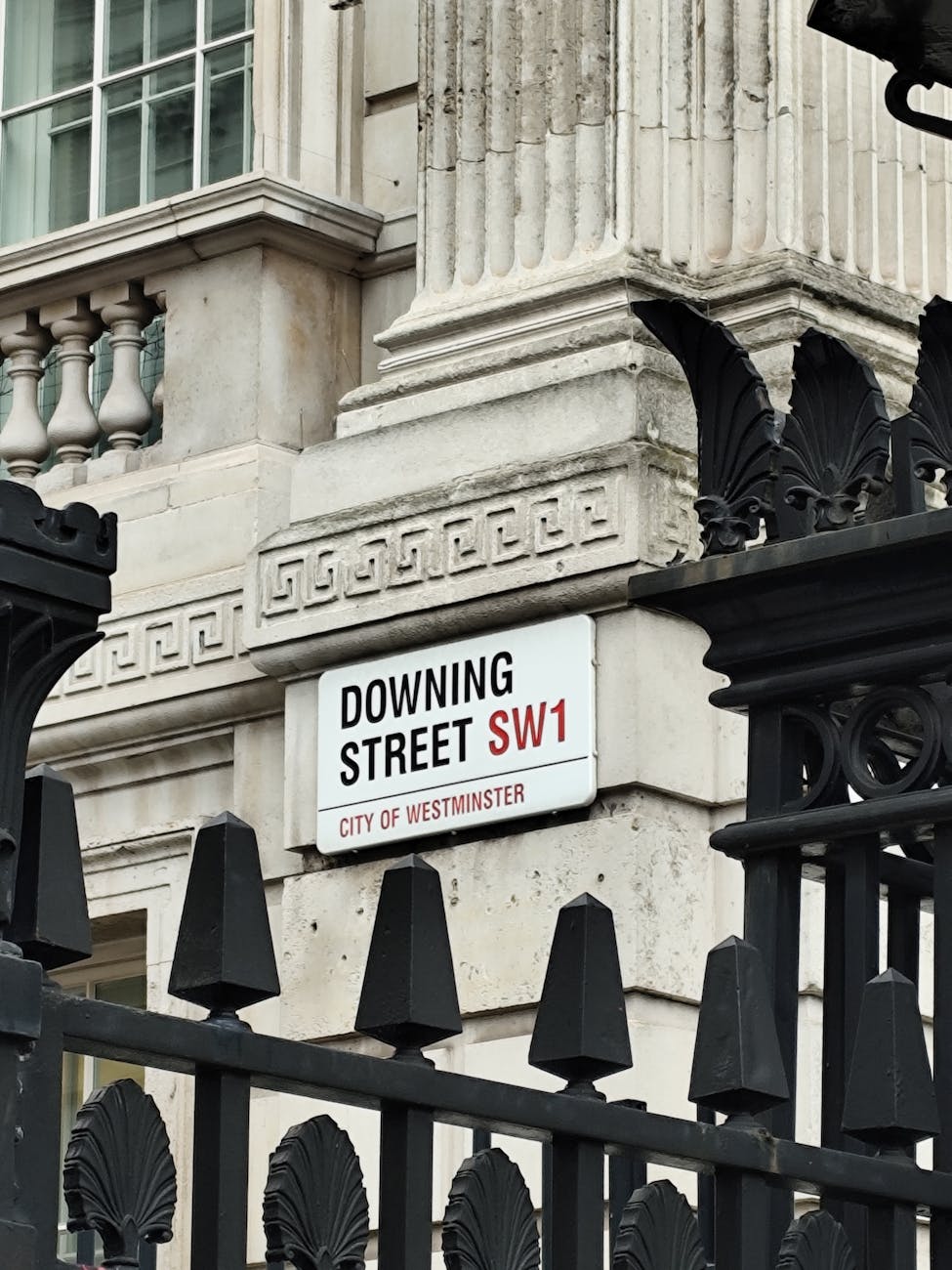
With Trump doing his best to wreck economies and the volatile political scene here it seems the maelstrom never stops although the media have much to answer for regarding the UK. Ever since this government was elected the media have worked to bring it down and their endless right wing narrative creation, speculation and conjecture around a Labour leadership challenge built to a crescendo last weekend, appalling to witness. One viewer described it as ‘fleas on roadkill’ and that’s about the measure of it, the usual suspects like Chris Mason, Robert Peston, Sam Coates and Kay Burley piling in to denigrate ‘Starmer’ followed by attempts to dig up dirt on Wes Streeting and Andy Burnham. Unfortunately they don’t have to look too far on Streeting, who has accepted multiple donations from private healthcare companies and who, just prior to resignation, gave the green light to NHS use of sinister software company Palantir. This means that you and I have no choice as to how this company (with its links to the US and Israeli militaries) will use our patient data.
Good for Sadiq Khan, London Mayor, who has cancelled the police’s contract with Palantir for both procedural and ethical reasons, drawing predictable flak from his Conservative Party opponent at City Hall, who used weak and moral compass free arguments to criticise his decision. Susan Hall complained that this move was ‘tying the police force’s (crime solving) hands behind their backs’ but the Mayor’s committee assessing the contract found serious breaches of protocol relating to it and… the Met didn’t try out other software suppliers. ‘On Thursday, the Mayor’s Office for Policing and Crime (MOPAC) said Palantir was the only supplier the Met had seriously considered for the contract. MOPAC said the force had failed to present its procurement strategy for approval – calling it a “clear and serious breach” of procedure, despite the requirement being “specifically emphasised” to the Met’.
The UK CEO of Palantir, Louis Mosley (grandson of Oswald) then had the nerve to ‘hit out’ at Khan, using similar loaded and manipulative arguments suggesting the Met’s effectiveness would be severely compromised. In fact the Met has been hopeless in so many areas of its operations and for so long that its performance could not be attributed to having this potentially dangerous contract cancelled. On Friday’s Radio 4 World at One (22:44 minutes in) there was an interesting discussion about this, Susan Hall followed by backbench Labour MP Martin Wrigley rebutting her arguments and spelling out the dangers associated with Palantir. We won’t have heard the end of this.
https://www.bbc.co.uk/news/articles/c9wend4lk2no
On the Left opinion seems split as to whether Keir Starmer should be challenged at all (some going as far as calling the challengers traitors) and those who believe he’s done for and they need someone with fresh vision. Some of us will see it from both sides: Keir Starmer doesn’t have a lot of charisma and many detest his Zionism and poor judgement but he’s been up against very difficult circumstances since coming into office (including problems posed by the Trump administration), he’s been good on the world stage and we have to ask ourselves how others might do it better. And it’s true to say (as many have) that two years isn’t half long enough to judge someone on, especially after the 14 years of Tory misrule. Journalist Jonathan Freedland makes an initially unlikely comparison between politics and football, specifically Arsenal winning the Premier League after a 22 year wait. ‘The sensational victory didn’t happen by accident, it took years of dedication and clever planning, something the PM – himself a fan – should note’. He discusses the policies, qualities and habits necessary to succeed, including achieving stability and ‘strategic patience’. ‘Strange to think that while politics demands instant gratification, it’s sport that can demonstrate the value of waiting. Patience was the necessary companion to what has been a defining aspect of the Arsenal project: long-term thinking. I learned this week that the club has a “football intelligence unit”, which five or six years ago laid out a timeline and potential route back to the top’. What’s described sounds like a SWOT analysis, working out a potential ‘window’ for Arsenal to seize.
‘That quiet work went on in the shadows for years – and this week we saw the result. Now compare that kind of long-termism, devising a plan and executing it, with the way government operates. It’s usually, and understandably, focused on the short-term – scrapping a planned rise in fuel duty, for example, to address immediate pressure on the cost of living, rather than advancing the gradual, necessary shift away from fossil fuels’. Besides patience and long termism, he suggests, the work obviously needs a plan and vision. And here we come up against the short electoral cycle which (surely for too long) has dictated many a political path. The long term failure over solving the social care crisis has been a victim of just this. He suggests that whereas Mikel Arteta had both plan and vision, Keir Starmer has had neither. Arteta also gave fans hope, suggests Freedland, something Starmer has manifestly failed to do. ‘He confused optimism with complacency, moving quickly to stamp it out. People will walk through a storm with you if they think you’re leading them to sunshine. But if the destination is grim, or never adequately described, they’ll soon drift away’.
Controversially, perhaps, he implies that Starmer needed to be more like ‘control freak’ Arteta, ‘across every detail’ whereas we saw what Sir Keir’s delegation of responsibility in the case of Peter Mandelson led to. This may be an unfair comparison, though: you can probably micromanage as a football manager much more easily than you can as PM. I admit to knowing next to nothing about football but found this a very interesting analysis: perhaps politicians and the civil servants advising them will better explore in future what they can learn from other fields outside politics.
Meanwhile, one potential leadership challenger continues to campaign hard in the lead up to the Makerfield byelection. While Andy Burnham has much more charisma and apparently more sense of direction than Keir Starmer, there are some who distrust him and see him as a cynical opportunist. ‘The King of the North’ is thought to favour introducing proportional representation across the UK, a 10-year plan for local services and an overhaul of inheritance tax to pay for the social care system. These policies shouldn’t be considered radical but may seem so because they’ve been avoided by various governments for so long. At least the media have had to wind their necks in to some extent because the leadership challenge they were hoping for and working towards after Streeting’s resignation never actually materialised. Not yet, anyway.
Particularly noticeable amid the various scandals surrounding the Reform Party is the apparent disappearance of Nigel Farage, who usually courts publicity. Time and time again he demonstrates refusal to face scrutiny, the latest example being for the massive donations from the Thailand based crypto billionaire Christopher Harborne (dubbed the Count of Dodgy Crypto by some wags and there are ruder versions) but there’s also still the matter of who paid for his house in Clacton. On both issues we’ve seen him change his story several times and this alone prompts suspicion. The media, who have protected Farage and Reform for far too long, should be doing this but very soon tax expert Dan Neidle is expected to release his own analysis of the crypto donations, which should make interesting reading. Reform has presented these donations (Harborne also donated to Boris Johnson) as innocent but no one gives those amounts of money for nothing in return and it’s known that a Reform policy is to expand the use of cryptocurrency. Reform has previously called for deregulation and proposed a new ‘bitcoin reserve fund’ and the forcing of HMRC to accept crypto as a payment for taxes. Reform’s website tells us that, as PM (!) Nigel Farage will enact the Cryptoassets and Digital Finance Bill, ‘setting out a bold, post-Brexit roadmap to make the United Kingdom the world’s premier hub for cryptocurrency and blockchain innovation’.
And it’s not ‘just’ one donor. The Guardian points out: ‘At another level, there is a constituency of wealthy crypto enthusiasts seemingly rewarding Reform for its role as the foremost cheerleader in British politics for the currency. As well as Harborne, there is Ben Delo, a British billionaire who last week said he had given £4m to Reform since the start of the year, before the government’s cap on donations to political parties by British citizens living abroad came into effect’. So it’s clear there’s nothing disinterested about these donations: the crypto billionaires would benefit hugely from Reform’s policies. Reform reckons 7m people in the UK hold bitcoin, more in the younger generation, and Reform is purporting to wish to help them.
As if this wasn’t enough, over 100 Reform councillors have resigned or been sacked since the local elections, a picture of incompetence but also of expense as byelections will have to be held for those seats. Moreover, there’s instability in the party itself, the chair Dr David Bull suddenly (and without explanation) being deposed, with Lee Anderson moving into that role, Zia Yusuf seeming to have his role changed every few months, and Makerfield candidate Rob Kenyon being found guilty of racist and other vile remarks on an X account he tried to delete and to broadcaster and campaigner Carol Vorderman. The party has no shortage of baggage of its own making without, at present, the input of their AWOL leader, last reportedly seen boarding a Eurostar train to Brussels.
Former Blairite minister Alan Milburn, having been charged with reporting on the seemingly intractable problem of rising numbers of NEETs (Not in work, training or education) and young people going straight from school or college onto benefits has produced the first part of his report. It’s long been a problem but it was nevertheless rather shocking to hear that the UK spends £25 on benefits for such people compared with £1 on measures to help them get into work. This issue is all over the media, including an ‘exclusive’ interview with Sunday with Laura Kuenssberg, which included informative clips of Milburn’s sessions with young people. What came across loud and clear was that (those present anyway) they had mostly applied for hundreds of jobs but rarely heard back and they had had no guidance as to how to present themselves or their CVs. Milburn rightly says this is a shameful situation, a failure by the education, health and benefits systems but surely employers are firmly in the frame as well, having unrealistic expectations and little preparedness to take people on. But another key issue not mentioned is surely the diminishing number of jobs due to process automation, AI and factors like employers’ National Insurance and the eventual need, quite possibly, for UBI (Universal Basic Income).
Apparently there were 957,000 young NEETs in the UK from October to December 2025 – equivalent to 12.8% of people in that age category, according to the latest figures from the Office for National Statistics. This made me wonder whether lessons could be usefully learned from those who have been successful in finding work – if not in part 1 maybe such material will be included in part 2 of this report. Milburn acknowledged poor mental health as one of the barriers to progress but rightly said that ‘such diagnoses should not mean young people are not expected or encouraged into the work place….. welfare reform is absolutely essential and needs to be done. But as I said, it’s got to be within the context of a wider set of reforms to state institutions’. Therein lies the problem: for far too long timid governments have tinkered around the edges of difficult issues when radical reform is what’s needed but there’s such a fear of alienating colleagues and the public. Keir Starmer had to climb down on his last attempt at welfare reform because of vociferous back benchers but the evidence in this report will surely serve as the intended catalyst for change.
https://www.bbc.co.uk/news/articles/crrpx4p1z71o
Time and time again we see the Palace PR machine going into overdrive, with sycophantic reports and clips about the royals by sycophantic and parasitical ‘royal correspondents’ just when there’s more positive news about the Sussexes but primarily when there’s a resurgence of unsavoury news about the former Prince Andrew. Following on from Kate’s risible trip to Italy last week we see champion of the homeless, William (he of seven luxurious mansions, palaces and weekenders and £23m annual profit mostly tax free from the Duchy of Cornwall) in a hard hat hammering a nail in on a construction site), attracting comments to the effect that it was clearly the first time he’d ever done this. All such performative media footage to deflect from the latest Andrew scandals, namely that the former Queen pressed for him to be made trade envoy (with no vetting) and the useless plod now extending their investigation of Andrew’s alleged Misconduct in Public Office to sexual misconduct (we know from staff accounts about such events on royal properties), allegedly calling for witnesses. They’re also meant to deflect from an updated edition of Andrew Lownie’s book ‘Entitled’. Meanwhile it’s emerged that Prince Andrew allegedly sexually assaulted a woman at Royal Ascot and his mother and his protection officers covered for him. It just goes on and on, reinforcing the set up that endured for centuries but is now being seriously challenged – that rich and powerful men are protected and get away with stuff no ‘ordinary’ citizen would.
The Trump Iran War induced cost of living crisis is anticipated to lead to food prices rising over 50% by November, compared with prices beforehand. But it’s bad enough already and it seems to me there’s not nearly enough of rapacious supermarkets and utility companies being called out. They continue to get away with profiteering and we can bet they don’t take any of the inflationary hit themselves. An article headlined ‘Squeals of horror over price caps – but how are we going to fix our broken food system?’ analyses this pressing issue, starting with the ‘furious’ reactions of supermarket chains to being ‘asked’ to cap prices on essential foods. Yet another sign of arrogance, that they’ve been allowed to get away with taking customers for granted for years, an attitude well and truly displayed by Radio 4’s retail ‘expert’ on speed dial ‘Lord’ Stuart Rose, who, on the Today progrmme, indignantly inveighed against such a measure.
‘But this caterwauling is a distraction from two unpleasant facts. Firstly, the food price surge over the summer and beyond is likely to be significant – and will come on top of a near-40% rise in the price of food since 2020 – due to a devastating combination of the Iran war and a forecast record-breaking El Niño, which will hammer global food production. And secondly, Britain’s food system is painfully exposed to such shocks. The long-held assumption that a global food system can be relied on to meet the nation’s needs, at a reasonable price, no longer applies. With about one-third of the fertiliser trade travelling through the strait of Hormuz, and about half of the world population’s food supply dependent on artificial fertiliser, the shock to global food systems will play out over the next year – regardless of how quickly the strait may or may not reopen’. I did wonder whether this dire situation might prompt more farmers to go organic but that takes time to organize and would be expensive in different ways.
The article goes onto discuss other ‘chokepoints’ in the global food system, which all makes rather alarming reading. Too many of us probably don’t know this stuff but need to, for example the fact of our dependency on a small number of ‘breadbasket locations’ – 60% of global food production occurring in just five countries. Then there are the extensive problems caused by climate change and weather ‘events’ causing markedly decreased harvests. ‘Britain has had three of its five worst harvests on record in the last decade. Losses for farmers are beginning to mount. Last year saw the harvest value of wheat, barley, oats and oilseed rape fall by more than one-fifth below its long-run average, costing farmers £828m in lost revenues. Over the whole decade, lost revenues from those weaker harvests now come to £2.3bn’. It’s not only the young people’s worklessness that needs reform but the ‘entire food system’ according to this writer, a fact acknowledged by DEFRA but not publicly. Meanwhile the rest of us not involved in government and food production circles can feel pretty helpless. Perhaps we can expect to see a rise in applications for allotments.
Finally, it was really interesting recently to see a list of ‘the greatest literature ever published in English, as voted for by authors, critics and academics worldwide’. It’s in reverse order and you can click on each link for the author, date and few facts about the book. The article suggests you check to see how many you’ve read. As you’d expect classic authors like Dickens, Austen and others are well represented besides some I found strange choices including the unreadable. I won’t say what got the top spot but it’s one that’s widely acknowledged as one of the best literary works ever published. Time to re-read it!
https://www.theguardian.com/books/ng-interactive/2026/may/12/the-100-best-novels-of-all-time

